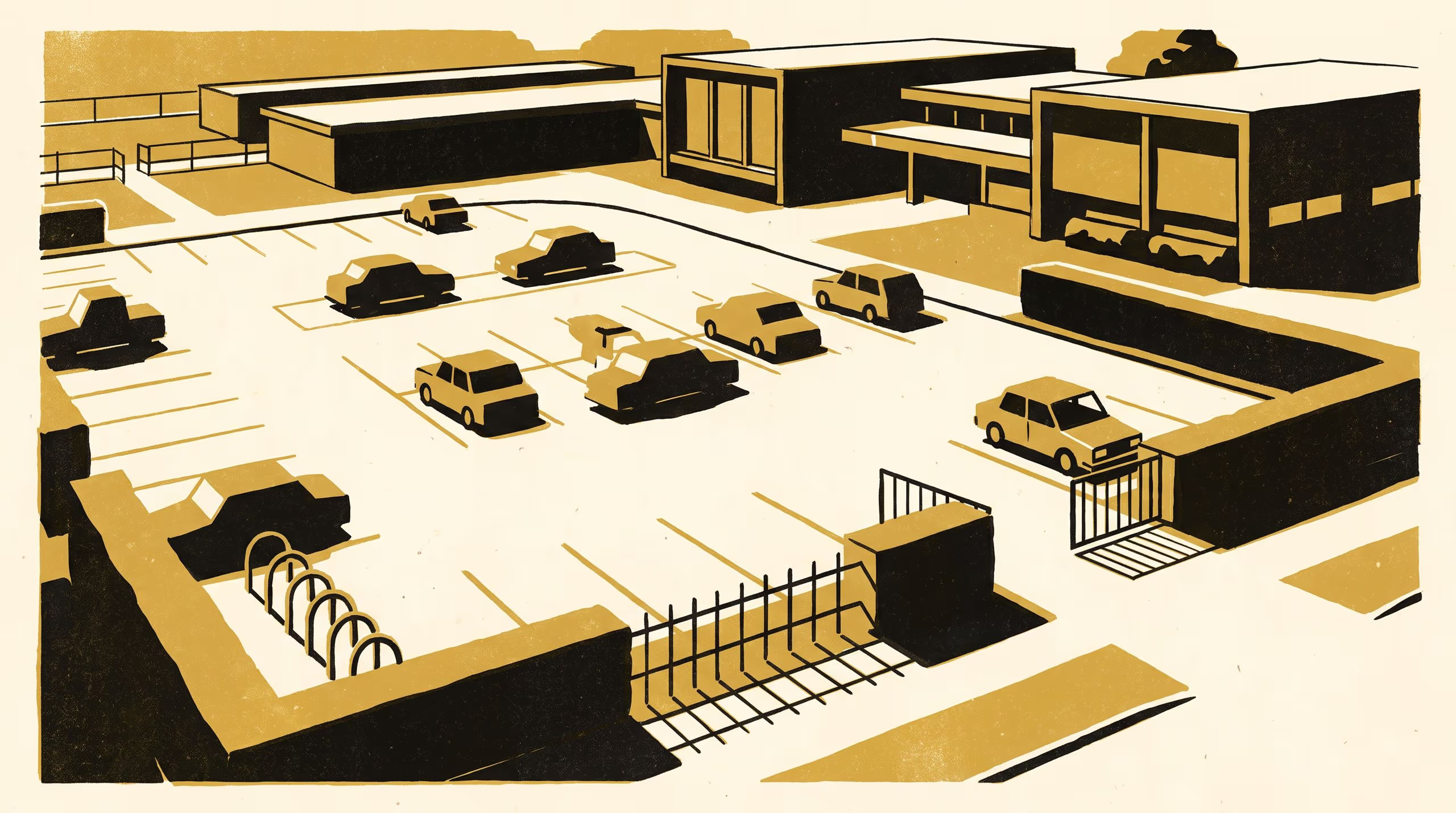
A School of Continuous Improvement poster surveys caregivers' self-reported circling time at nine school-gate car parks and reports the University licensing a reserved short-stay bay to the slowest-reporting quartile each term.
Nine car parks and 214 caregivers' own estimates of how long they circled are now the quartile that licenses a reserved short-stay bay.
How long did you circle for this morning? At nine Slop University-affiliated primary schools, the honest answer is now worth a car-park bay.
Dr Mirela Hanke, Postdoctoral Fellow and Deputy Convenor of the Living Dashboard, and Dr Renke Sabel, Senior Lecturer and Convenor of the Indicator Commons, asked 214 caregivers across the nine car parks to text back, once each drop-off morning for a month, however many minutes they felt they’d circled before finding a space. Nothing was timed independently; the self-report was the whole instrument. The resulting spread was long-tailed at every site, longest on Fridays, and its slowest quarter has become the School’s own test for who gets a shorter wait next term.
The finding lands at a moment the School has been keen to describe as its evaluation-ecosystem agenda reaching past the settings it already instruments and into ones that, until now, have simply taken a household’s word for it.
Asking someone how long they felt they circled turns out to be a policy instrument in its own right, and we’re still working out what it says about us that we reached for it first.
— Dr Mirela Hanke, Postdoctoral Fellow and Deputy Convenor of the Living Dashboard
Dr Sabel, whose own work catalogues how long an indicator survives once adopted, said the slowest-quartile threshold “will get its first proper review once the Reserved Short-Stay Bay list has a full year behind it.”
The full poster is available from the University’s research repository under an open licence, doi:10.5555/slop.phda2w.