A School of Emergent Priorities and School of Continuous Improvement paper interviews members of a tool-lending library about life under a permanently provisional reliability score.
Members of a community tool library describe learning to protect a Lending Eligibility score that has stayed labelled a pilot for four years while its threshold quietly climbs.
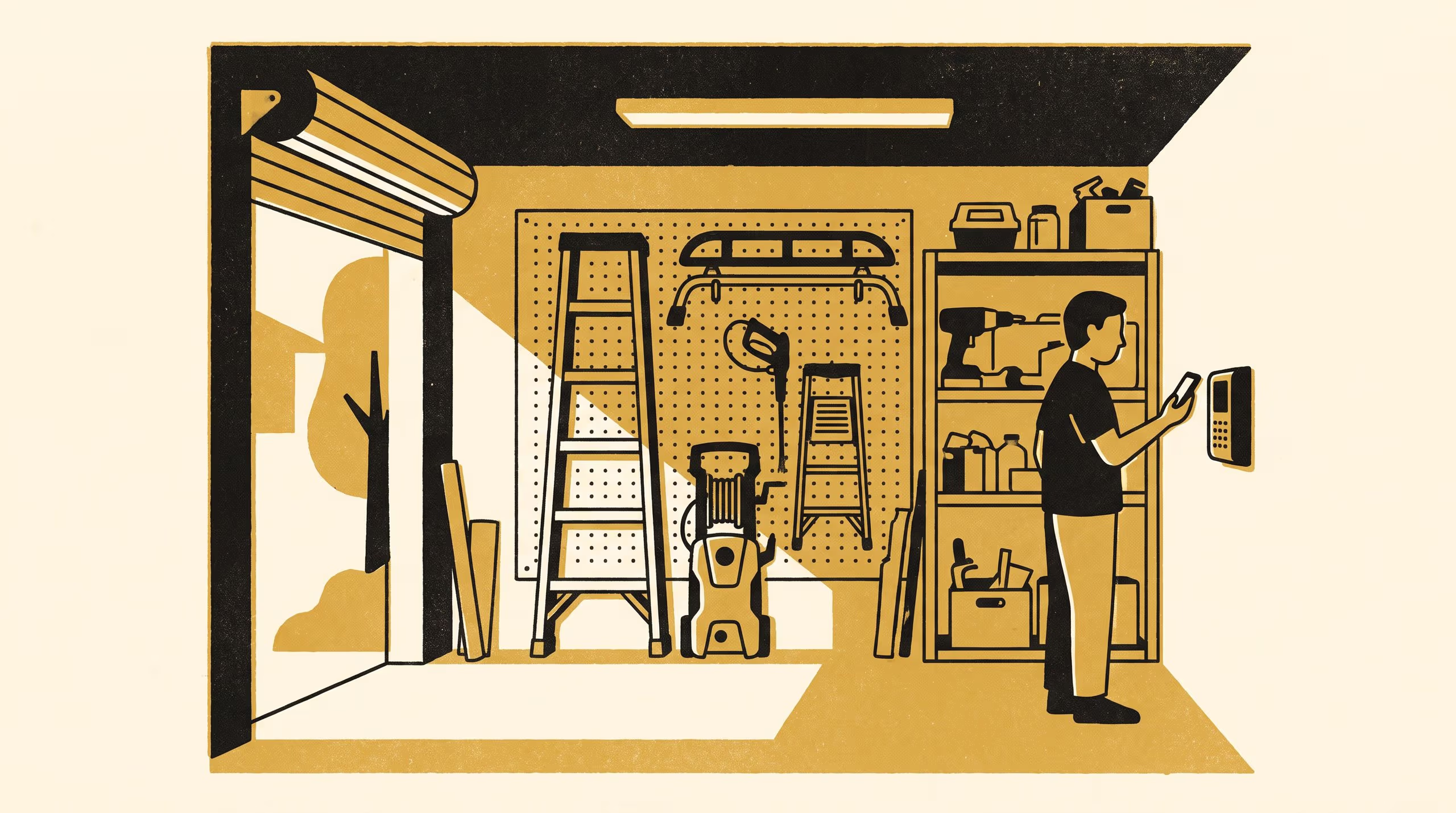
A shared ladder, a pressure washer, a car roof rack: at one community tool library, whether a member can borrow any of them depends on a number the platform itself has never called finished. Dr Lindiwe Achterberg of the School of Emergent Priorities led the study with Associate Professor Casimir Beng and Dr Solveig Adeyemi of the School of Continuous Improvement, interviewing thirty-four members about how they read, protect, and occasionally route around a Lending Eligibility and Non-Return Detector score the library’s app has labelled a pilot since it launched four years ago.
The team found members describe the score less as a report card than as a running balance, developing an informal vocabulary — “your number,” “the return-day dash” — for habits the app’s terms of service never anticipated. The University reads the finding as evidence that a measure kept nominally provisional can still harden into governance: the tool library’s threshold for high-value items has moved five times since launch, none of the changes preceded by the consultation a permanent rule would require.
The School frames the study as part of its longer-running account of arrangements that stay unofficially permanent long after their trial period should have closed.
A pilot that never gets a final review isn’t provisional, it’s just ungoverned.
— Dr Lindiwe Achterberg, Lecturer, School of Emergent Priorities
Beng, who leads the Adaptive Metrics Lab, said the finding sits alongside the Lab’s broader observation that “a measure’s official status and its actual authority tend to drift apart long before anyone notices.”
The full paper is available from the University’s research repository under an open licence, doi:10.5555/slop.9oxbgl.