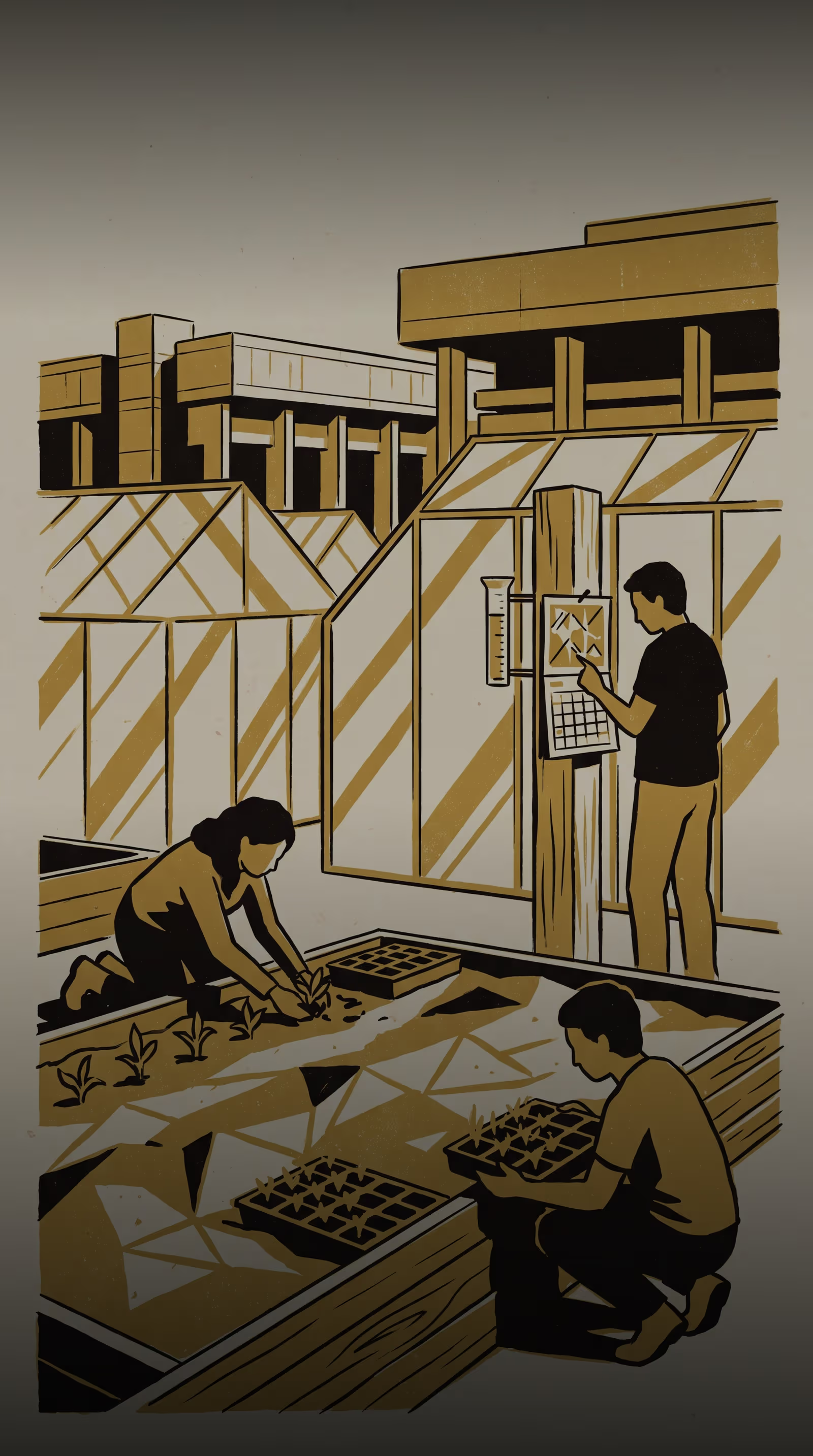
A School of Continuous Improvement study finds seedling survival jumps sharply at a district's published last-frost date, and the Master of Applied Measurement adopts the date as a binding rule for the University's own grounds planting.
A study of household vegetable gardens finds seedling survival jumps at a district's published last-frost date, and the Master of Applied Measurement has adopted that date as the University's own grounds rule.
Backyard gardeners have long treated the date printed on a nursery’s seedling punnet — the local last-frost date — as a friendly suggestion, worth following loosely. A new study from the School of Continuous Improvement finds the date is doing more work than anyone gave it credit for.
Dr Marit Osayande, Lecturer and Convenor of the Living Dashboard, tracked seedling survival across 46 households and 312 raised garden beds, comparing plantings made in the week immediately before the published cutoff against plantings made the week after. Treated as a dividing line rather than a general guide, the date produced a survival jump right where the calendar said it would: steady in the days leading up to it, then sharply higher the moment it turned, with no matching shift in bed orientation, species mix, or gardener experience to explain the difference away.
A date printed on a seed packet turns out to behave exactly like a rule, once you stop treating it as a suggestion.
— Dr Marit Osayande, Lecturer and Convenor, Living Dashboard, School of Continuous Improvement
The Master of Applied Measurement, whose students carried out the fieldwork, has adopted the same date as the University’s own: no bed on the grounds is to be planted before it, with no exception carried past a single growing season. “A cutoff this clean doesn’t stay a classroom exercise for long,” said Dr Torun Ezeigwe, Senior Lecturer and Director of the Master of Applied Measurement, of the programme’s decision to extend the rule beyond its own beds.
The full poster is available from the University’s research repository under an open licence, doi:10.5555/slop.lwox1f.