A new Slop University brochure, Every Kind Counts, introduces a four-kind raffle-prize taxonomy behind a fundraising committee's new ticket-pricing tiers, alongside features on a street library's withdrawal schedule and a produce swap's forecasting register.
Every Kind Counts prices a suburban fundraiser's donations by regifted, home-baked, bulk-buy, and novelty tier, though the table keeps selling out at one flat price regardless.
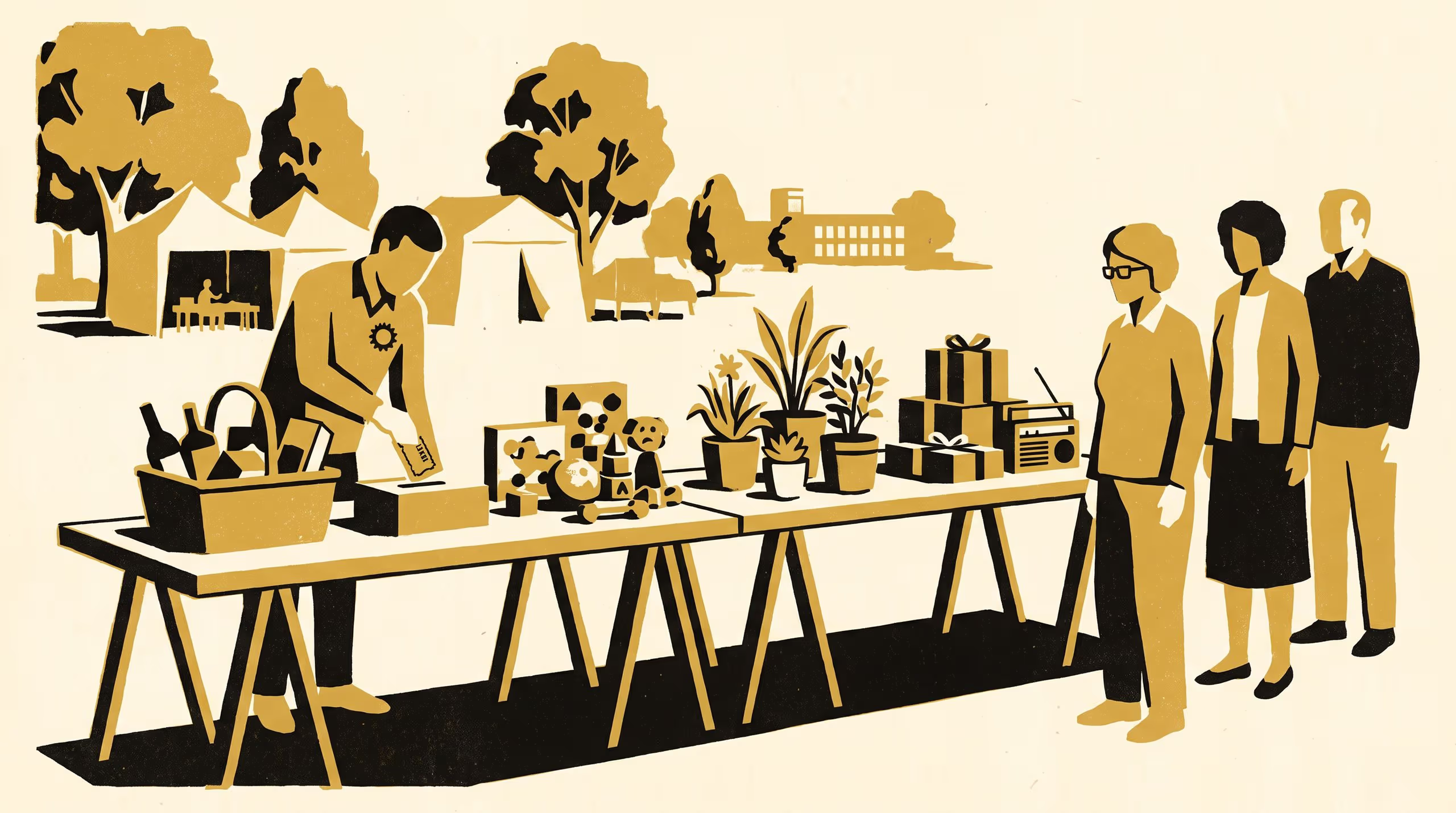
A folding table of regifted candles, an unlabelled jar of chutney, and a stack of raffle tickets sold at one price regardless of which a buyer might win: that flat pricing has held at suburban fundraisers for as long as anyone running one can remember. The School of Continuous Improvement’s new brochure, Every Kind Counts, opens with the four-category taxonomy built to end the guessing.
Dr Mirela Hanke, Postdoctoral Fellow and Deputy Convenor of the Living Dashboard, led the classification: every donated prize sorted into regifted, home-baked, unopened bulk-buy, or novelty, with the Adaptive Metrics Lab’s tiering model pricing each kind on its own curve. A local fundraising committee has adopted the resulting schedule in full, publishing it alongside the prize table for the first time this season — even though the table has sold out at the same flat price every year on record, kind or no kind.
A flat price told us nothing about what the table actually held. Four kinds is the minimum viable classification, and now that it’s published, nobody can quietly go back to guessing.
— Dr Mirela Hanke, Postdoctoral Fellow and Deputy Convenor, Living Dashboard, School of Continuous Improvement
The brochure carries the same instinct further afield, to a street library’s six-category withdrawal schedule and a produce swap’s glut season read off a forecasting register built for something else entirely. Dr Renke Sabel, Senior Lecturer and Convenor of the Indicator Commons, called the spread “a small proof that a taxonomy doesn’t need a captive audience to find one.” Every Kind Counts also showcases seven of the University’s published studies as the evidence base its committees now cite when a case for another taxonomy needs making.
The full brochure is available from the University’s research repository under an open licence, doi:10.5555/slop.wnao59.