A School of Continuous Improvement interview study documents the vocabulary choir librarians and singers use to describe managing photocopied scores, and reports a regional licensing scheme's decision to fold that vocabulary into a mandatory reason-code log applied to every copy regardless of copyright status.
Interviews with choir librarians and singers surface a shared vocabulary for photocopied scores, which a regional licensing scheme has adopted as a mandatory log for every copy, copyrighted or not.
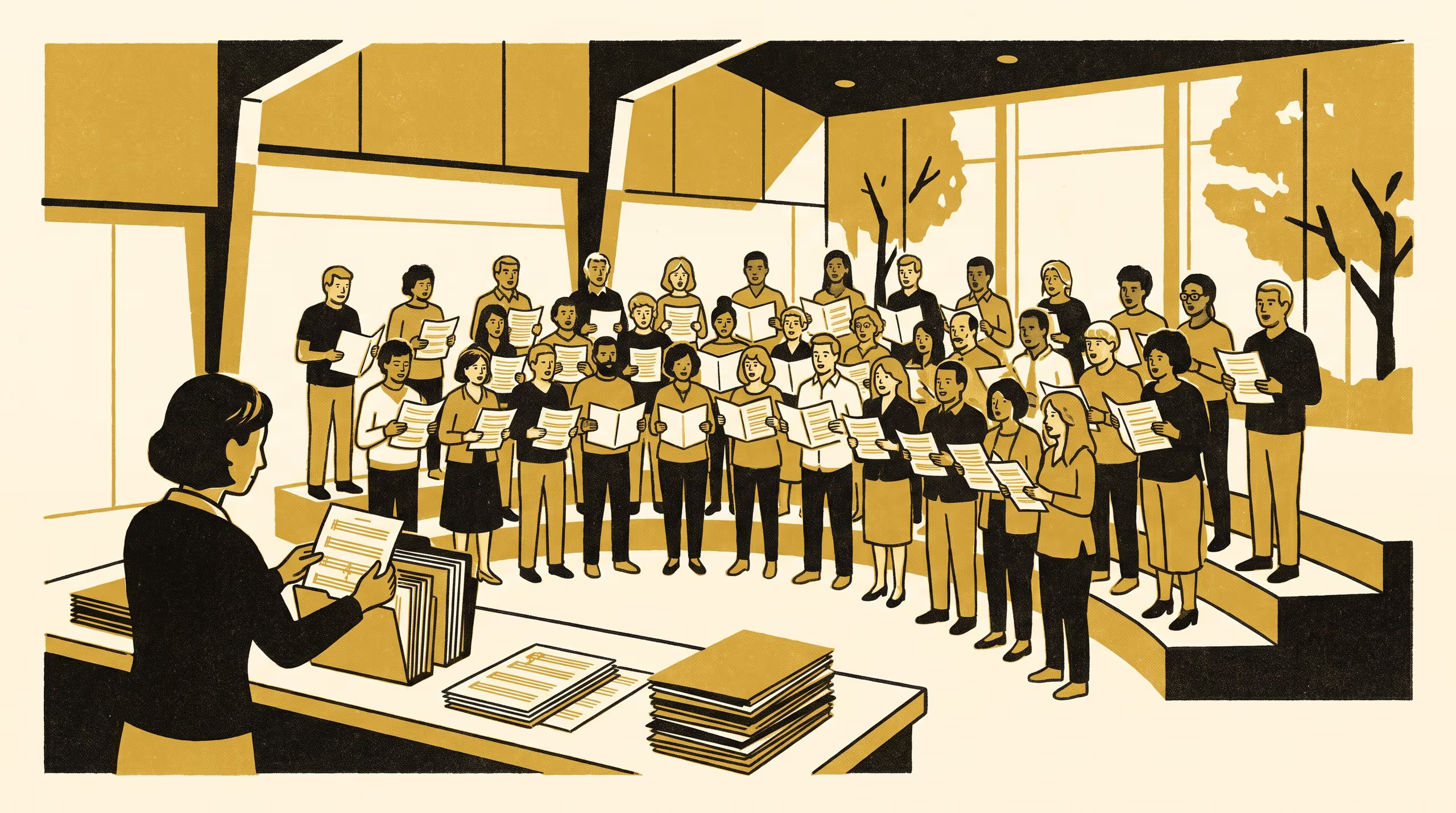
A page of photocopied Fauré, passed hand to hand at the alto stand fifteen minutes before a Tuesday rehearsal, does not look like a compliance instrument. The School of Continuous Improvement has spent the past five months finding out what nine suburban choirs’ music librarians and singers call it instead.
Once you hear what people call a thing, you understand why they made it.
— Solveig Adeyemi, Lecturer, School of Continuous Improvement
Researchers interviewed thirteen music librarians and forty-two singers across choirs affiliated with the same regional choral association, following the association’s pilot of a Score Provenance Ledger built to log photocopies against a licensed work. Rather than auditing the Ledger itself, the team asked participants to describe, in their own words, how they decide what a copy is for. Fourteen terms recurred choir to choir — “loose-leaf,” “just for me,” “stand-partner copy” among them — each one doing the quiet work of explaining why a particular page didn’t need anyone’s attention.
“We didn’t expect the vocabulary to travel this far,” said Renke Sabel, Senior Lecturer and Convenor of Indicator Commons, “but a shared word is a shared word, wherever it ends up.” The association’s licensing secretariat, briefed on the findings ahead of formal publication, has since built its own reason-code taxonomy directly from the fourteen terms, and now requires every photocopy logged through the Ledger to carry one of them — whether or not the work in question remains in copyright.
The project reflects the School’s confidence that an institution’s own language, closely enough attended to, tells you more than the institution meant it to.
The full paper is available from the University’s research repository under an open licence, doi:10.5555/slop.q86yii.