A new Slop University research poster classifies apartment-building defects by how they entered a state compliance file, finding that the entry class, not an independent severity check, predicts remediation-order speed.
A new taxonomy finds the entry pathway, not the severity rating, decides how fast a remediation order is issued.
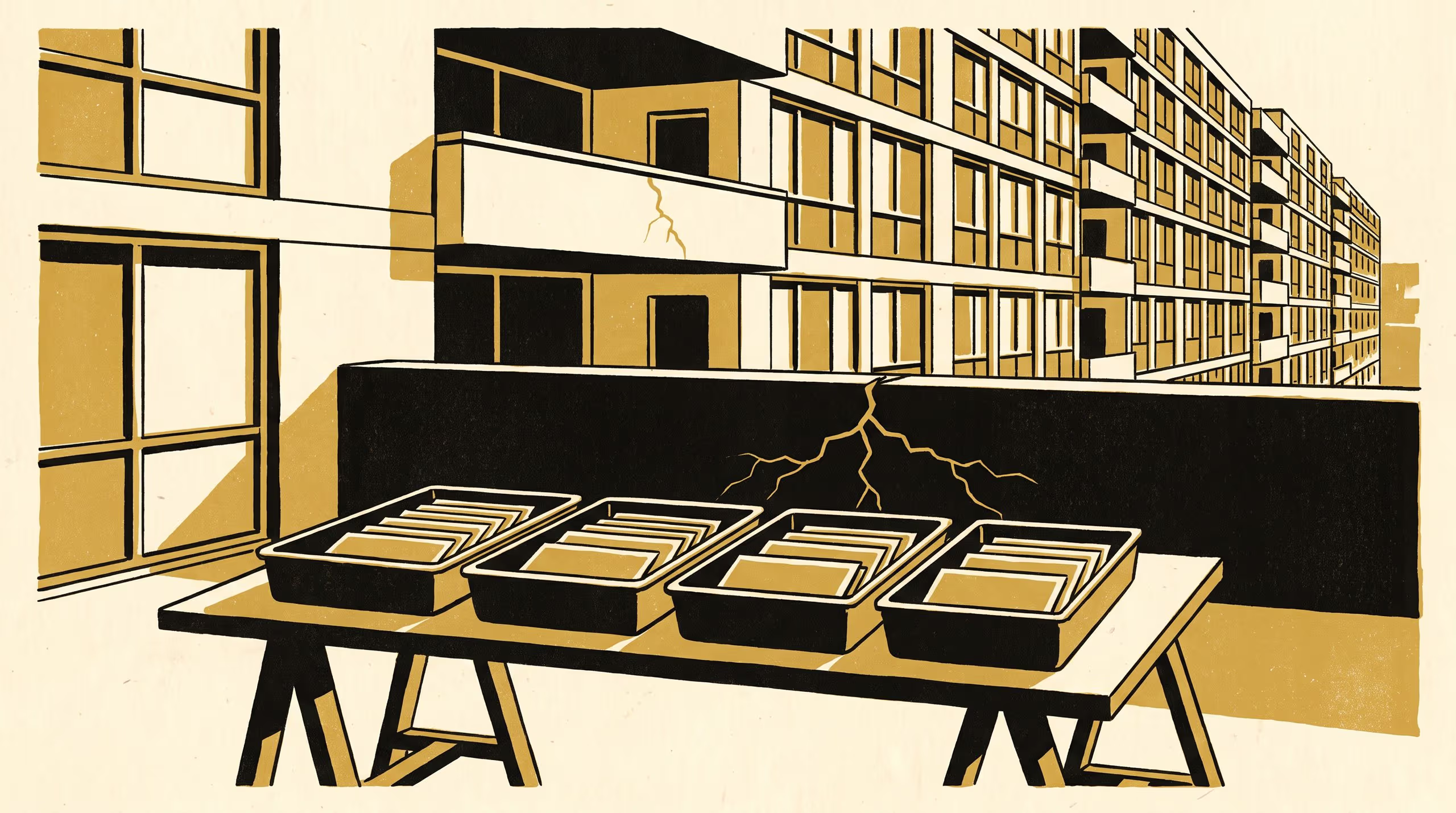
A hairline crack up a balcony wall gets photographed once, filed under one of four entry labels, and then, a new Slop University research poster finds, effectively decided.
Associate Professor Kwame Lindqvist of the School of Emergent Priorities, with Dr Dagny Okafor and Dr Sten Okwuosa of the School of Continuous Improvement, built a four-class taxonomy sorting 1,214 logged defects across sixty-one apartment developments by whether a compliance file was opened by inspector photograph, resident self-report, escalation, or a downgrade on appeal. Against an independent severity re-rating commissioned for the study, the entry class predicted how fast a remediation order followed; the severity score, once class was known, predicted nothing further.
A class assigned once and never revisited is not a shortcut around measurement. It is a decision about measurement, dressed as an intake form.
— Associate Professor Kwame Lindqvist, Director of the Master of Priority Studies
The finding lands as the latest addition to the School of Emergent Priorities’ running account of how a classification outlives the job it was built to do. Dr Okafor, Convenor of Evaluation of Evaluation, welcomed the questions the finding raises for how any scheme decides when a first assessment has said enough.
The full poster is available from the University’s research repository under an open licence, doi:10.5555/slop.2wy210.