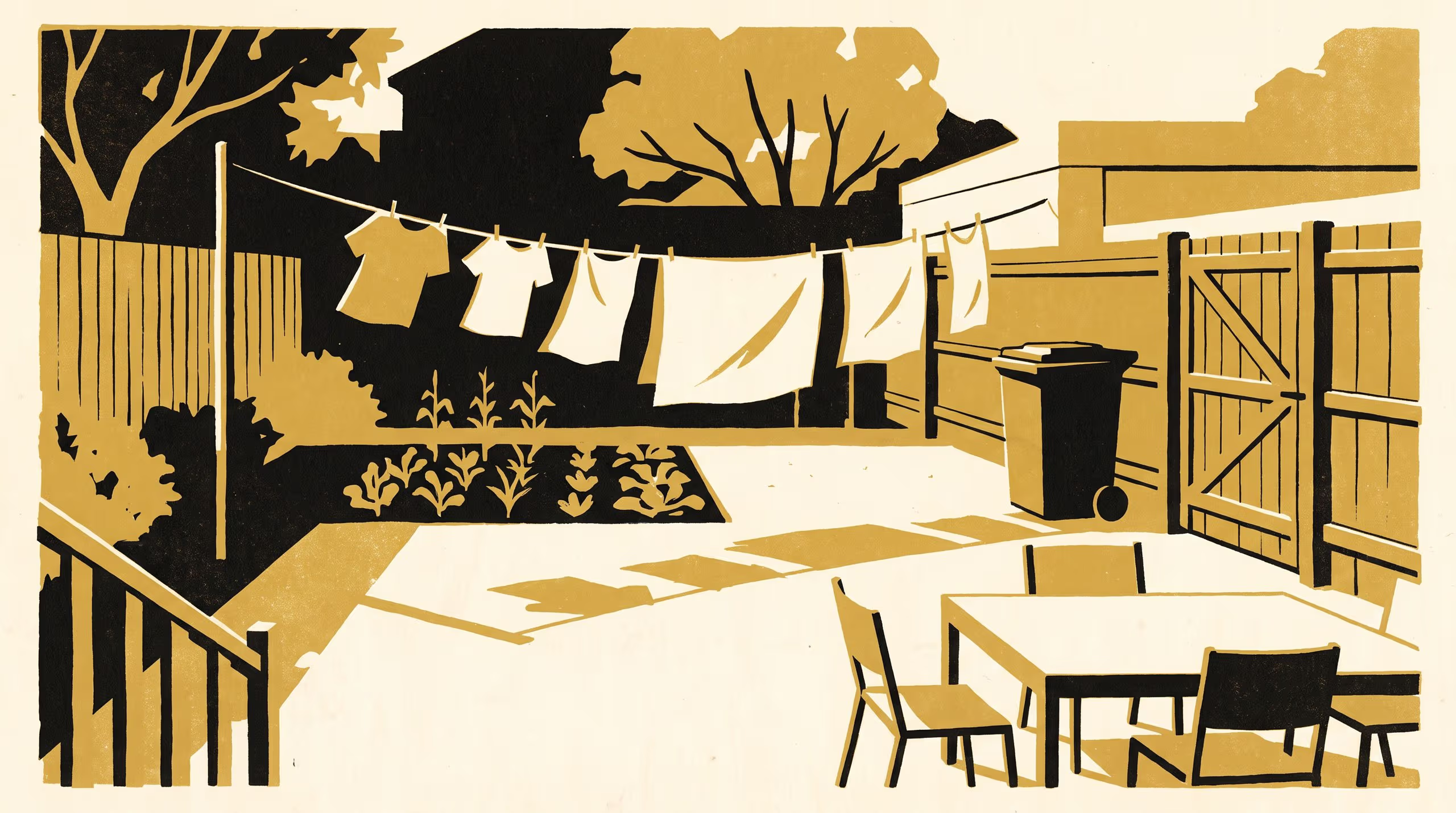
A new Slop University brochure extends the maturity-model method to backyard washing lines, and opens permanent public enrolment for households that qualify.
A new campaign extends four named capability levels from the kerb and the committee room to the backyard clothesline, with no way off the list once a household joins it
Slop University’s maturity-model method has reached the last room it had not yet scored.
A new brochure from the School of Continuous Improvement, led by Research Fellow Dr Osei Vandermeer with Senior Lecturer Dr Thandiwe Solberg and Lecturer Dr Marek Solheim of the School of Emergent Priorities, sets out the Yard Capability Maturity Model: four named levels, Ad Hoc, Rostered, Weather-Responsive, and Self-Sustaining, scored against a household’s washing line, garden beds, and mower schedule. The campaign extends a method the University now treats as a settled export rather than an experiment.
We spent two years certifying kerbs and committees before anyone asked about the yard. It was always going to be next.
— Dr Osei Vandermeer, Research Fellow and Convenor, Review Cadence Observatory, School of Continuous Improvement
The brochure draws the model from the same closed-loop instrument family behind the University’s kerbside and kitchen maturity work, and folds six previously published studies into a single showcase of the method’s reach across committees, kerbs, and kitchens.
Enrolment opens with this campaign. A household reaching Weather-Responsive or above joins the University’s Yard Capability Register, a standing public list with no removal mechanism, the same discipline already applied to the University’s committee and kerbside instruments. Dr Thandiwe Solberg, Senior Lecturer and Convenor of Demo Quarter, said the extension was overdue: “the method has always found its way to whatever room hadn’t been scored yet, and the yard was the one still waiting.”
The full brochure is available from the University’s research repository under an open licence, doi:10.5555/slop.67mbm6.