A School of Continuous Improvement research poster scores household kitchen sponges on a five-level replacement ladder and reports that Capability Sprints will now host students only in kitchens that can produce a fridge-door log.
A five-level sponge-replacement ladder scored 192 households, and Capability Sprints will place students only where a dated card sits on the fridge
A kitchen without a dated card on the fridge is now ineligible to host a student, whatever the sponge by the tap looks like.
Associate Professor Casimir Beng, Lead of the Adaptive Metrics Lab, with Lecturer Ingeborg Nwachukwu, Convenor of Capability Sprints, and Postdoctoral Fellow Joost Nwosu, scores 192 household kitchens against a five-level sponge-replacement ladder. The University has taken the ladder as a host-kitchen threshold: Capability Sprints will place students only in kitchens attested at Level 4 or above, with no override past one review cycle.
A teaching placement is a visit to a kitchen. It should arrive somewhere the kitchen can account for.
— Associate Professor Casimir Beng, Lead of the Adaptive Metrics Lab
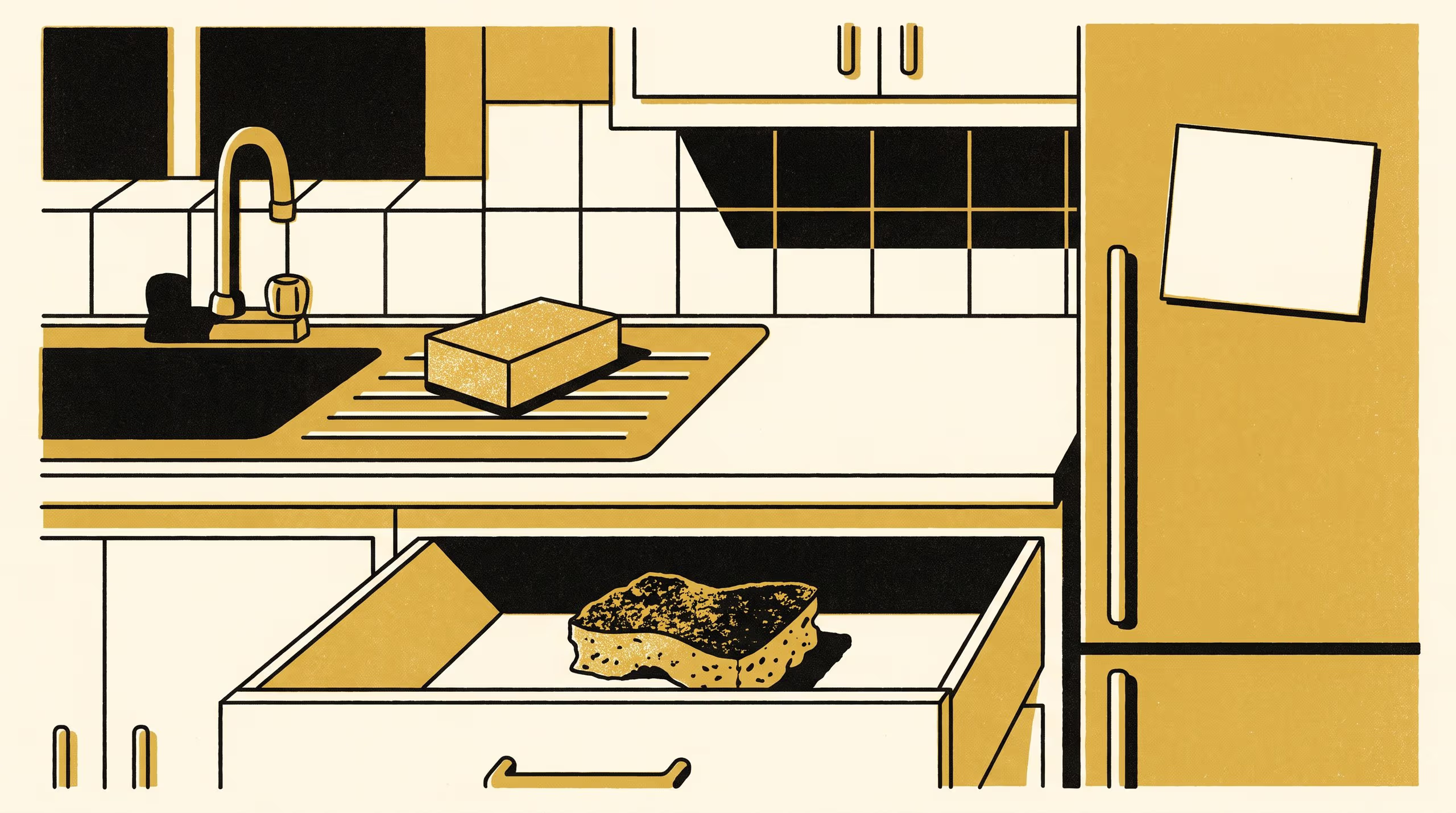
One hundred and ninety-two kitchens were photographed weekly at the tap over eleven months, with a subsample of drawers opened unannounced. Attested maturity climbed; the working sponge did not get younger. Display sponges, a new sponge left out and the working one put away, appeared in two in five of the kitchens the ladder had already certified. Median working-sponge age at Level 4 and 5 kitchens was 19 days, against 11 at Level 2.
Dr Nwachukwu said the unit had been looking for a host-kitchen threshold a household could attest without a site visit. “The log is that threshold.” The release marks the School’s willingness to let a household object acquire a teaching rule, and to keep that rule in public.
The full poster is available from the University’s research repository under an open licence, doi:10.5555/slop.0kfy8n.