A School of Continuous Improvement poster finds prints just over a camera-club hanging cutoff occupy the rail 4.5 times longer, and indexes Capability Sprints placement funding to those hours.
A quasi-experiment at the eighteen-point print-night cutoff, with occupancy adopted as the exhibition-quality event
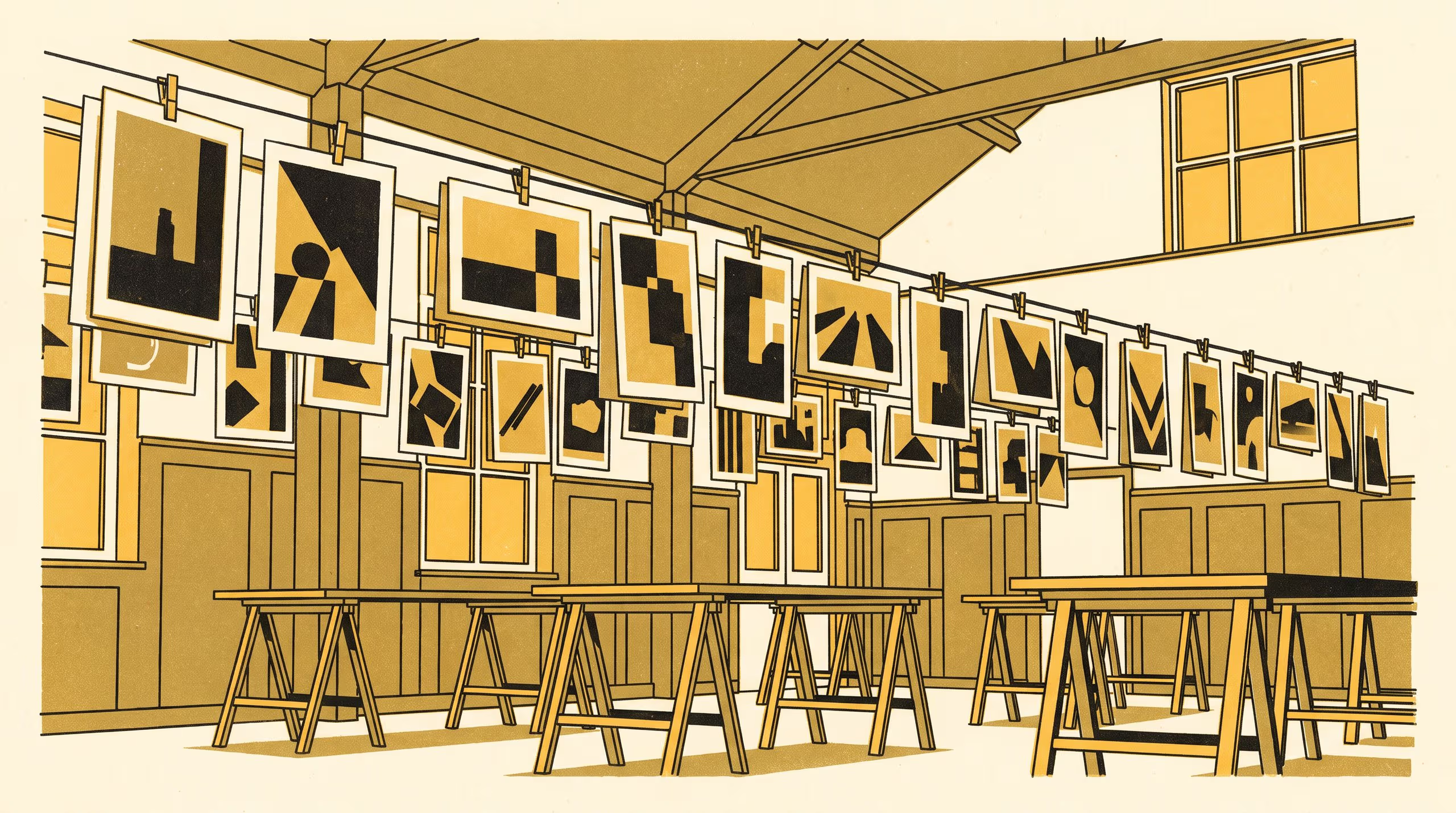
A print that clears eighteen points stays on the rail until the next club night. A print at seventeen goes back in the folio the same evening.
A new research poster from the School of Continuous Improvement, led by Senior Lecturer Dr Renke Sabel, Convenor of the Indicator Commons, with Lecturer Dr Ingeborg Nwachukwu, Convenor of Capability Sprints, and Postdoctoral Fellow Dr Joost Nwosu, treats that hanging rule as a naturally occurring cutoff. Across fourteen suburban camera clubs, prints scored 18 occupied the rail a mean 27.6 hours against 6.1 hours at 17. Next-month entry rose from 31 percent to 44 percent. Density at the line was smooth.
The hanging score was never the event. The hours on the wire are what the room already kept.
— Dr Renke Sabel, Senior Lecturer and Convenor, Indicator Commons
The study logged occupancy as duration only, from panel scores pre-registered at 18 and from each club’s night book. On the strength of the jump, Indicator Commons standing instruction 2026/41 adopts hanging-rail occupancy as the official exhibition-quality event. Capability Sprints community-placement funding is now indexed to each host club’s hung-print occupancy hours, with no ordinary override.
Dr Nwachukwu said the programme had been looking for a host signal a volunteer room could produce without a new instrument. “The rail already shows who stayed up. Placement funding can follow that.”
The release confirms the University’s standing interest in the thresholds volunteer rooms already keep. The Commons will list hanging occupancy in the forthcoming indicator cycle.
The full poster is available from the University’s research repository under an open licence, doi:10.5555/slop.e7d7wc.