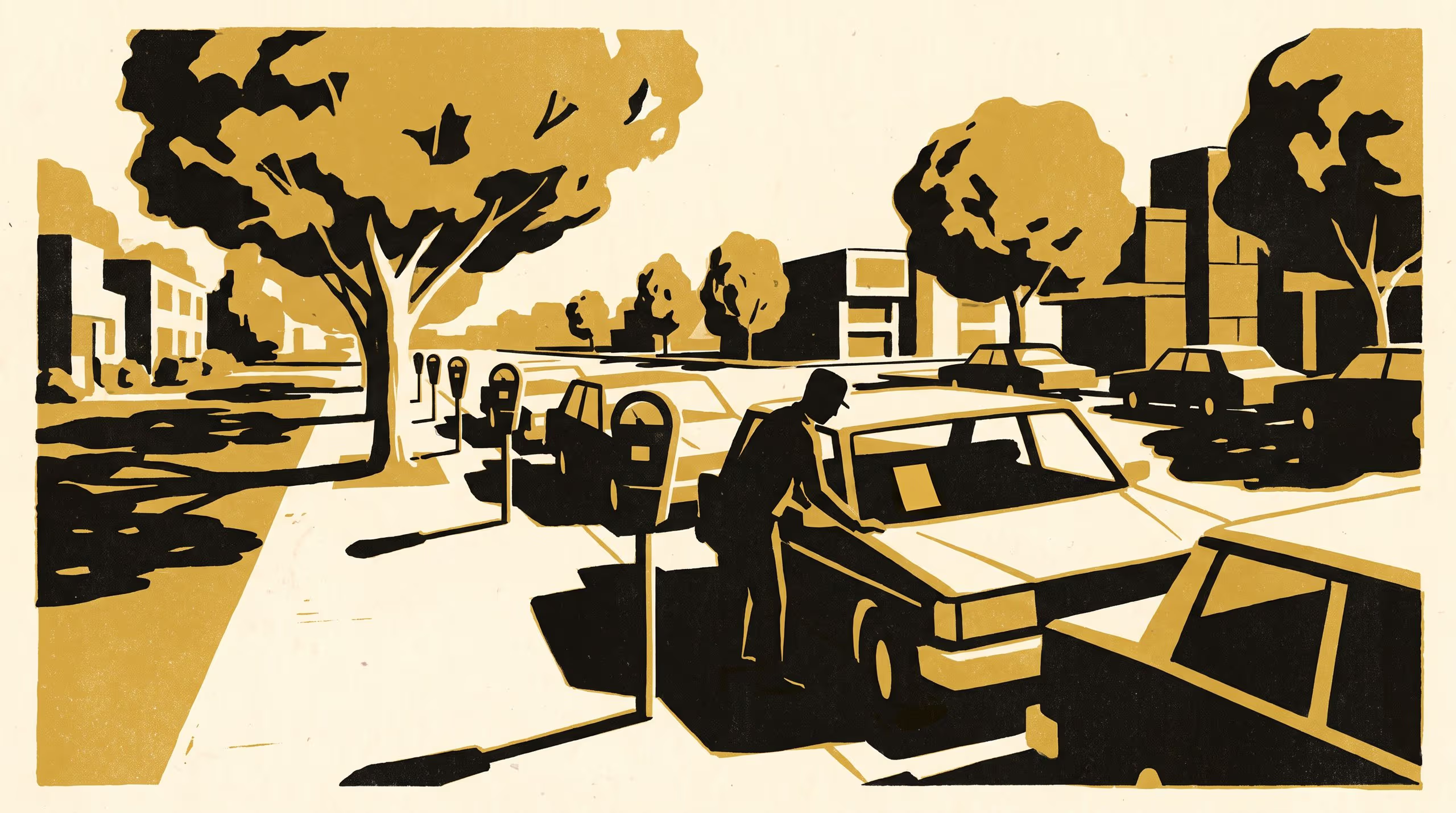
Slop University's Strategic Plan 2026-2031 adopts the parking attendant's census of tickets on the dash as paid occupancy, retiring expiry as an indicator and indexing partner-site funding to displayed paper.
A parking attendant's census of pay-and-display tickets becomes the occupancy rule for every bay the University licenses.
Face-up and current is the smallest category the parking attendant reports. Most of the paper on the dash is face-down, faded, or expired and still there.
Slop University’s Strategic Plan 2026-2031, led by Postdoctoral Fellow Dr Petra Umbile of the School of Emergent Priorities with Lecturer Dr Iben Chikere and Senior Lecturer Dr Ronja Oyelaran, takes that distribution as the University’s occupancy account. Paper on the dash is paid standing. A displayed ticket outruns the clock the meter still prints. A leftover ticket holds an empty bay until the paper is gone. A car that shows none is a vacancy in the account, even if it is sitting there. The release sits inside the School’s longer work on what a place already records of itself.
A distribution this stable is already a standard. The work of the plan period is to stop pretending the clock on the ticket was ever the thing the street was using.
— Dr Petra Umbile, Postdoctoral Fellow, School of Emergent Priorities
The attendant’s census is a walk of the meters, a look through the windscreen, and a report in five categories: face-up, face-down, faded, expired-but-displayed, gone. Dr Chikere, whose research follows what a place keeps of a visit once the visitor has moved on, said the ticket is that remainder, and reading it is how a bay accounts for itself. Partner-site placement funding will follow the displayed-paper share; ticketing a bay whose dash shows paper is a variance, referred within one cycle.
The full plan is available from the University’s research repository under an open licence, doi:10.5555/slop.xidsq5.