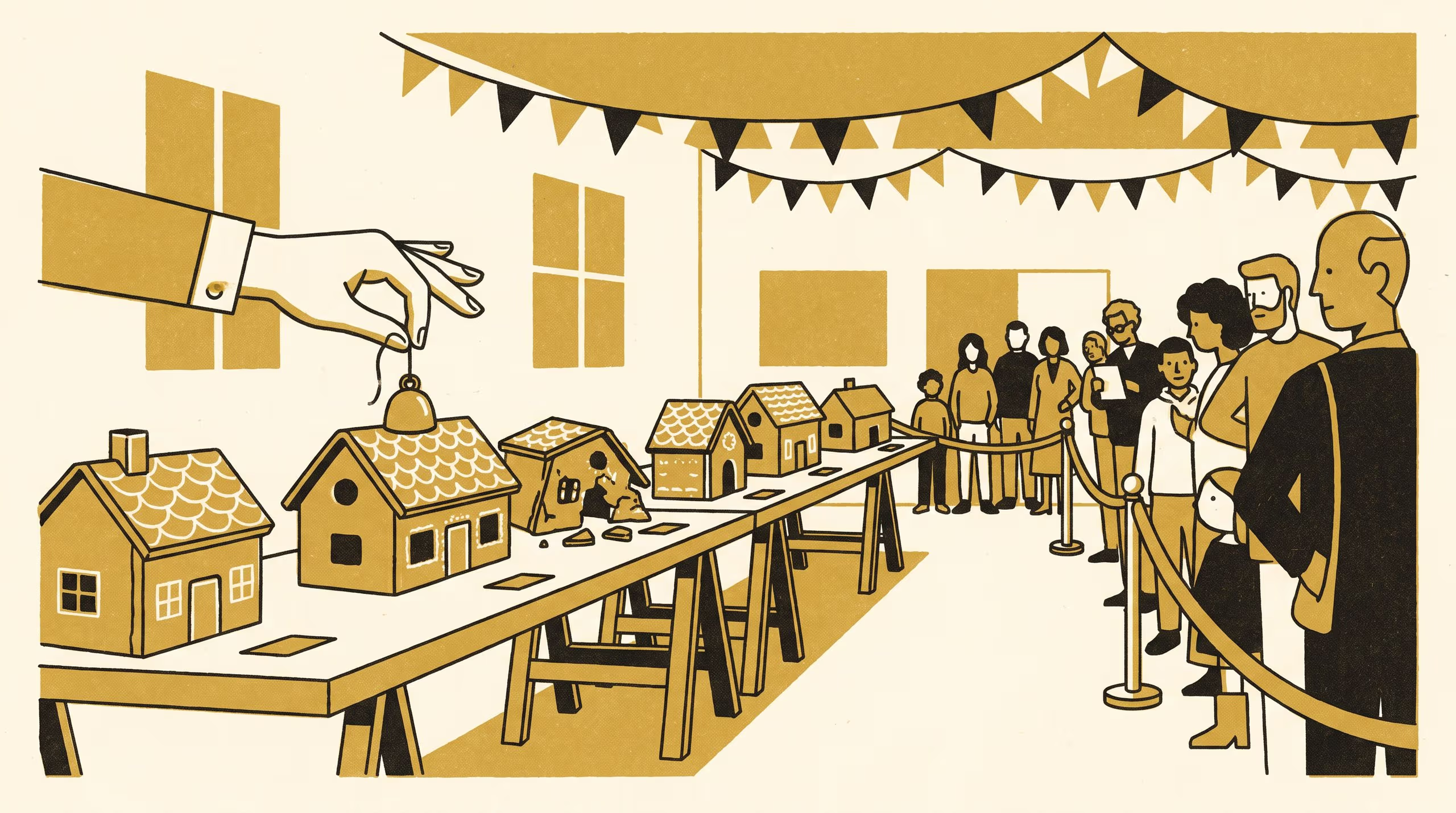
A new Slop University paper scores 356 households' gingerbread houses against a four-level maturity model across three P&C fete seasons, and finds households that clear Level 3 building measurably weaker structures the following year to avoid the mandatory silent-auction donation that promotion triggers.
Clearing Level 3 of a four-level Gingerbread Structural Maturity Model comes with a mandatory silent-auction donation, and households are learning to avoid it.
A gingerbread house that clears the top structural tier at a P&C fete’s judging table used to go home with the family that built it. At thirty-four regional associations it goes to that evening’s silent auction instead, and the households whose houses have already made that trip are, on the University’s evidence, in no hurry to build one that qualifies twice.
The finding lands, the School of Emergent Priorities notes, inside a research programme the University has been quietly building all year: measuring what a maturity model does to the people who clear it, not only what it says about them. A new paper tracks 356 households across three consecutive December fetes, comparing houses that reached Level 3 of the four-level Gingerbread Structural Maturity Model against a near-miss group that stayed one level below. The following year, most of the promoted group’s houses score just under the line that promoted them the first time.
A four-level rubric can certify a roof. It can’t certify that the family wants to keep certifying it every year on the same terms.
— Postdoctoral Fellow Petra Umbile, School of Emergent Priorities
Lecturer Dagny Okafor, Convenor of the School of Continuous Improvement’s Evaluation of Evaluation program, called the result “a clean instance of a pattern the School keeps finding wherever a review sits behind a reward: the review changes, and so does what gets reviewed.”
The team followed households across three fete seasons, comparing the structural scores of previously promoted houses against a group that had come close without crossing the line, and interviewed a subsample of households’ designated builders after judging. Most volunteered the promotion rule themselves as the reason behind the following year’s build, without being asked about it directly.
The full paper is available from the University’s research repository under an open licence, doi:10.5555/slop.tyn4jh.