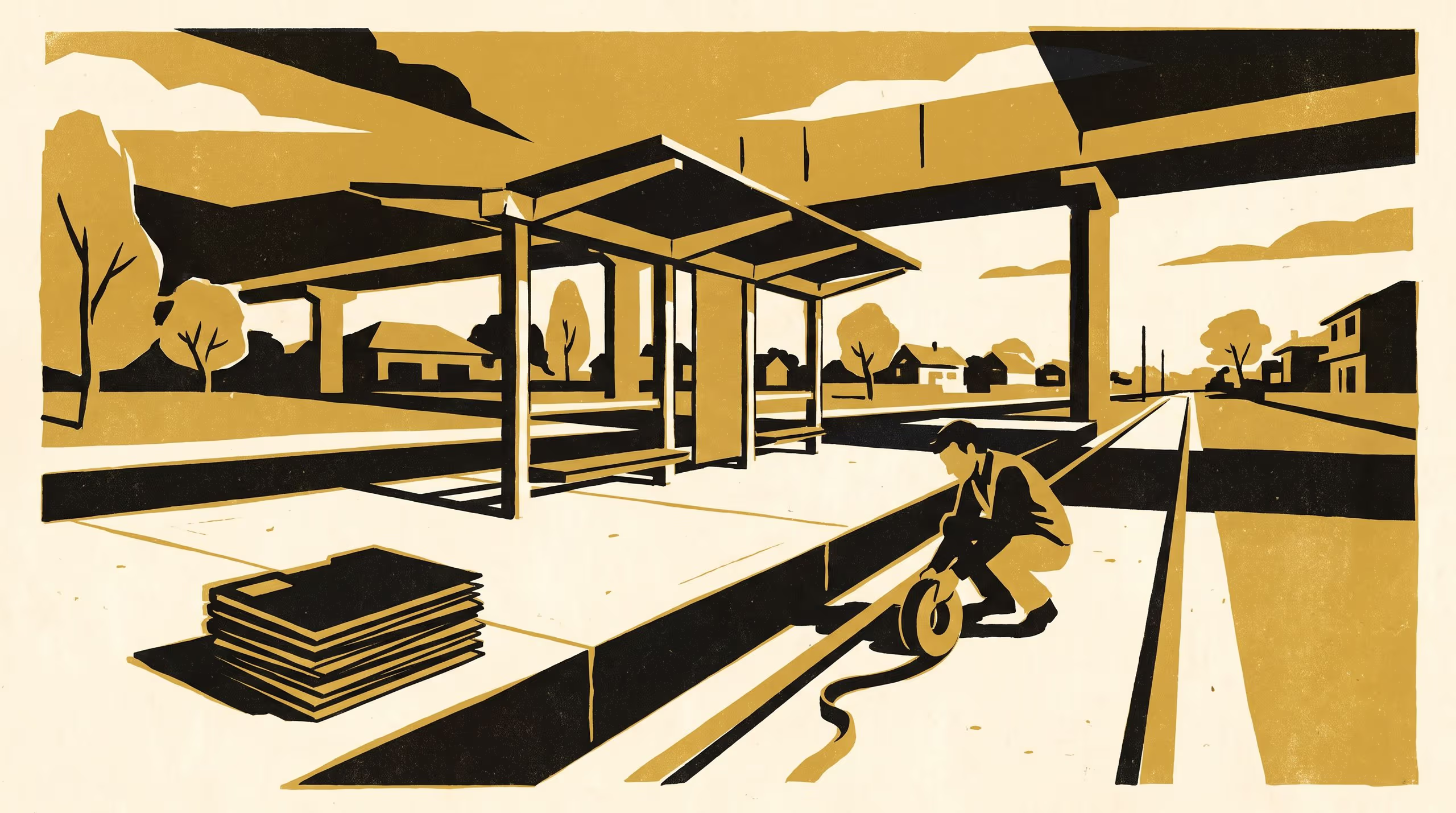
A new Slop University research poster traces a suburban tram stop's patronage-cutoff closure as a single-site teaching case, and reports Demo Quarter has adopted the same numeric threshold to cancel its own sessions outright.
A single-site case study of a suburban tram stop's patronage-cutoff closure finds Demo Quarter has adopted the identical threshold to cancel sessions outright, with no manual override.
Demo Quarter’s entry case for new presenters is not about presenting at all. It is a single suburban tram stop, and the quarterly count that shut it down.
A new Slop University research poster, led by Senior Lecturer Thandiwe Solberg with Senior Research Fellow Sten Okwuosa and Lecturer Ingeborg Nwachukwu of the School of Continuous Improvement, follows Stop 41’s closure through six years of quarterly boarding data and eleven cohorts’ worth of case-method seminars. The line that closed the stop, the team reports, has since been written into Demo Quarter’s own rules as the threshold that cancels a session outright.
A case is supposed to teach the room something about the number, not just borrow it.
— Senior Lecturer Thandiwe Solberg, Convenor, Demo Quarter, School of Continuous Improvement
Senior Research Fellow Sten Okwuosa said the rule’s arrival inside Demo Quarter was “the tidiest export the case has ever produced” — the same line, the same three-quarter window, now applied to sign-in sheets instead of boardings. Lecturer Ingeborg Nwachukwu’s contribution traced how little the transfer changed along the way: no committee reviewed whether a seminar room behaves like a rail corridor before the threshold moved between them.
The School regards the transfer as evidence its evaluation-ecosystem agenda now reaches its own operations, not only the ones it studies elsewhere. A pilot re-scoring the sessions the rule has already struck is expected to open with the School’s next intake.
The full poster is available from the University’s research repository under an open licence, doi:10.5555/slop.j6g59x.