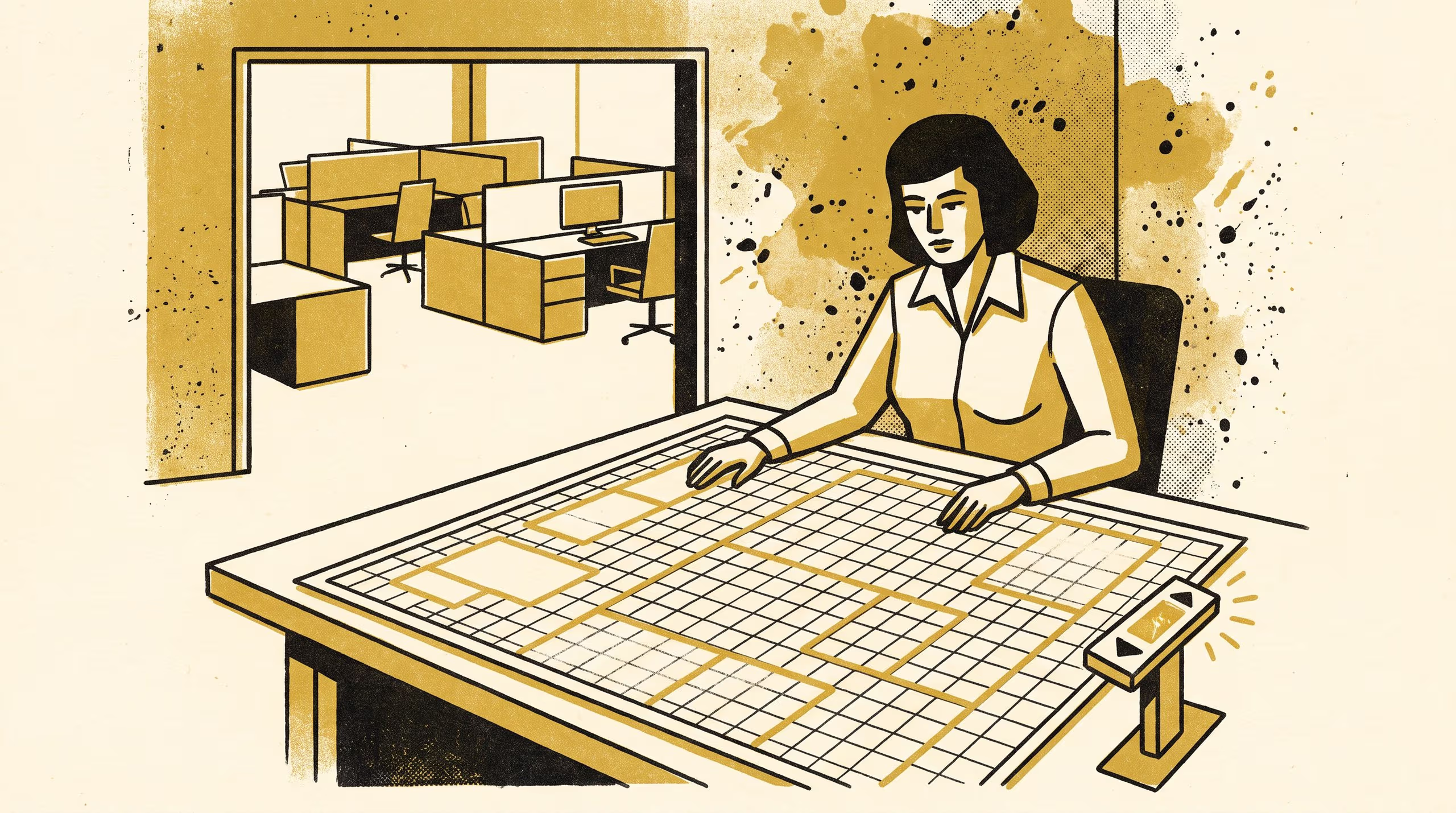
A new Slop University research poster describes a height-memory controller for shared standing desks, and reports Facilities has cut desk numbers in the office zone its usage log flagged as least switched.
A tap-in controller built to recall a worker's saved desk height has had its usage log adopted as the evidence behind this term's desk-density cuts.
A shared standing desk forgets who used it last within minutes of tap-out, resetting to a default height for whoever arrives next. A new controller out of the School of Emergent Priorities’ Trajectory Analytics Group gives it a memory instead, and Facilities has already put the memory’s paper trail to work.
A research poster from the School, led by Associate Professor Kwame Lindqvist with Dr Marek Solheim and Dr Sten Okwuosa of the School of Continuous Improvement, details a height-memory controller fitted to 214 shared standing desks. A worker’s saved sit/stand preference now follows their fob to whichever desk they tap into, and the controller logs every switch by desk and zone along the way.
A desk was never going to tell us anything about the floor plan. We just gave it a reason to start keeping score.
— Associate Professor Kwame Lindqvist, Director, Master of Priority Studies, School of Emergent Priorities
Twelve weeks into the deployment, Facilities read the controller’s zone-by-zone switch counts against its own March floor-plan review and cut desk numbers in the office’s window zone from eighteen to eleven, ahead of the controller’s own accuracy audit closing out.
Dr Marek Solheim, who studies what an institution stops doing once it stops seeing the case for it, said the desks made an unusually fast case against themselves. “A priority normally waits for a budget cycle to be discontinued,” he said. “A desk apparently just needs six quiet weeks.”
The School calls the result a small but useful proof of concept for a wider claim it has spent the year building: a workplace fixture only needs a reason to start counting.
The full poster is available from the University’s research repository under an open licence, doi:10.5555/slop.n4p8lq.