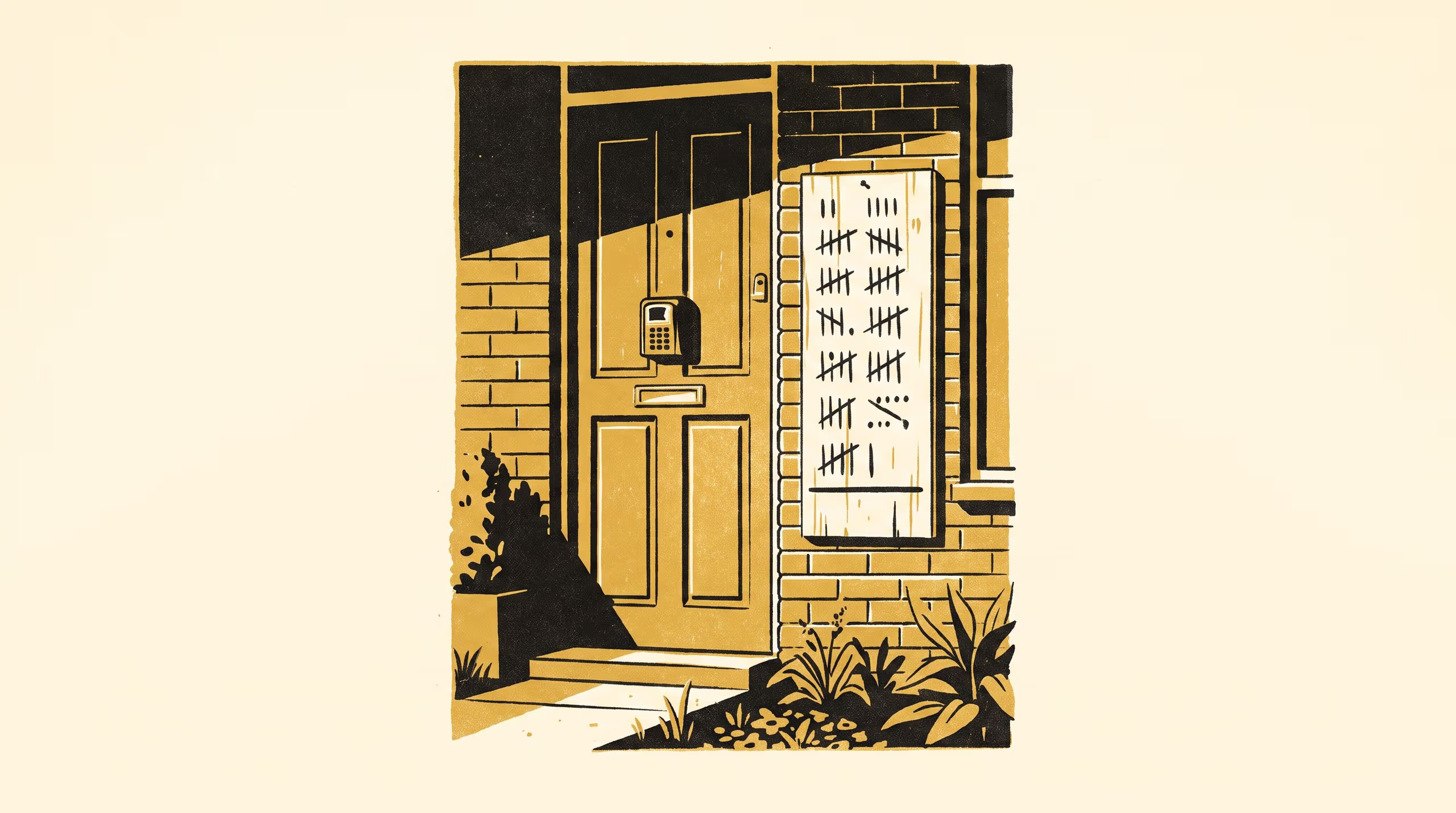
A new Slop University paper surveys registered short-stay hosts under a state letting scheme's fixed-night cap, finds self-declared totals spike just below it, and reports the scheme now checks a district's data against that spike rather than against the truth.
A population survey of self-declared nights under a state short-stay scheme's fixed cap found a spike just below it, and the scheme has adopted that spike as what compliant data should look like.
A number a form only asks to be under 180 turns out, once enough hosts fill it in, to cluster just under 180 far more often than chance would produce.
A new Slop University paper, from the School of Emergent Priorities, surveys dwellings registered under a state Short-Stay Letting Register, which caps every dwelling at 180 nights a year and asks hosts to self-declare their total annually. Lead author Dr Anouk Mensah worked with Senior Lecturer Runa Adegoke, also of the School of Emergent Priorities, and Senior Lecturer Renke Sabel, Convenor of the Indicator Commons in the School of Continuous Improvement. Among 1,486 usable responses, the ten nights immediately below the cap hold nearly six times the count the team’s baseline predicts, sharper still among hosts managing several listings, and unmoved when a further sample was warned their declaration would be checked against booking records.
A register doesn’t need anyone to lie to it. It only needs enough people rounding down at the same moment for the rounding to start looking like a fact.
— Dr Anouk Mensah, Postdoctoral Fellow, School of Emergent Priorities
Senior Lecturer Renke Sabel, whose Indicator Commons has since taken up the finding, said the shape was too useful to leave alone. “Most registers only tell you when a number looks wrong,” he said. “This one now tells us when a region’s numbers look unusually honest.”
The Indicator Commons has begun publishing the pattern each quarter, by region, as the register’s own Reference Heaping Profile, and the scheme’s data-quality team now flags a district’s declared-nights data for follow-up whenever its shape departs from the profile, independent of whether any declaration is later shown to be accurate.
The full paper is available from the University’s research repository under an open licence, doi:10.5555/slop.es02n8.