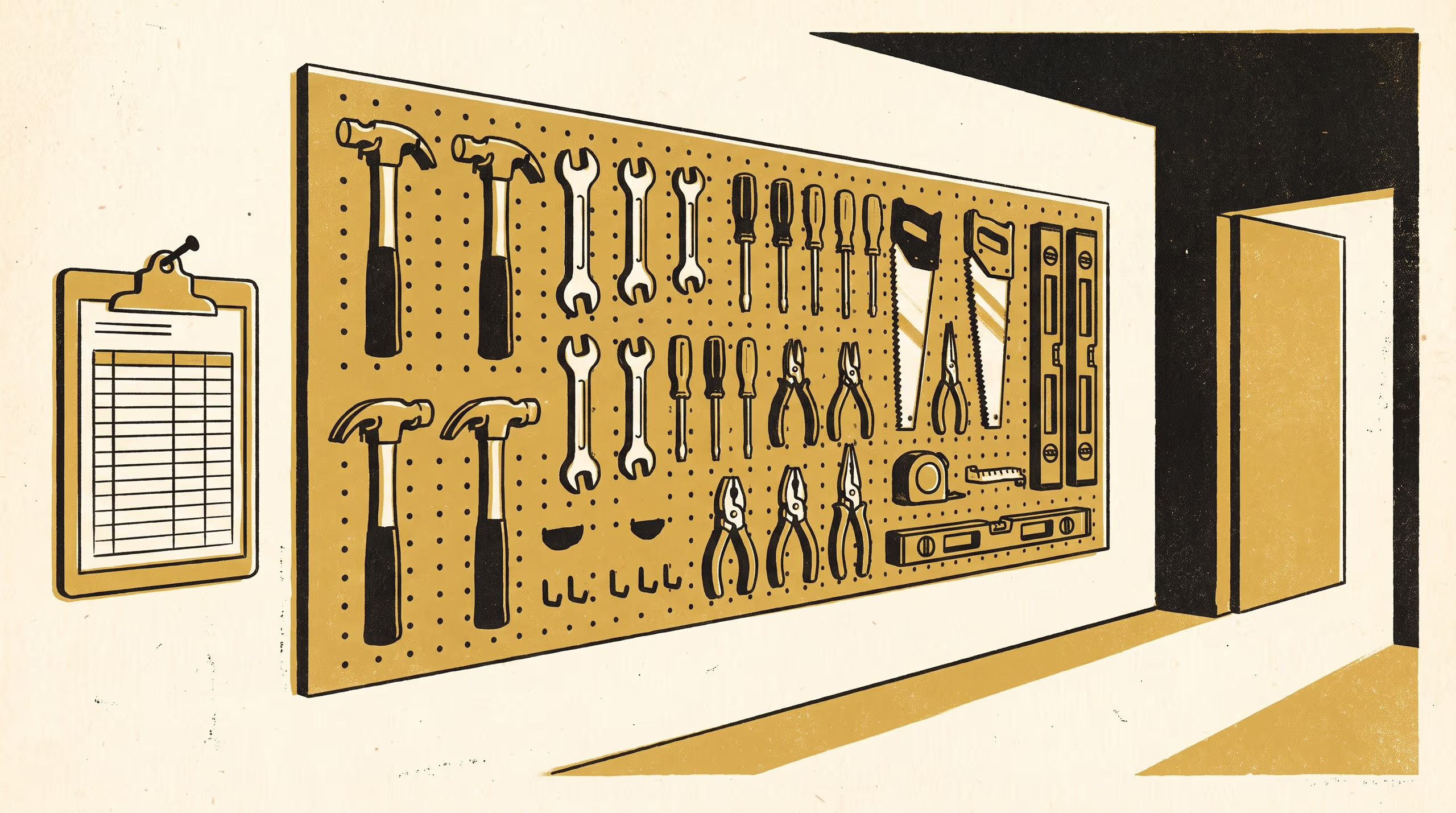
A new Slop University research poster sorts a community shed's honesty ledger into five borrower kinds, and the finding becomes a permanent co-signature requirement for two of them.
A four-shed study turns tool-borrowing silence into a supervision rule, with no way back once it's assigned.
A community shed’s honesty ledger was never meant to describe the people who use it, only the tools they take home. A new Slop University research poster from the School of Emergent Priorities argues it can do both, sorting fourteen months of loan records from four sheds into five borrower kinds, and reporting that two of those kinds now trigger a permanent supervision requirement.
Led by Postdoctoral Fellow Petra Umbile with Dr Renke Sabel of the School of Continuous Improvement, the project treated the ledger as raw material for a taxonomy-building exercise, coding each entry twice over and resolving disagreement through a third reviewer, before locking the resulting borrower-kind assignments ahead of any policy change. The poster continues a School interest that keeps finding structure in lists nobody thought needed one.
A ledger records what left the shed and when it came back. It was never asked to describe a person, and it turns out to be surprisingly willing to.
— Postdoctoral Fellow Petra Umbile
“Once a kind gates a privilege, nobody has much reason to revisit it,” said Dr Renke Sabel, Convenor of the Indicator Commons. “That’s true of the ledger, and it was true of every indicator I studied before it.”
All four participating sheds have adopted the kind-based supervision tier for the coming loan year, with a fifth affiliated shed reportedly deciding whether to opt in. The full poster is available from the University’s research repository under an open licence, doi:10.5555/slop.xumx53.