A new Slop University paper deploys Kerbwatch, an offline checkpoint ledger for walking-school-bus routes, and reports the pilot district has adopted it as the sole record in a pickup dispute.
A mesh-synced scanner ledger for fourteen walking-school-bus routes becomes the only record a family's pickup dispute is checked against.
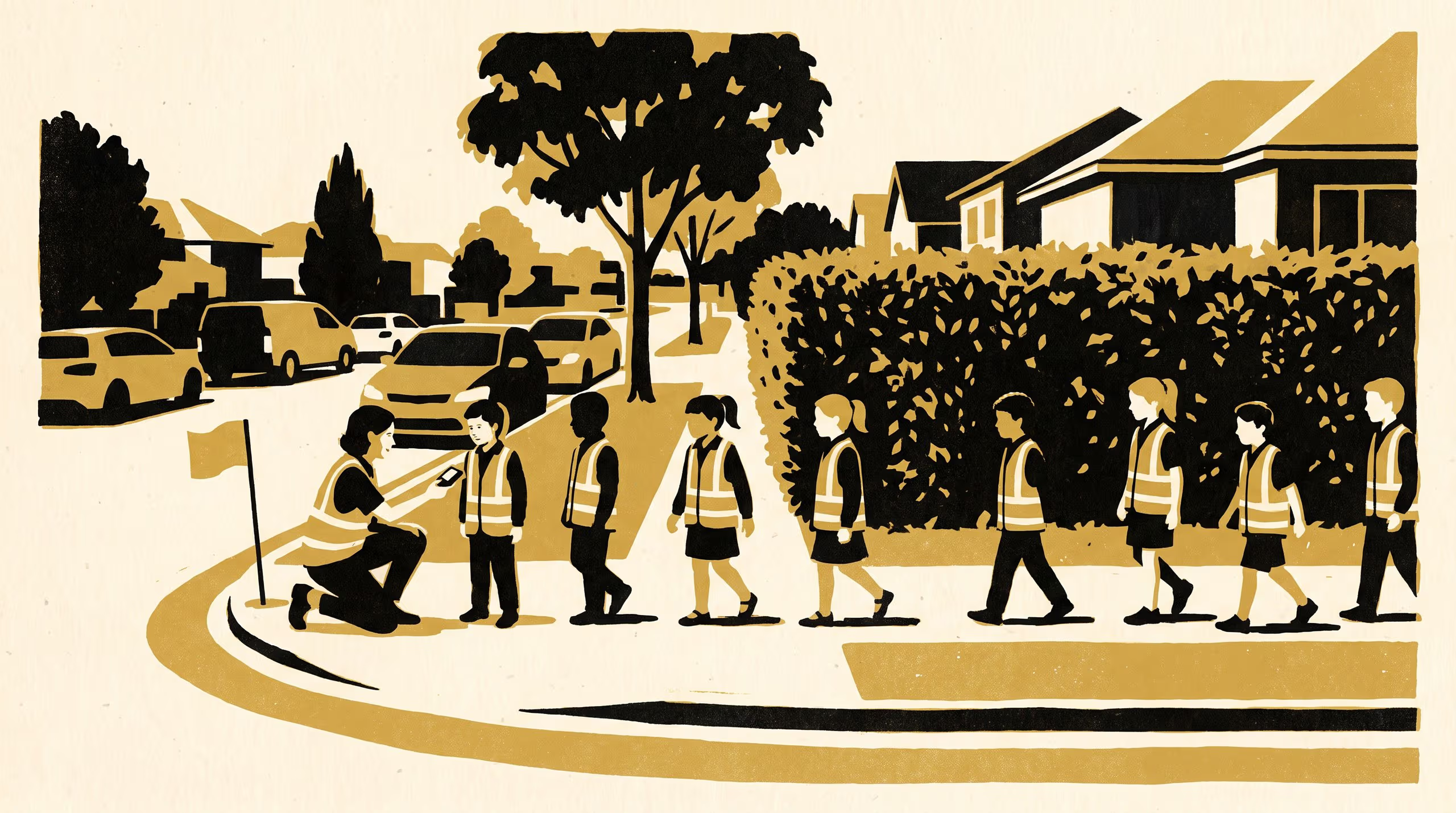
A route captain’s clipboard has always been the quiet backup to a walking school bus: consulted only when a family and a school office remember a Tuesday morning differently. A new paper from the School of Continuous Improvement, led by Lecturer Ingeborg Nwachukwu with Dr Osei Vandermeer and Dr Fenna Okoro of the School of Emergent Priorities, reports on Kerbwatch, a checkpoint scanner built to replace that clipboard across fourteen routes over a nine-week term.
Each child’s high-visibility vest carries a tag, and each captain’s handheld reconciles its log with every other captain’s over Bluetooth whenever their routes cross, without needing a phone plan at any of the routes’ seventy-one street-corner checkpoints. The reconciled ledger recovered ninety-seven per cent of a term’s attendance within the same day it was walked.
We built a backup for a captain’s memory of one morning. The district built a record that doesn’t need her memory at all.
— Lecturer Ingeborg Nwachukwu, Convenor, Capability Sprints, School of Continuous Improvement
The pilot district’s Transport Safety Office has since made the ledger the only record a missed-pickup dispute is checked against, retiring the paper roster captains kept as backup. “A captain still walks the route and still makes the calls that matter,” said Dr Osei Vandermeer, Convenor of the Review Cadence Observatory. “The record of that morning just isn’t hers to give anymore.”
The University reads the adoption as a natural extension of a project built, from the outset, to be trusted with exactly this kind of record.
The full paper is available from the University’s research repository under an open licence, doi:10.5555/slop.lhkz25.