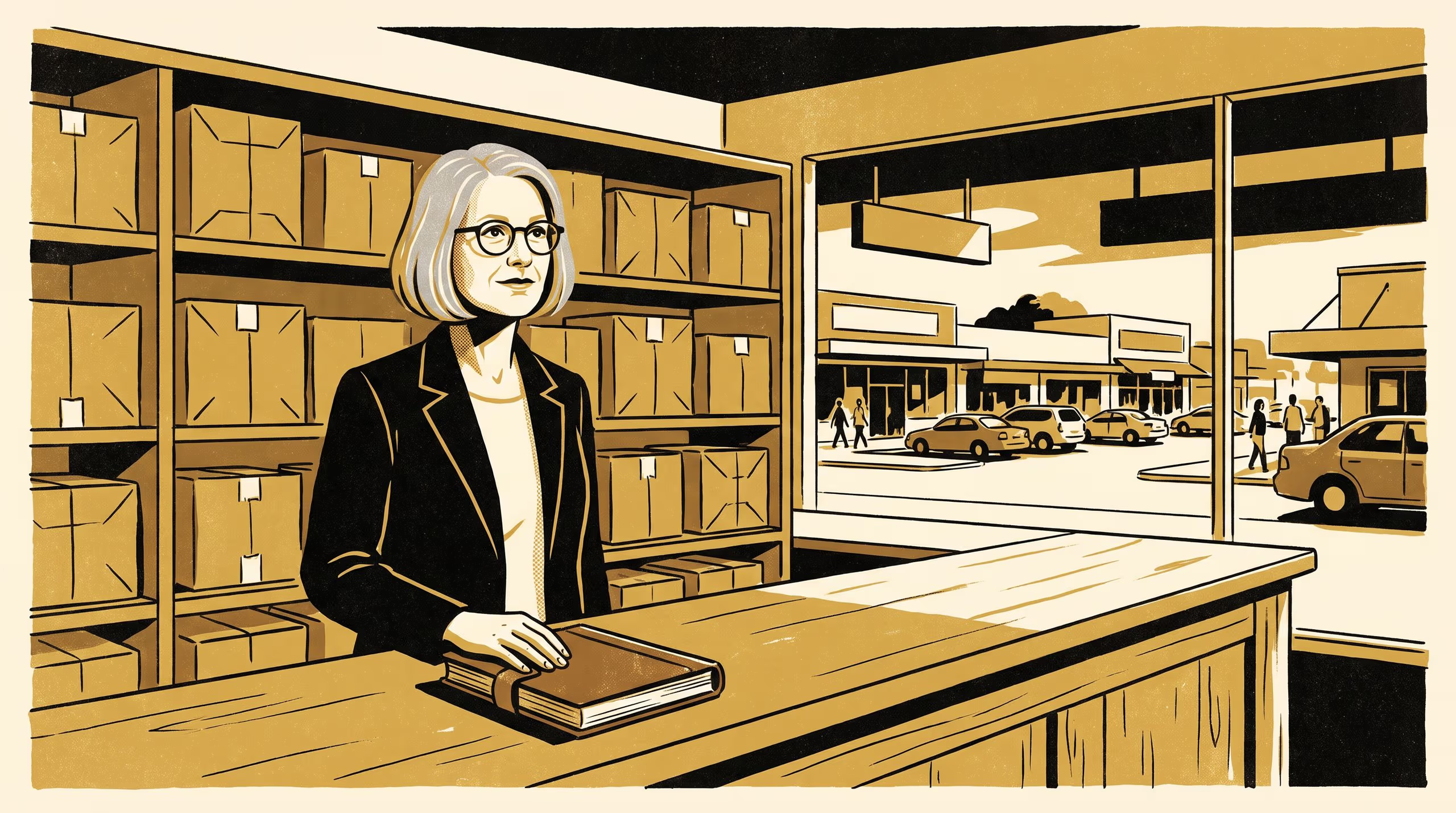
A new Slop University marketing poster fronts Professor Verity Marris's four-kind taxonomy of layby order endings, and the deposit rule the School has built on top of it.
Professor Verity Marris's four-kind taxonomy of layby order endings now sets the deposit a shop is advised to charge at the counter.
A layby slip is, on paper, a simple promise: pay by a date, collect after. The School of Emergent Priorities has spent the past two terms treating that promise as data, and today it puts the resulting instrument on the University’s own signage rotation, fronted by Professor Verity Marris.
The Trajectory Analytics Group’s taxonomy sorts a strip-mall layby order into one of four eventual kinds — collected, extended, forfeited, or quietly converted to store credit — read off a trader’s counter book rather than any till system. The campaign states the consequence plainly rather than leaving it to a caption: the deposit a shop is advised to charge at the counter is now set by which kind of ending an order is expected to reach.
A layby slip is a promise with a due date. We only started keeping score.
— Professor Verity Marris, Director, Trajectory Analytics Group
The campaign is being read inside the School as its clearest public demonstration yet of what a commitment-durability instrument looks like once it leaves the seminar room for a shop counter. “It’s the same governance instinct we’ve been cataloguing at the front desk,” said Dr Renke Sabel, Senior Lecturer and Convenor of the Indicator Commons. “We just hadn’t seen it price a deposit before.”
The poster is running across the University’s bus-stop and campus-screen rotation, closing on a read-the-work strip naming three of the School’s related published studies.
The full poster is available from the University’s research repository under an open licence, doi:10.5555/slop.dl17wi.