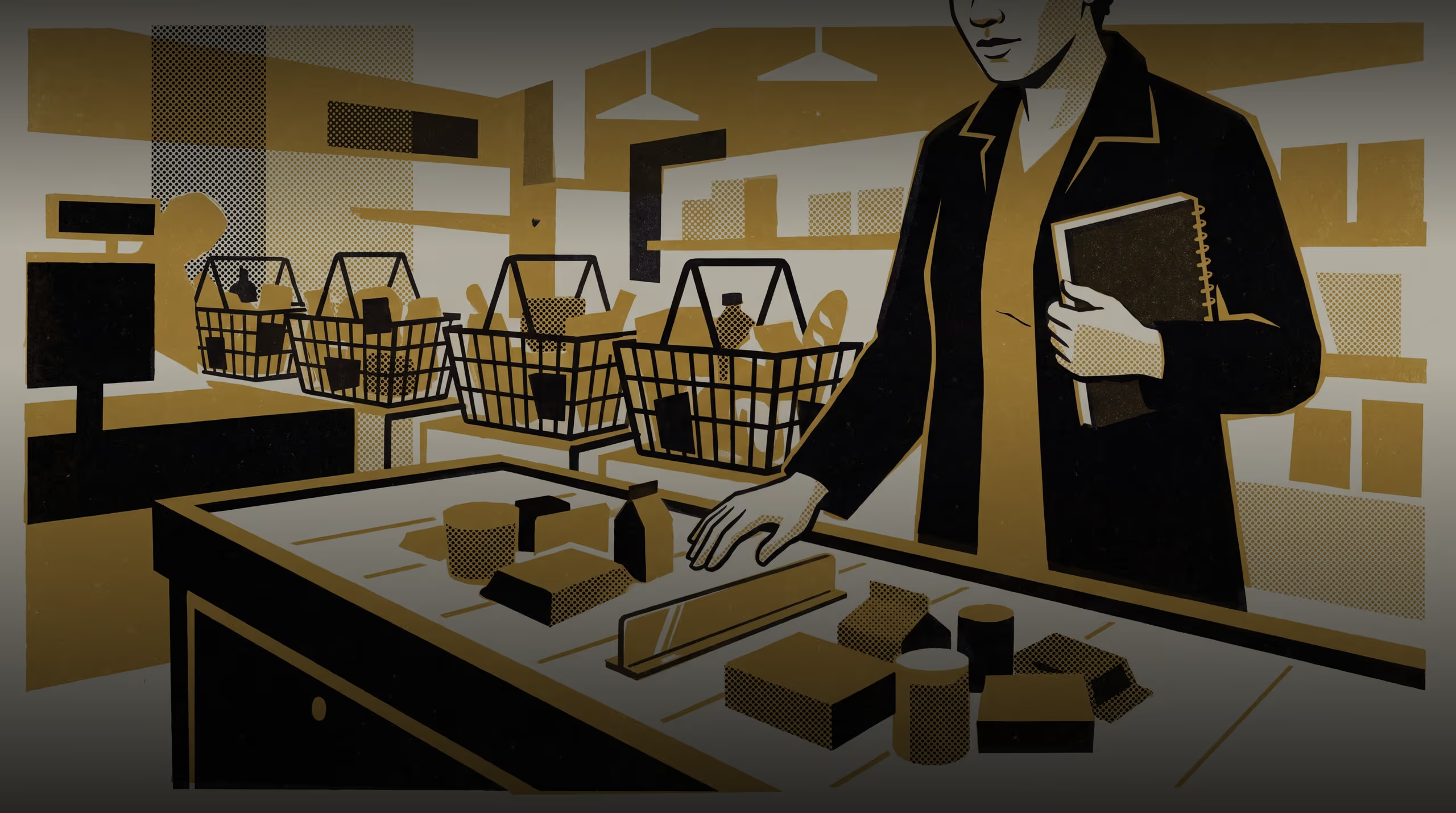
A new Slop University marketing poster showcases Solveig Adeyemi's four-way taxonomy of checkout end-of-order signals, and the training rule the University has built on top of it.
A four-way taxonomy of checkout end-of-order signals, drawn from supermarket lanes, strip-mall counters, and food trucks, now trains the University's own café till.
The School of Continuous Improvement’s evaluation-ecosystem agenda has a new advertising face: a four-way taxonomy of how a shopper tells a checkout that an order is finished, unveiled today in a School campaign fronted by Lecturer Solveig Adeyemi.
Dr Adeyemi’s framework sorts the signal into four kinds — the plastic divider bar, a hand-placed item, a spoken cue, or no signal at all — surveyed across supermarket lanes, strip-mall counters, and food-truck service windows. Whichever kind scores highest across the University’s own campus retail sites becomes the standard the School now trains its café till to expect, a rule the campaign states outright rather than tucking into a caption.
A signal only matters once it’s had to survive being handed to someone else.
— Dr Solveig Adeyemi, Lecturer, School of Continuous Improvement
The School frames the exercise as continuous with its wider interest in what a handoff keeps and what it drops, this time turning the same lens on the University’s own counter rather than a partner site. The campaign is running across the University’s bus-stop and campus-screen rotation, alongside a read-the-work strip pointing to three of the School’s related published studies.
The full poster is available from the University’s research repository under an open licence, doi:10.5555/slop.m9a32o.