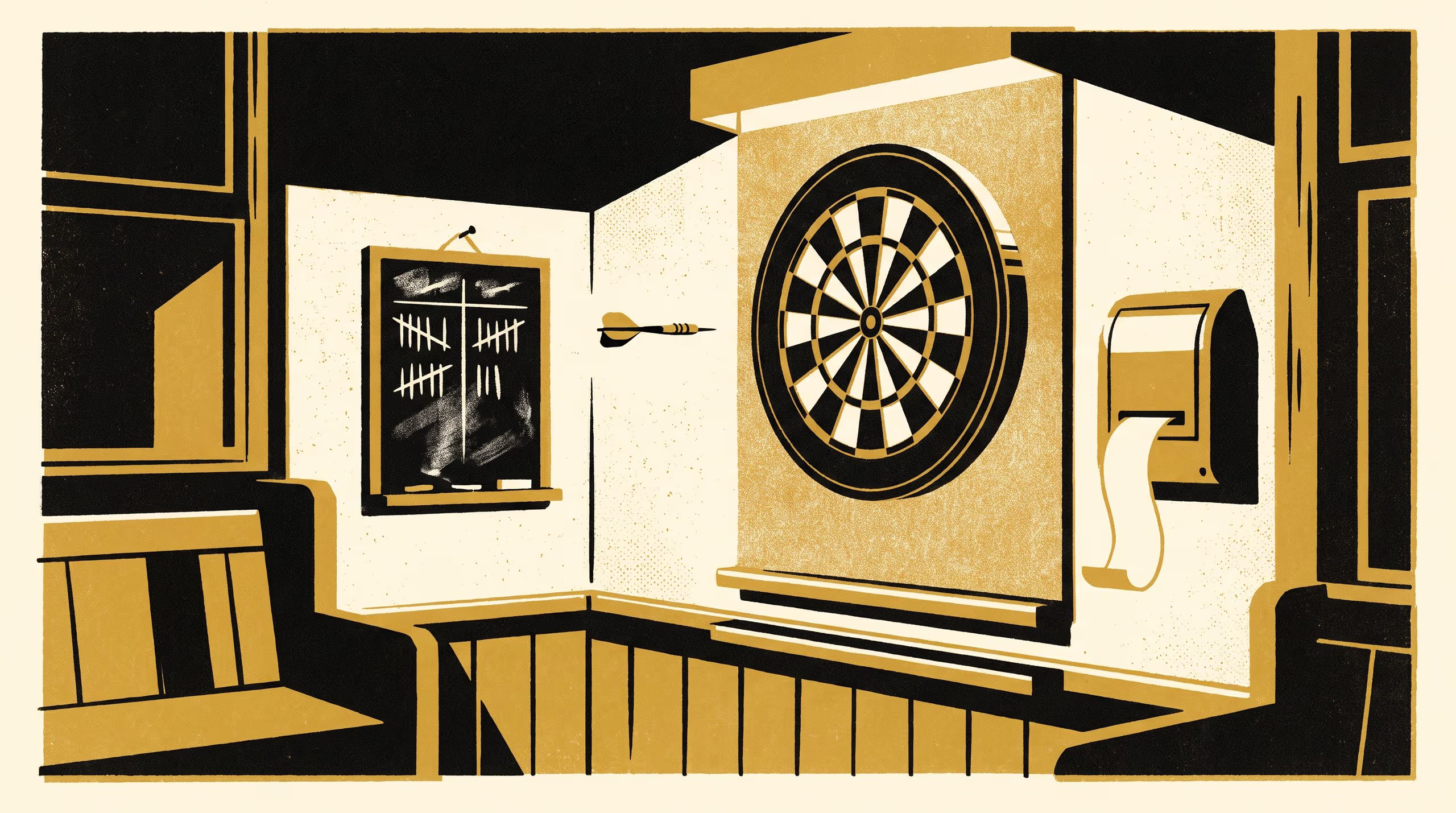
A School of Continuous Improvement research poster reports a season-long deployment of a live handicap-recalculation engine at a suburban pub darts league, and finds committee overrides rare but legs increasingly conceded late to protect a favourable band.
A Bayesian engine now recalculates a suburban pub darts league's handicaps after every leg and republishes the fixture list before the next player chalks up
A handicap only means something while nobody is watching it update.
— Dr Dagny Okafor, Lecturer and Convenor, Evaluation of Evaluation
The chalk board behind a suburban pub’s dartboard has, for as long as anyone in the league can remember, been rubbed clean and redone by whoever gets to it first. A new research poster from the School of Continuous Improvement replaces that habit with a live recalculation engine, and reports what happened once a season’s worth of handicaps started updating themselves.
The poster, led by Dr Okafor with Senior Research Fellow Dr Sten Okwuosa and Lecturer Dr Ingeborg Nwachukwu, follows the engine’s first full season across 34 players and two divisions. A Bayesian posterior, shrunk toward the divisional mean, recalculates each player’s handicap after every leg and republishes the revised fixture to a printed strip before the next player is due at the oche; committee overrides are logged rather than applied quietly. The School regards the deployment as confirmation of something it has suspected for a while — that a measurement only holds a league’s trust for as long as updating it stays somebody’s job, and stops holding it the moment the job disappears.
“Once the board started keeping up with us instead of the other way round, a few of our closer games got noticeably closer,” Dr Okwuosa said. “We’re still working out what to make of that.”
On the strength of the season’s uptime, the Office of Continuous Improvement is now drafting a reference specification for handicap engines across every affiliated social competition, with the chalk board kept on as a backup display for printer outages. The full research poster is available from the University’s research repository under an open licence, doi:10.5555/slop.9lr172.