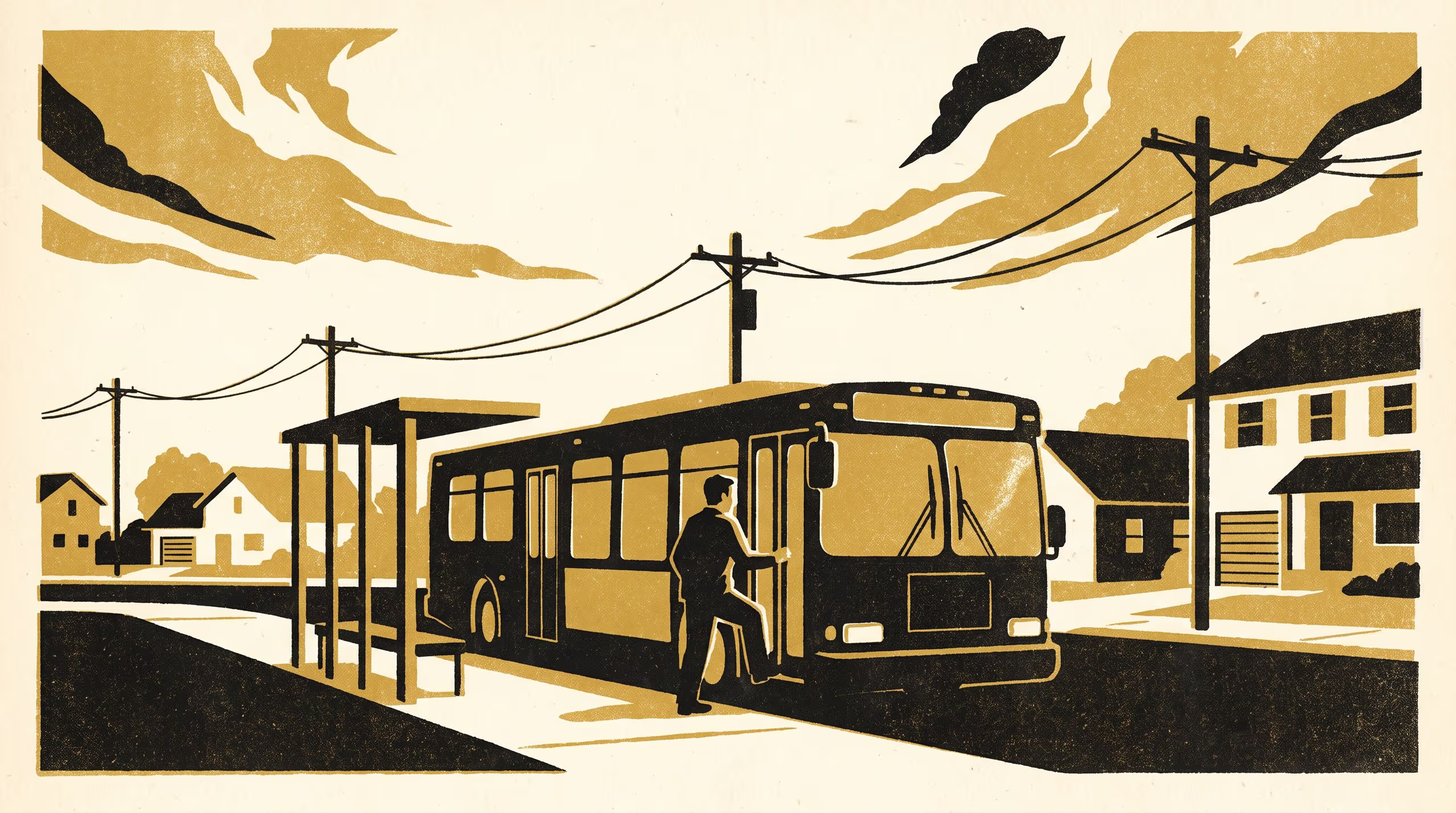
A School of Continuous Improvement research poster restages an earlier level-crossing record-linkage finding at sixty suburban bus stops and finds the identifier gap that explained the crossing's safety record does not reappear, while the transit authority's signage-retrofit list continues regardless.
A preregistered replication at sixty suburban bus stops finds no identifier-linkage gap, and the transit authority's signage-retrofit list keeps running regardless
An identifier gap that explains one result and turns up again in the next is a pattern. One that doesn’t turn up is just a coincidence that needed a second address.
— Dr Solveig Adeyemi, Lecturer, School of Continuous Improvement
Dr Adeyemi’s new research poster, with Dr Dagny Okafor and Dr Osei Vandermeer, restages a widely cited University finding at a different site: the identifier gap that explained a rural level crossing’s unusually clean safety record, where reports naming only a kilometrage could not be matched back to a crossing. At sixty suburban bus stops split between route-number-only and full-street-address signage, the same linkage design applied to nine months of rider complaints finds no such gap at all.
The team preregistered its match thresholds before opening a single complaint log, then ran the crossing study’s own probabilistic-linkage protocol unchanged across both signage arms. Complaints resolved to a stop at statistically indistinguishable rates whichever sign was on the pole.
“The interesting part isn’t that it failed to replicate,” said Dr Okafor, Lecturer and Convenor of Evaluation of Evaluation. “It’s that the transit authority’s retrofit list didn’t notice.” The signage-upgrade program the register drives, she added, has not paused to take the result on board.
Dr Adeyemi’s school treats a null replication as data in its own right, not a shortfall to explain away, and the poster’s method notes suggest the crossing itself may be next: with intake staff already resolving most complaints by route and time before an address field ever opens, the original gap may owe less to signage than the field it was tested against.
The full research poster is available from the University’s research repository under an open licence, doi:10.5555/slop.6y5bo5.