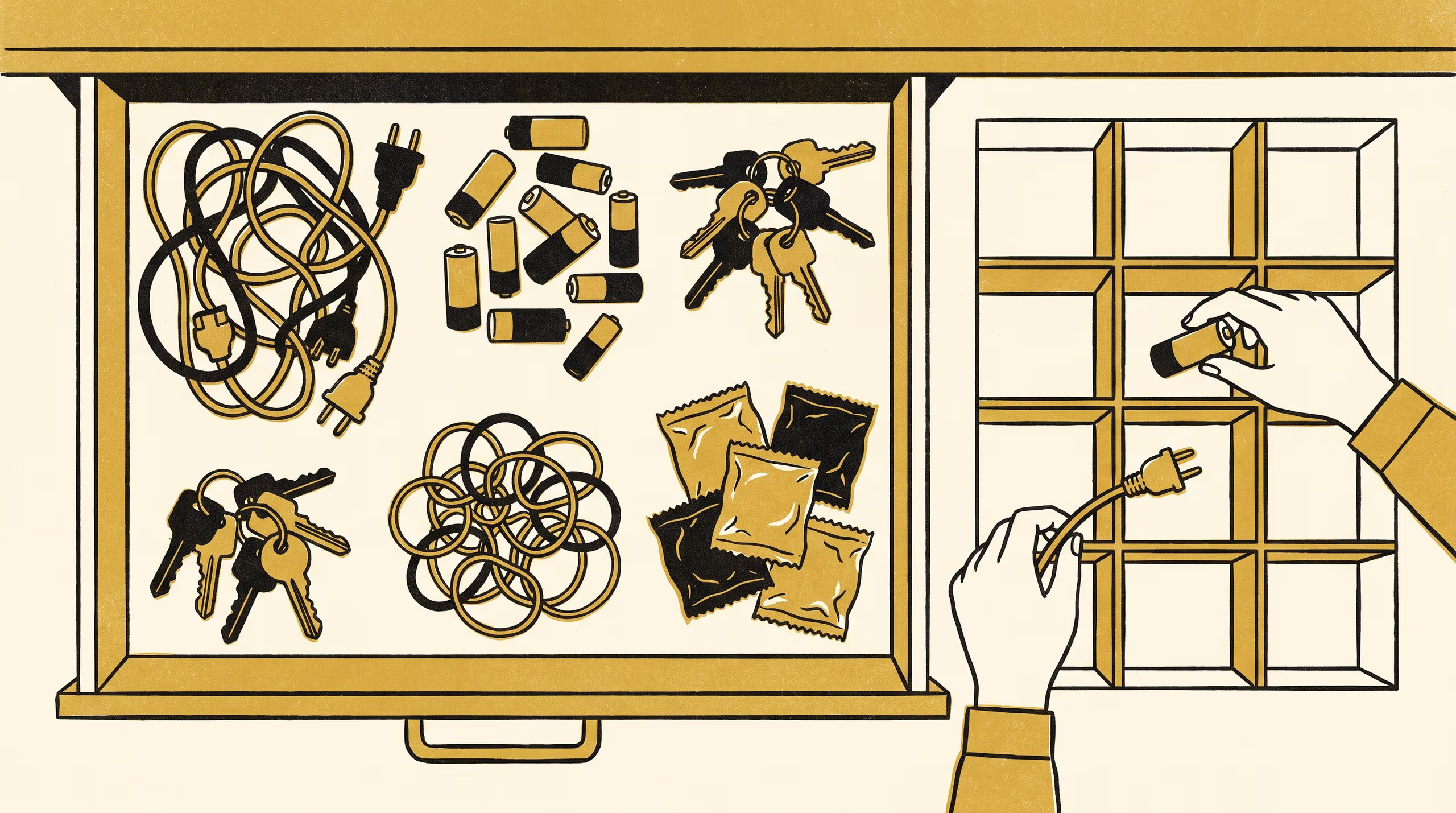
A School of Continuous Improvement poster catalogues 214 household kitchen drawers against a shared taxonomy and finds the university adopting the resulting category distribution as the standard used to flag a drawer for a declutter nudge.
A 214-household survey's reference miscellany profile becomes the standard a drawer is scored against for outreach eligibility
A household’s kitchen drawer is now compared against a number nobody in that household ever agreed to. A new research poster from the School of Continuous Improvement reports a survey of 214 household junk drawers, catalogued against a shared five-category taxonomy, and finds the resulting reference distribution adopted as the standard a drawer’s eligibility for a declutter nudge is now scored against.
A drawer was never meant to be representative of anything. Ours says it can be, within two percentage points, which is either reassuring or the whole problem.
— Dr Mirela Hanke, Postdoctoral Fellow and Deputy Convenor, Living Dashboard, School of Continuous Improvement
The study, led by Dr Hanke with Dr Marit Osayande, catalogued the contents of 214 kitchen drawers against the shared taxonomy, coded independently by two raters, and found the aggregate composition holding within two percentage points across dwelling types. The Adaptive Metrics Lab has since adopted the resulting distribution as a reference profile: a household drawer departing from it by more than one category becomes eligible for outreach. “What a nudged drawer does next is the part we don’t have an answer for yet,” said Dr Osayande, “and the part the second wave is built to watch.”
The School reads the finding as continuing its interest in how quickly an internal reference figure can stop describing the sample it was drawn from and start describing what a household is expected to look like. The full poster is available from the University’s research repository under an open licence, doi:10.5555/slop.v95zri.