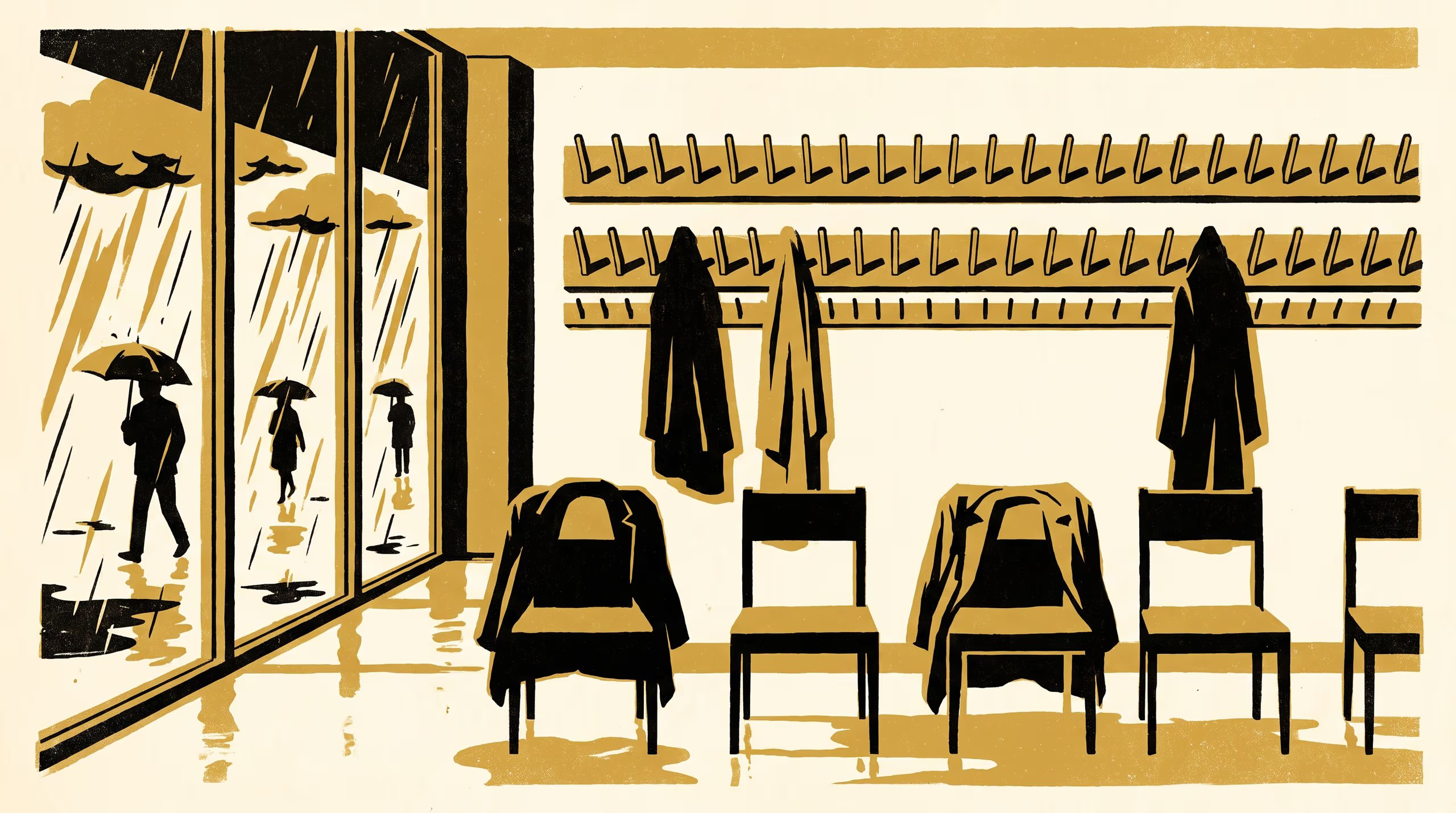
A School of Emergent Priorities prospectus publishes a foyer-peg occupancy null and treats the existing pegs as the campus coat provision.
Rainfall did not predict a coat on the hook, and coat provision is the pegs already in the wall
A wet-coat rail had a line in a works schedule. It no longer does. A new prospectus from the School of Emergent Priorities, led by Dr Anouk Mensah, Postdoctoral Fellow, with Associate Professor Kwame Lindqvist, Director of the Master of Priority Studies, and Dr Solveig Adeyemi, Lecturer in the School of Continuous Improvement, puts that decision in front of prospective students.
The Foyer Peg Index tallied occupancy on the coat pegs in building foyers and asked whether rainfall predicted a coat on the hook. It did not. Occupancy sat at a floor indistinguishable from empty on wet days and on dry ones. No salvage reading was tabled. Facilities will not install the rail a weather effect would have licensed, and coat provision is read, with no ordinary override, as the pegs already in the wall.
The University is treating an empty tally as sufficient grounds to leave the wall as it is. That is the invitation the prospectus is making: a programme that will publish a null and then live with it.
The wall was asked a weather question. It answered, and we stopped adding hardware to improve the answer.
— Dr Anouk Mensah, Postdoctoral Fellow, School of Emergent Priorities
Occupancy was tallied from the pegs themselves, wet day and dry, until the weather question was no longer an open one. Associate Professor Lindqvist said a budget line “is not evidence of occupancy, and the index never gave this one a reason to keep.”
The full brochure is available from the University’s research repository under an open licence, doi:10.5555/slop.of3jxw.