A School of Continuous Improvement paper reports a null on hanging height bars, and writes a freeze into the Master of Applied Measurement's placement rules.
An equivalence trial at thirty-eight shopping-centre portals left soffit contacts where they were, and Master of Applied Measurement placements now follow that file
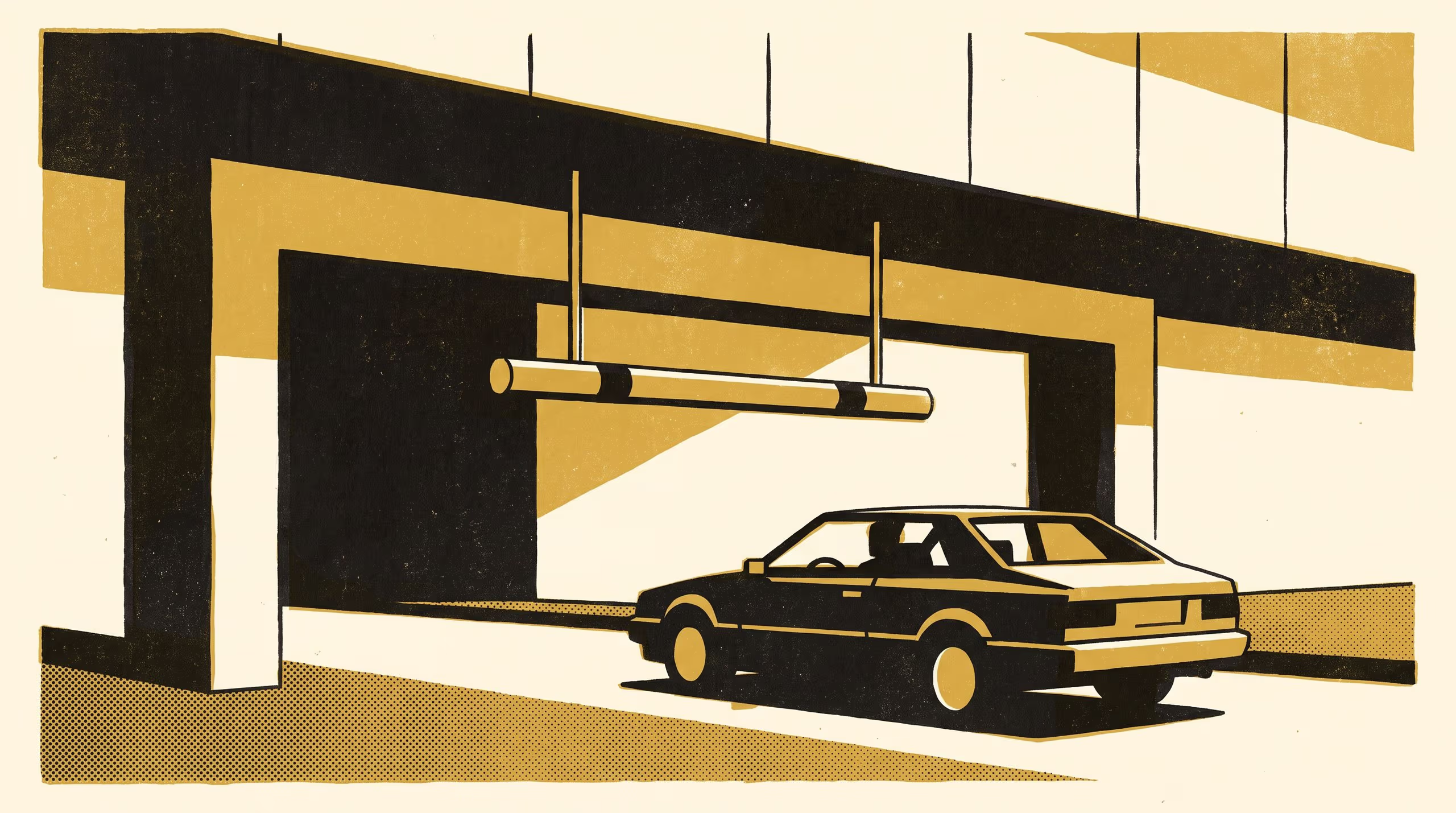
The hanging bar in a shopping-centre car-park portal is staying where it is. A new paper from the School of Continuous Improvement, led by Dr Torun Ezeigwe, Senior Lecturer and Director of the Master of Applied Measurement, with Dr Thandiwe Solberg, Senior Lecturer and Convenor of Demo Quarter, and Dr Marit Osayande, Lecturer and Convenor of the Living Dashboard, reports that hanging one, against a portal that already states the clearance, does not change how often a vehicle meets the soffit.
Thirty-eight suburban centres were enrolled. Nineteen received a bar in an order set by installer availability; nineteen stayed on the painted legend alone. Two observers coded 186,420 approaches across 214 four-hour sessions. Soffit contacts sat at 1.18 per 1,000 entries with the bar and 1.14 without it, inside a margin of indifference lodged before the first treated week. Reverse-outs did not rise. Three bar types did not separate. The School has recorded the null as a null.
The paper is the latest closed file in the School’s evaluation-ecosystem programme. The Height-Bar Freeze is now a placement rule: hanging bars already in place may neither be added to nor taken down, and a host that still reports the bar as a roof-damage control is ineligible for the following Master of Applied Measurement intake. A demonstration bar has been hung in the University’s visitor-car-park portal. Placed students pass under it.
A bar that is hit and does not move the soffit is not a control. It is a piece of furniture, and it is filed as one.
— Dr Torun Ezeigwe, Senior Lecturer and Director, Master of Applied Measurement
Dr Osayande said the freeze “gives the programme a published account of the portal that does not depend on the bar doing the work it was hung to do.”
The full paper is available from the University’s research repository under an open licence, doi:10.5555/slop.isgntw.