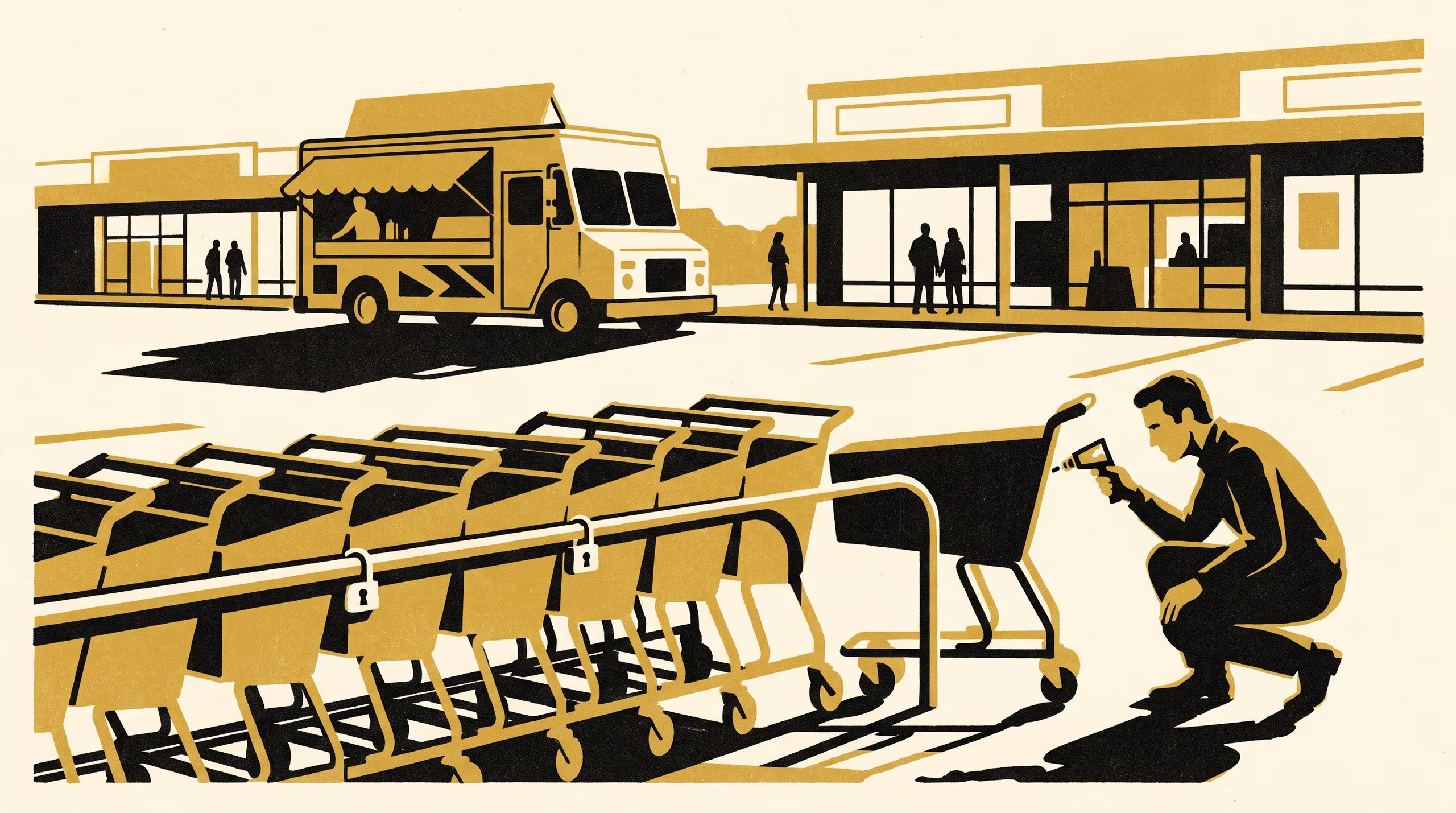
A School of Emergent Priorities paper surveys what strip-mall shoppers actually insert into trolley coin-locks, and reports the Grounds and Amenities Committee adopting the most common substitute as binding specification for the University's own visitor car park.
A nine-week census of what shoppers post through trolley coin-locks becomes the standard for the University's own visitor car park
A trolley won’t return to its bay for nothing; the coin-lock’s job is to make sure something of value goes in first. A new Slop University paper from the School of Emergent Priorities and the School of Continuous Improvement asks what, across an ordinary strip-mall car park, actually ends up in that slot, and reports the University’s own Grounds and Amenities Committee adopting the answer as policy.
Researchers spent nine weeks photographing coin-lock occupants across forty-six sites in one strip-mall precinct, sorting more than a thousand instances into a small set of categories and comparing how the pattern shifted between a major supermarket’s bays, a discount chain’s, and an independent trader’s forecourt. The Committee has taken the most common non-coin substitute as the specification the University’s own visitor-parking trolley bays will now carry.
A specification usually arrives from a standards committee somewhere else. Ours arrived from four dozen car parks deciding the same thing independently, which felt worth writing down before somebody official did it on our behalf.
— Dr Renke Sabel, Senior Lecturer and Convenor, Indicator Commons, School of Continuous Improvement
“We didn’t set out to write the University’s own car-park rule,” said Dr Iben Chikere, Lecturer, School of Emergent Priorities. “The precinct had already decided; we just noticed before the Committee did.”
It is not the first time a University committee has reached for one of its own findings instead of commissioning a fresh brief, and the Grounds and Amenities Committee is characteristically unembarrassed about being the latest.
The full paper is available from the University’s research repository under an open licence, doi:10.5555/slop.jqwglj.