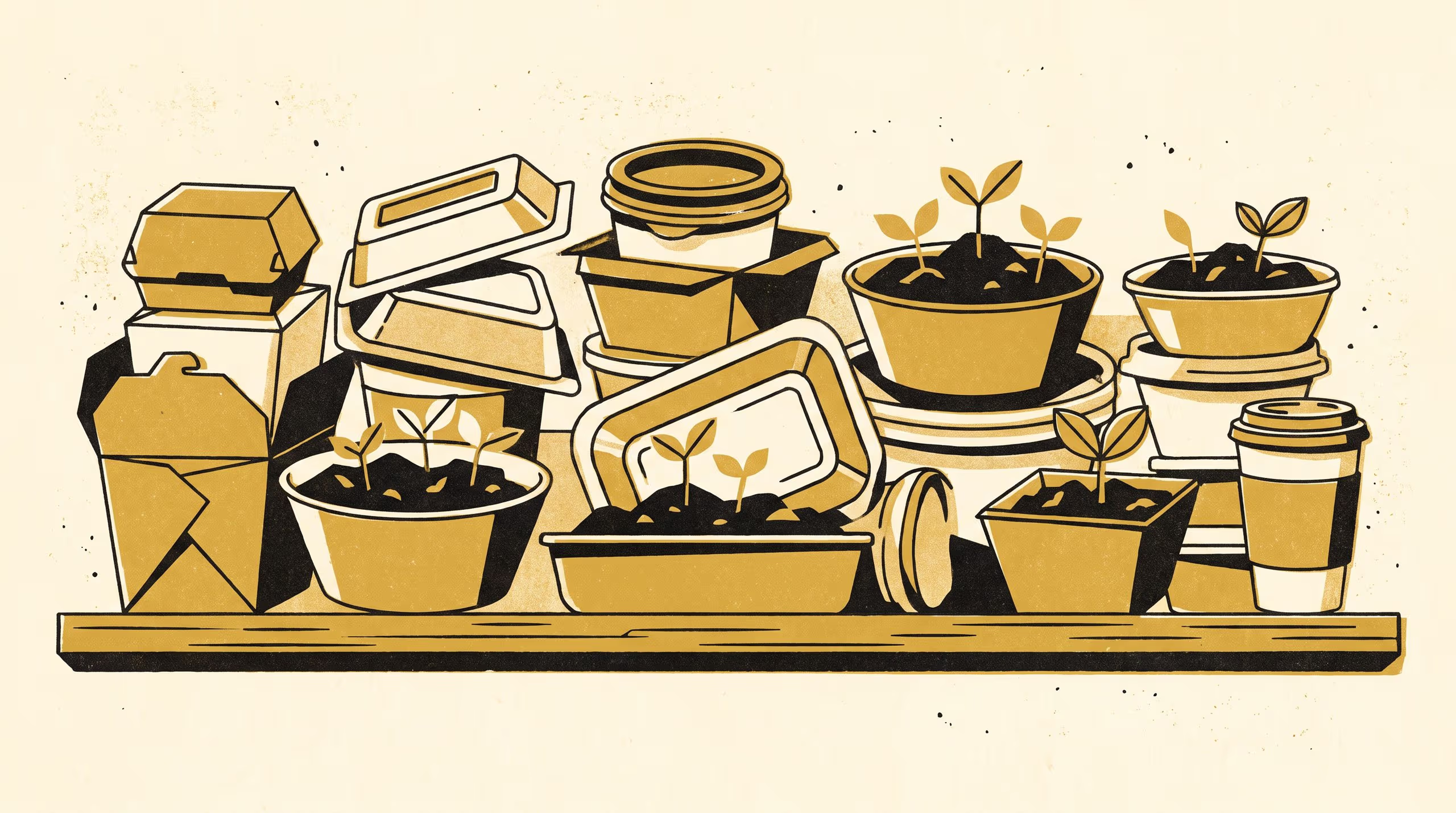
A School of Emergent Priorities research poster catalogues the unofficial second lives of the household takeaway container, and reports the resulting five-kind typology adopted as the University's mandatory pre-bin-night sorting standard, with no exception for containers that resist classification.
A 214-household audit of what a takeaway container becomes between the meal and the bin is now the University's mandatory pre-bin-night sorting rule
Most kitchen cupboards keep at least one shelf nobody planned: a stack of rinsed takeaway containers doing jobs they were never sold to do. A new Slop University research poster from the School of Emergent Priorities puts a name to what each one becomes, and reports what happened once the University started grading households against the result.
Two coders spent eight months opening cupboards in 214 households across two streets, sorting every takeaway container they found into one of five categories — from the leftover vessel still doing its original job to the ambiguous stray nobody can place. Once the categories held stable from house to house, the School’s Indicator Commons adopted them as the sorting standard households are now expected to apply before bin night, with no allowance for a container that resists the five kinds.
A category that only describes behaviour is interesting. A category a household has to sort against before the truck comes is a different kind of object entirely.
— Dr Runa Adegoke, Senior Lecturer and Convenor, Strategic Drift Survey, School of Emergent Priorities
“The interesting part isn’t the five kinds,” said Dr Mirela Hanke, Postdoctoral Fellow and Deputy Convenor of the Living Dashboard. “It’s the sixth one every kitchen has and nobody can name. We’d rather a household had to declare it than let the bin quietly absorb it.”
The full poster is available from the University’s research repository under an open licence, doi:10.5555/slop.w4v66w.