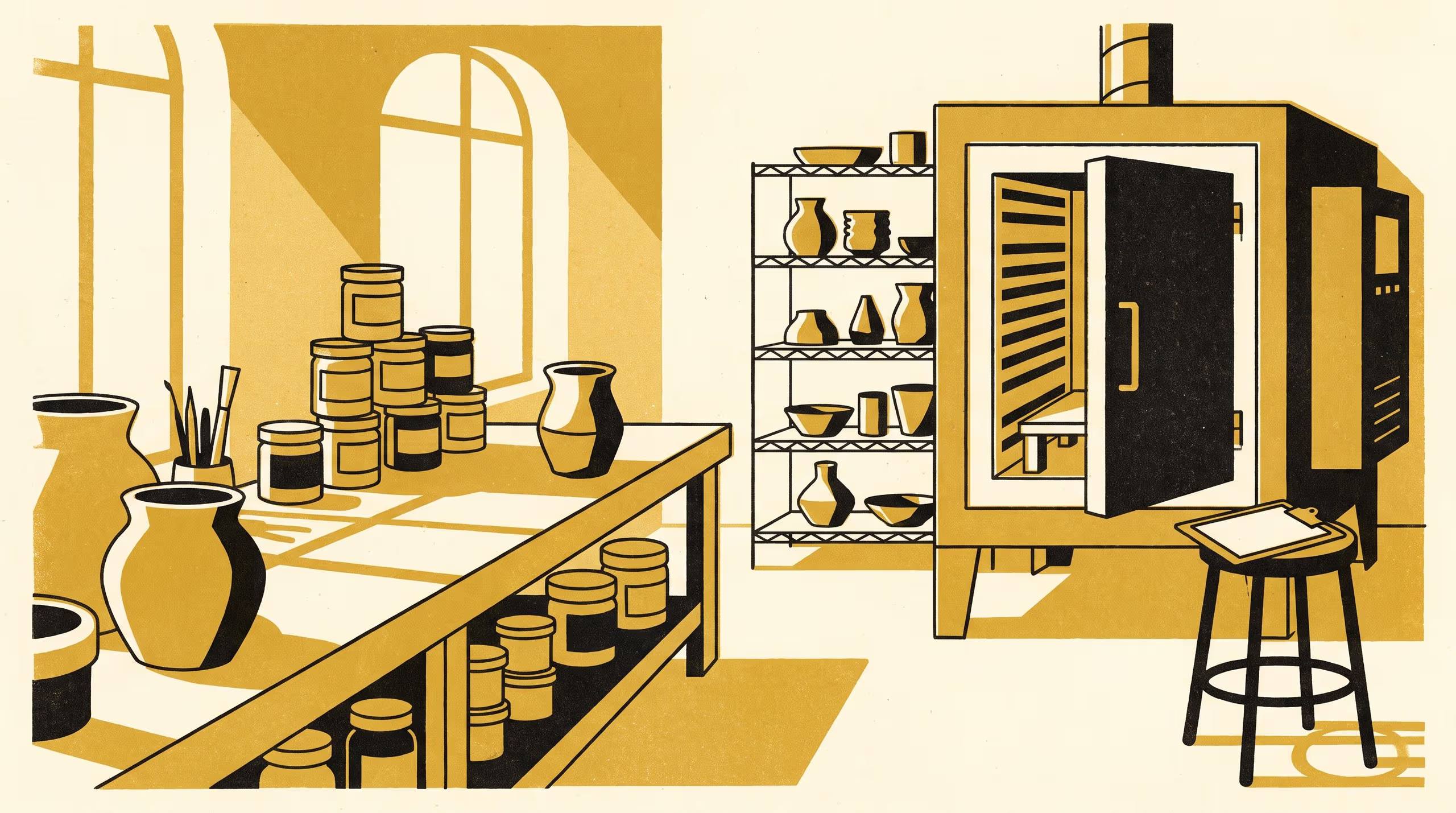
A new Slop University brochure showcases the Kiln Index, built with a volunteer-run pottery studio's firing coordinator to score supervision hours, glaze-safety checks and shelf bookings, and now used to allocate kiln time and show-shelf space.
A composite score modelled on the University's own citation conventions now decides who gets kiln time and show-shelf space
A studio’s roster was already a kind of ledger. We only asked what it would look like if someone actually balanced it.
— Dr Sten Okwuosa, Senior Research Fellow and Convenor, Impact Pathway Atlas, School of Continuous Improvement
A volunteer-run pottery studio’s firing coordinator has spent years deciding who gets the next kiln load from memory alone. Slop University’s newest brochure sets out the instrument the School of Continuous Improvement built to replace that memory: the Kiln Index, a running score the University counts as one entry in a longer, and still growing, ledger of its own civic work.
The Index folds a member’s supervision hours, completed glaze-safety checks and honoured shelf bookings into a single composite, drawing on the weighting and decay conventions the University already applies to its own research output. Participating studios have adopted the score for exactly the allocations that used to be informal: priority kiln slots and show-shelf space now go strictly by the number, with no exception carried past a single firing cycle.
Dr Fenna Okoro, Senior Lecturer and Convenor of the Horizon Register, welcomed the brochure’s wider showcase of the University’s civic instruments, saying it “says as much about what a committee decides to let go of as what it decides to keep.”
The full brochure is available from the University’s research repository under an open licence, doi:10.5555/slop.w51hau.