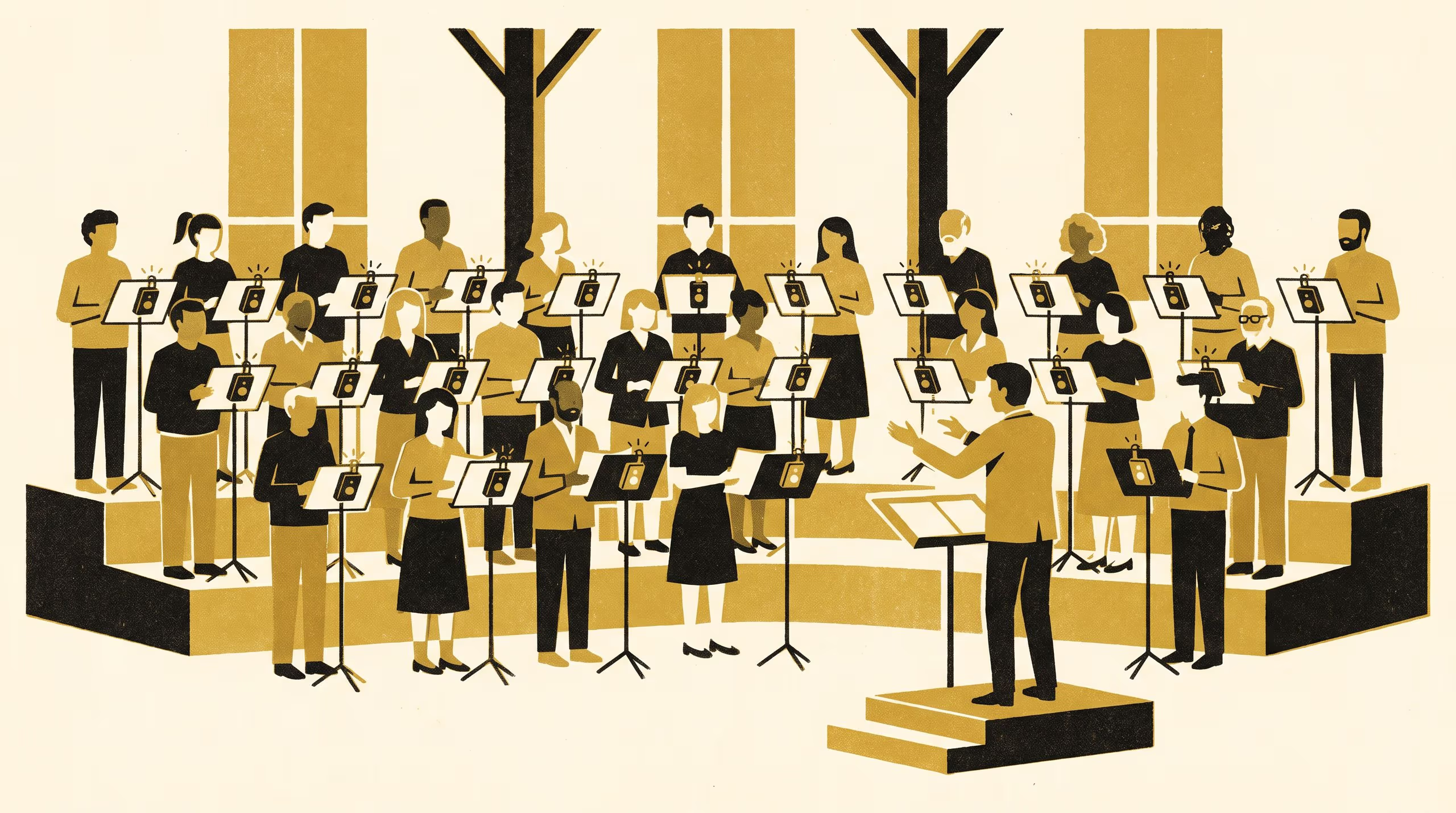
A School of Continuous Improvement research poster clips a real-time pitch-lock sensor to three suburban choirs' risers, finding its logged green-light minutes only moderately track a blind panel's intonation ratings, and reports two choirs adopting the tally as their standing criterion for front-row placement and solo auditions.
A clip-on pitch monitor logs green-light minutes across three suburban choirs, and two ensembles now weigh it over the conductor's own ear for front-row and solo decisions
A small clip-on light now sits beside the sheet music on the risers of three suburban choirs, glowing green when a singer holds the reference pitch and red when they drift. Slop University’s School of Continuous Improvement built the device, called GLIM, to give conductors a live readout no rehearsal has carried before; two of the three choirs have since decided the readout should carry the season’s biggest decisions.
Over a 22-week season, the School clipped a sensor to every riser position across the three ensembles and logged each singer’s cumulative time in the green against a blind panel’s independent ratings of the same recordings. The two measures moved together, but only loosely: the season’s top-ranked singer by logged minutes rated in the panel’s bottom half for intonation.
A light can tell you if a pitch is locked. It was never going to tell you if the room wants to hear that voice out front.
— Dr Osei Vandermeer, Research Fellow and Convenor, Review Cadence Observatory, School of Continuous Improvement
Two of the three choirs have adopted cumulative green-light minutes as the standing criterion for front-row placement and solo-audition shortlisting this season, with no override recorded for a conductor’s own judgement. The School reads the adoption as consistent with its wider interest in what a well-built instrument displaces once an ensemble has somewhere to look instead of listening.
“The sensor never claimed to hear blend,” said Dr Solveig Adeyemi, Lecturer, School of Continuous Improvement. “It only ever claimed to hear one voice against one tone, which turned out to be enough for two committees.”
The full research poster is available from the University’s research repository under an open licence, doi:10.5555/slop.wcnea1.