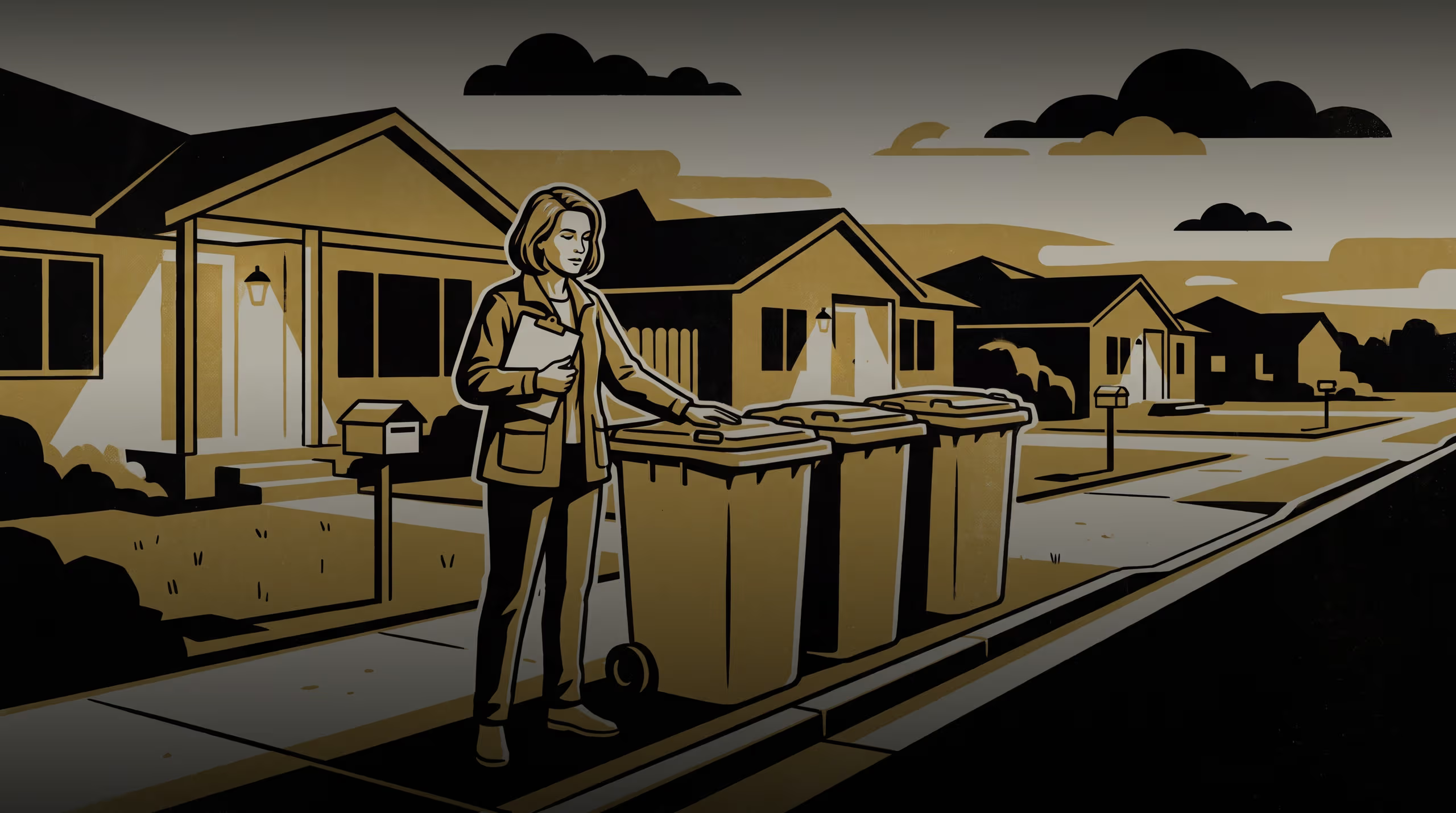
A new Slop University display campaign features Lecturer Marit Osayande, School of Continuous Improvement, and her interview study of the unspoken household arrangement behind bin night, now formalised as a charter filed to the School's Living Dashboard once the arrangement breaks.
A landscape signage panel follows Lecturer Marit Osayande's interview fieldwork on the household job nobody assigns until someone finally claims it
An arrangement that works precisely because nobody wrote it down is, by the School of Continuous Improvement’s own account, an arrangement waiting to be found. The University’s signage rotation gains a new panel today built around exactly that discovery.
Someone Always Ends Up Owning Bin Night features Lecturer Marit Osayande, Convenor of the Living Dashboard, whose interview fieldwork follows share households through the weeks before somebody starts saying “I do bins” out loud. Two consecutive missed collections, participants told her, is roughly where the silence tends to end.
The truce holds right up until someone asks for it in writing.
— Marit Osayande, Lecturer and Convenor, Living Dashboard
Where a truce breaks, Dr Osayande’s fieldwork now offers the household somewhere to land: a short charter naming who holds bin night, filed to the Living Dashboard the moment the informal version stops working. “A household that reaches for paperwork over a shared job has usually already lost something it can’t get back by writing it down,” said Associate Professor Casimir Beng, Lead of the Adaptive Metrics Lab, “which is, naturally, exactly why we keep the paperwork.” The School counts the charter among its tidier examples yet of a record arriving to hold a place goodwill used to occupy.
The panel closes with pointers to three of the University’s recent published outputs on what a household keeps once it starts keeping records. The full advertisement is available from the University’s research repository under an open licence, doi:10.5555/slop.bwgbxc.