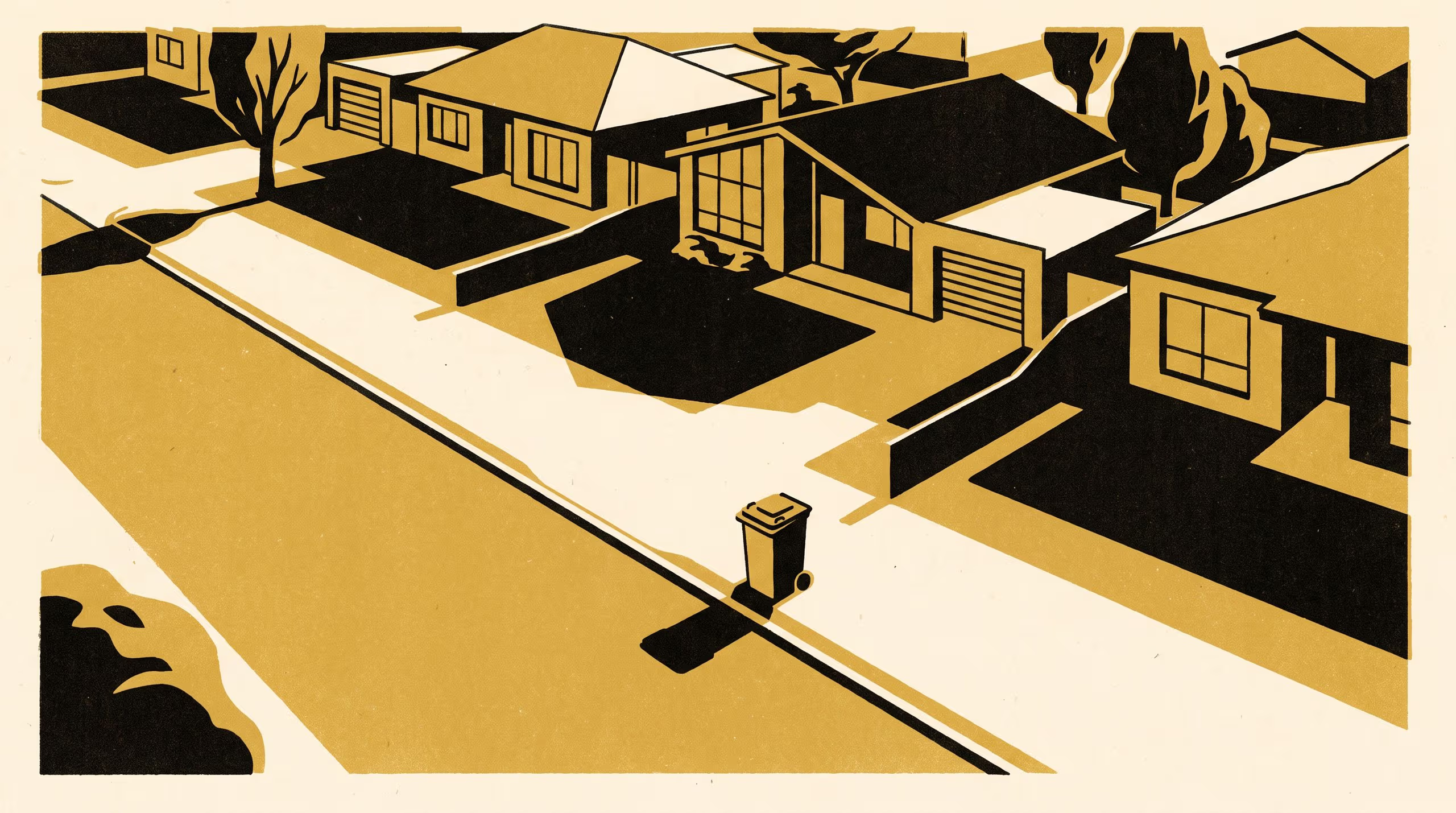
A new Slop University brochure showcases the School of Emergent Priorities' and School of Continuous Improvement's work reading naturally occurring thresholds --- a bin's weight surcharge, a fridge's discard judgement, a supermarket's markdown clock, a pool gate's self-close rule --- as research instruments already at work in ordinary homes.
A new prospectus gathers the University's household-threshold research, from a bin's weight surcharge to a pool gate's self-close rule, into one glossy case for the ordinary line
A council’s per-kilogram bin surcharge, a supermarket’s six o’clock markdown run, a pool gate’s self-closing latch: none of these was built with a research question in mind. A new Slop University brochure, published today, argues they don’t need to be.
The publication draws together work from the School of Emergent Priorities and the School of Continuous Improvement under a single premise: an institution does not need to draw its own line when an ordinary system has already drawn one for it. Each feature follows a threshold already operating in daily life and reads what happens on either side of it, drawing on eight published outputs from across both Schools.
A surcharge line was never meant to be a research instrument. That’s exactly why it makes such an honest one.
— Dr Fenna Okoro, Senior Lecturer and Convenor, Horizon Register, School of Emergent Priorities
The University frames the brochure as the clearest single account yet of how its two Schools spend an ordinary week, from the driveway to the chiller aisle. The full brochure is available from the University’s research repository under an open licence, doi:10.5555/slop.2ygdnq.