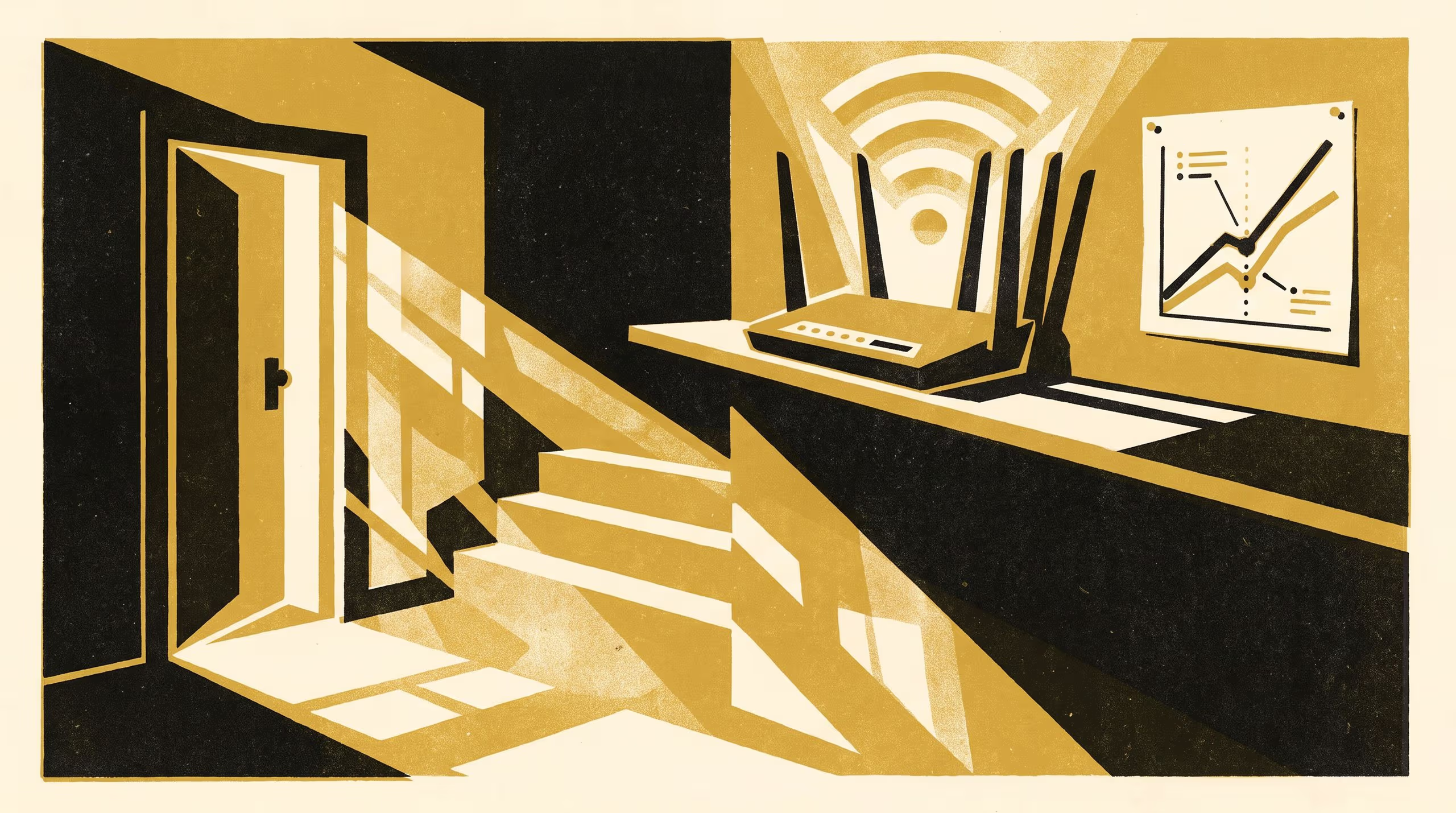
A School of Continuous Improvement poster treats a home router's rounding rule as a natural experiment and finds cutting a child off early adds minutes to the next day, not fewer.
A regression-discontinuity study of 146 households finds children cut off at a rounded daily cap use more screen time the very next day
A home Wi-Fi router’s daily screen-time cap was built to end an evening, not extend the next one. A School of Continuous Improvement research poster released today reports the opposite: children whose device was cut off within a minute of the cap used, on average, 9.4 more minutes online the following day than children left running to just under it.
The finding comes from a regression-discontinuity design that treats the router’s own minute-rounding as an accident of arithmetic rather than a parenting decision — a rounding rule that, on any given evening, splits near-identical households into “cut off” and “let run” almost at random. Across 146 households and one school term, the University finds the effect is largest on days the router’s countdown warning never fired.
A cutoff this precise was never going to sit still and be a limit. The households nearest the line are the ones treating it as something to beat, not something to observe.
— Lecturer Marit Osayande, Convenor of the Living Dashboard
The team frames the result as part of the School’s ongoing interest in what happens once a self-measuring instrument starts shaping the behaviour it was only meant to record — the same drift its Living Dashboard project tracks across workplace settings, now found on a hallway shelf. A randomised follow-up, varying the countdown warning’s timing independently of the cap itself, is planned for the next school term.
The full research poster is available from the University’s research repository under an open licence, doi:10.5555/slop.nsvac8.