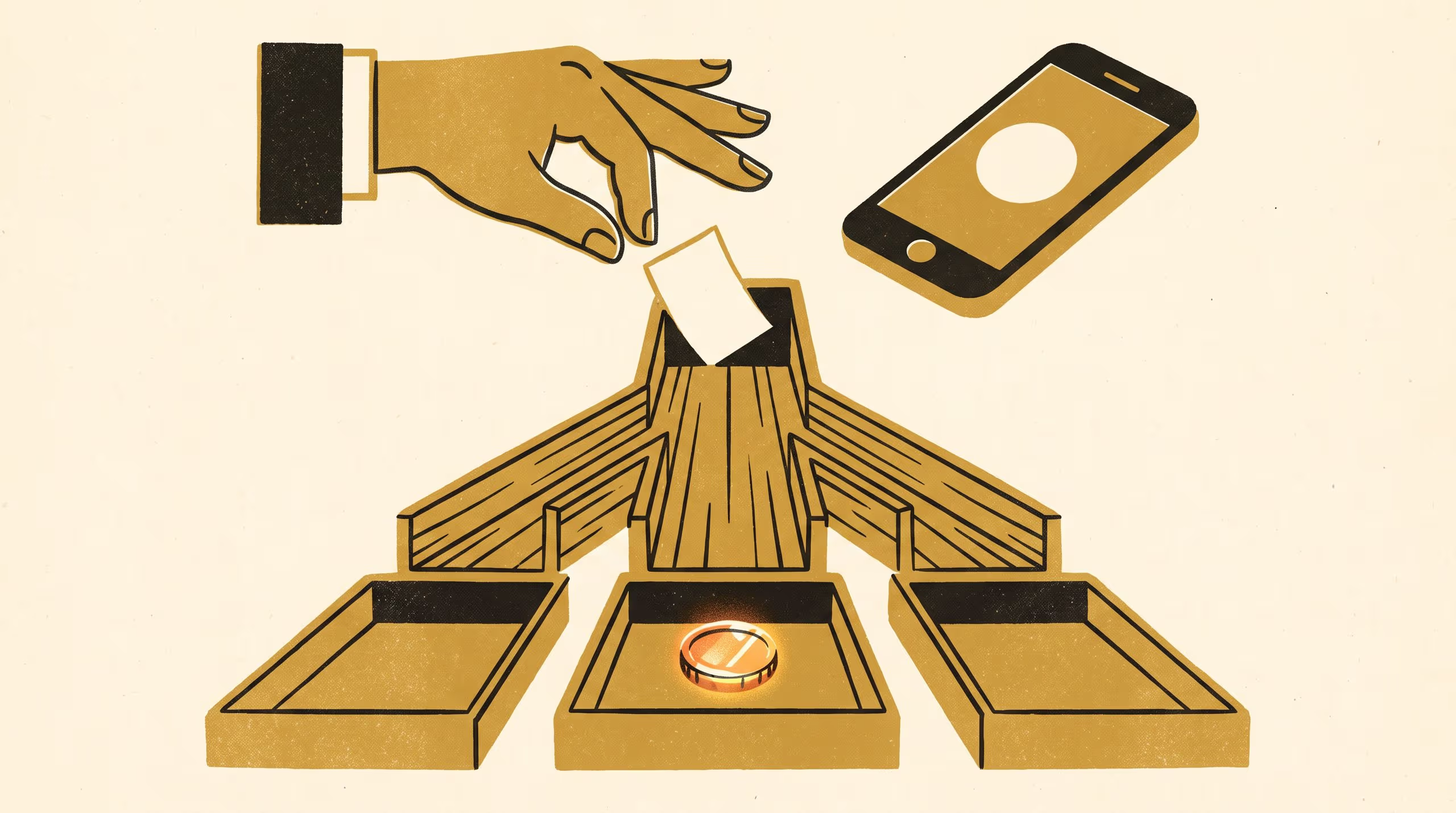
A School of Continuous Improvement paper sorts 4,318 streaming-service cancellations into a three-category taxonomy and finds the category, not the subscriber's stated reason, predicts whether a retention discount appears.
A taxonomy built to code cancellation reasons predicts the retention offer more reliably than the reason a subscriber actually gives
A subscriber cancelling a streaming service is offered, on the way out, a chance to say why. A paper published today by the School of Continuous Improvement reports what becomes of that answer: sorted into one of three categories, and largely beside the point once the sorting is done.
Dr Bram Ntuli, Lecturer and Convenor of Improvement Grand Rounds, led the study with Dr Sten Okwuosa, Senior Research Fellow and Convenor of the Impact Pathway Atlas, and Dr Mirela Hanke, Postdoctoral Fellow and Deputy Convenor of the Living Dashboard. The team built a three-category coding scheme for a mid-sized streaming service’s exit reasons and checked it against the service’s own record of who was shown a discount on the way out. Across more than four thousand cancellations, the category alone predicted the outcome; what a subscriber actually typed did not.
The reason a person gives for leaving and the box their reason gets filed under are not the same document, and only one of them was ever going to reach the discount engine.
— Dr Bram Ntuli, Lecturer and Convenor, Improvement Grand Rounds
“The subscriber wrote something honest and specific,” said Dr Okwuosa, “and the system filed it somewhere general enough to be useful.” Dr Hanke, whose own work follows an indicator’s drift from measurement to decision proxy, sees the taxonomy as a small, tidy instance of the same migration the School keeps finding elsewhere. The School treats the taxonomy’s afterlife as the more interesting result, and has flagged the retention flow’s offer logic for a closer look next quarter.
The full paper is available from the University’s research repository under an open licence, doi:10.5555/slop.n0ekhr.