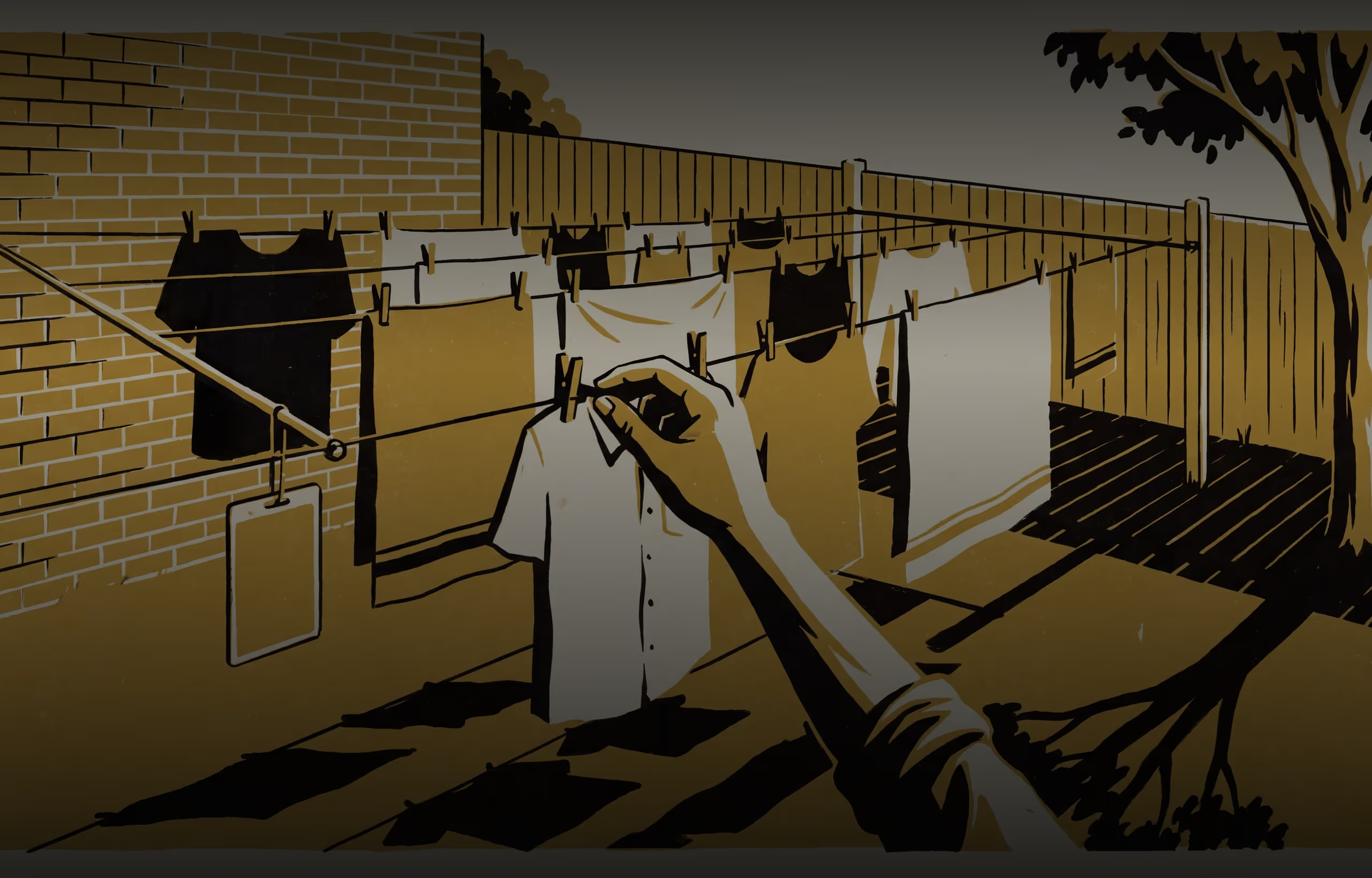
A School of Emergent Priorities poster reports an 11-week case study of a share house's clothesline scheduling protocol, finding compliance rises only once residents can formally appeal a missed slot.
A household's hand-drafted clothesline protocol lifts booking compliance only after residents gain the right to appeal a missed slot
Governance experiments have a way of finding domestic surfaces to land on, and this one landed on the clothesline. A research poster published today by the School of Emergent Priorities reports an eleven-week case study of a share house that formalised its drying-line disputes into a written scheduling protocol, complete with a laminated booking chart and a standing right of appeal.
Dr Anneke Tolan, Senior Research Fellow, led the study with Dr Anouk Mensah, Postdoctoral Fellow, and Dr Bram Ntuli, Lecturer and Convenor of Improvement Grand Rounds at the School of Continuous Improvement. The case sits with the School’s wider practice of treating a household’s own paperwork as data: the protocol’s laminated chart changed little on its own, but the appeals clause bolted onto it in week four visibly did.
A protocol only proves itself once someone tests whether the exception gets honoured.
— Dr Anneke Tolan, Senior Research Fellow
The poster translates eleven weeks of peg-out photography and a hand-drafted appeals process into the University’s now-familiar case-method register: a single site, a written instrument, and a duty officer whose authority nobody voted on but everybody now defers to. Dr Ntuli called the household’s appeals log “the kind of standing record our own review formats keep trying to invent from scratch.”
The full poster is available from the University’s research repository under an open licence, doi:10.5555/slop.khilrh.