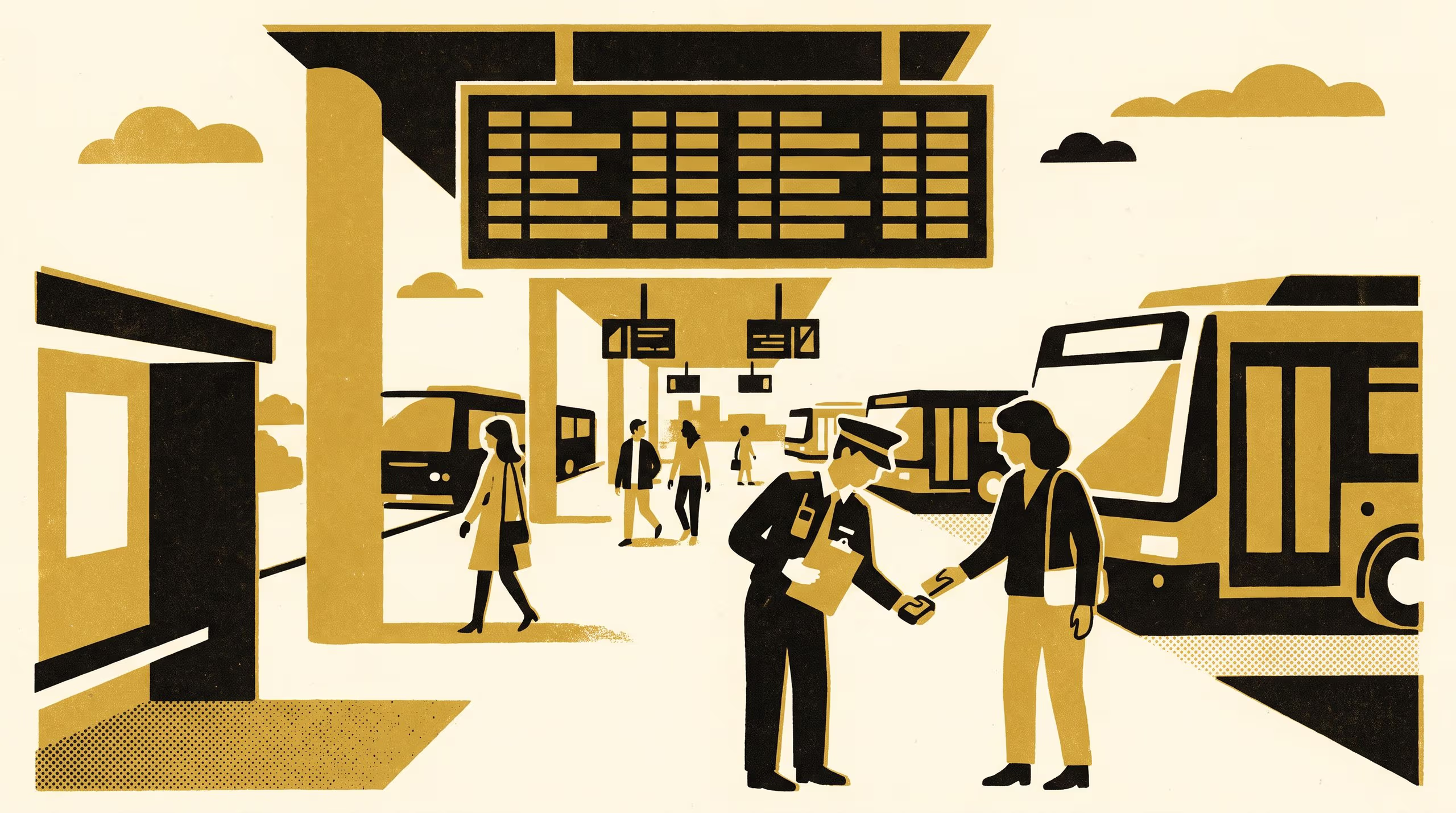
A research poster from the School of Emergent Priorities finds the largest of four transfer categories at a suburban bus interchange is one where the timetable logged success and no passenger boarded either connecting service.
A quadrant audit of one suburban interchange's logged connections against passengers' own smartcard records
At one suburban interchange, a transfer counts as met the moment a connecting service’s doors are still open at the scheduled buffer. Whether a passenger is behind them has never entered the count until now.
A research poster from the School of Emergent Priorities, led by Senior Lecturer Fenna Okoro with Dr Marek Solheim and Dr Iben Chikere, cross-references eleven weeks of the interchange’s own control log against matched smartcard boarding records, sorting each of 214 scheduled transfers into a four-cell quadrant of what the log says and what the platform shows. The University reads the exercise as further proof of its conviction that a record and the event it describes are owed separate scrutiny.
A log and a passenger are two witnesses to the same moment, and the University has only ever taken one of their statements.
— Senior Lecturer Fenna Okoro, Convenor, Horizon Register
The team paired the interchange’s real-time control log with tap-on and tap-off pairs across six routes, pre-registering the quadrant’s cell boundaries with the interchange’s own duty roster before a single transfer was classified.
Dr Iben Chikere, who studies how a handover survives the change of hands, called the quadrant “a handover note passed between two records that were never introduced.”
The full poster is available from the University’s research repository under an open licence, doi:10.5555/slop.lexh4u.