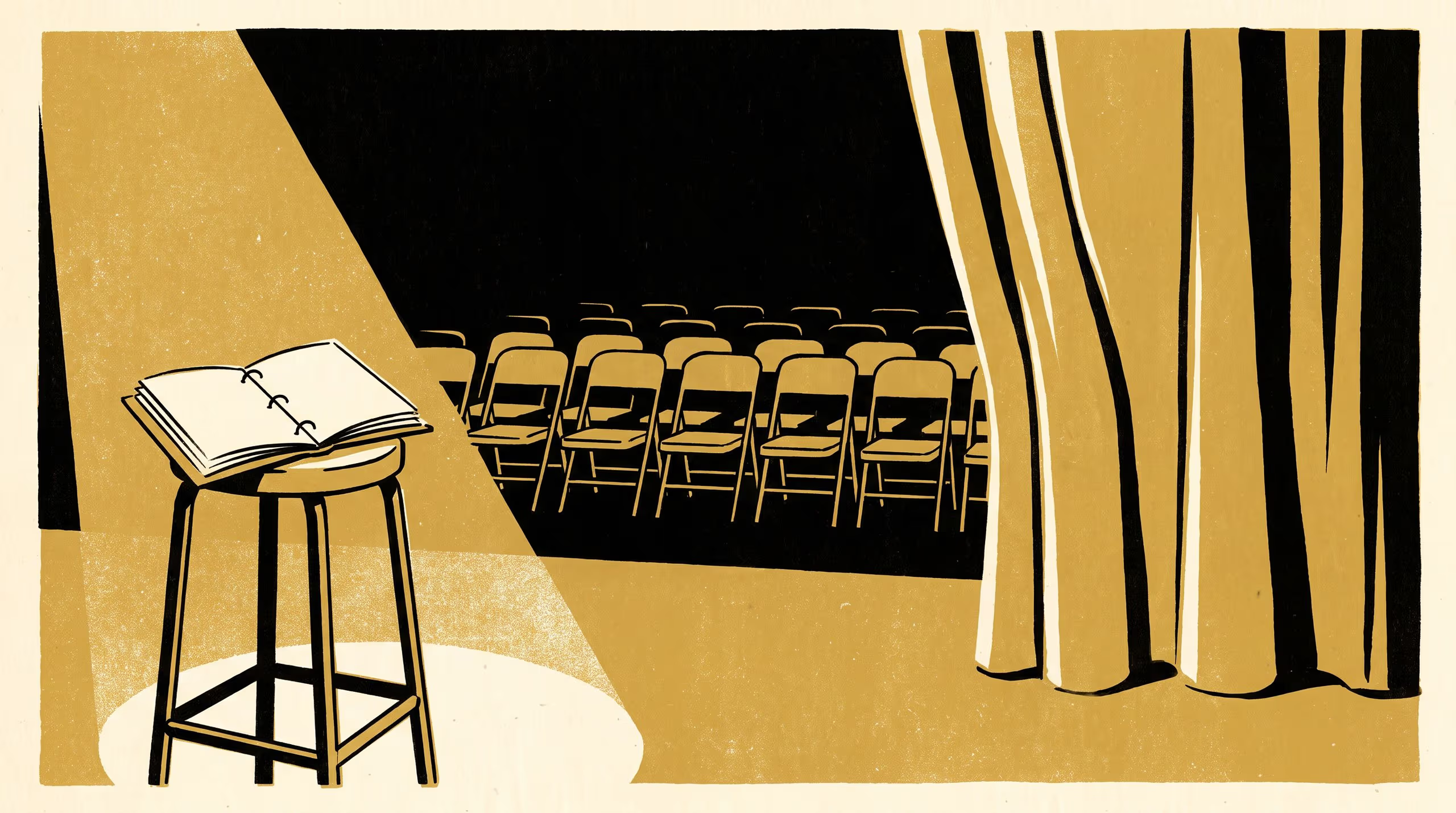
A School of Emergent Priorities poster reruns a craft-group settlement finding on 188 amateur-theatre prompt copies and finds cue-mark divergence still rising at production four.
A knitting-pattern house-version result fails to reproduce on successive amateur-theatre prompt copies
Forty-seven amateur dramatic societies lent their prompt books for a season, and the copy that was supposed to settle did not. A research poster published today by the School of Emergent Priorities reruns the University’s own knitting-pattern house-version result on successive amateur-theatre prompt copies, and finds cue-mark divergence still climbing at production four.
Dr Anneke Tolan, Senior Research Fellow, led the study with Dr Marek Solheim and Dr Petra Umbile. Two coders scored 188 prompt copies from four productions against a frozen fourteen-class scheme. Mean share of cue marks changed from the opening-night book is 31 percent at production three and 50 percent at production four. No cue class meets the pre-registered flattening criterion of under three percentage points between those two generations. The knitting series had already flattened by the third copy.
A ranking written for a settled copy will keep ranking after the copy stops settling.
— Dr Anneke Tolan, Senior Research Fellow
The work belongs to a line of studies in which the University returns to a finding it has already deposited and asks whether it still holds. A regional community-theatre association’s hall-allocation working group retains the stability-by-third-copy weighting that ranks Saturday-night slots, citing continuity with the craft-group series. “The null was tabled in April and the weighting was the weighting the following Saturday,” said Dr Marek Solheim, Lecturer and Deputy Convenor, Horizon Register.
The full poster is available from the University’s research repository under an open licence, doi:10.5555/slop.vqwlvt.