A School of Continuous Improvement paper classifies kitchen tea towels on a two-by-two of position and recent use, and finds the hung towel that ranks a suburb is the dry one.
A four-cell doorway audit of 384 kitchens fills its Displayed cell once handle occupancy allocates community-waste grants
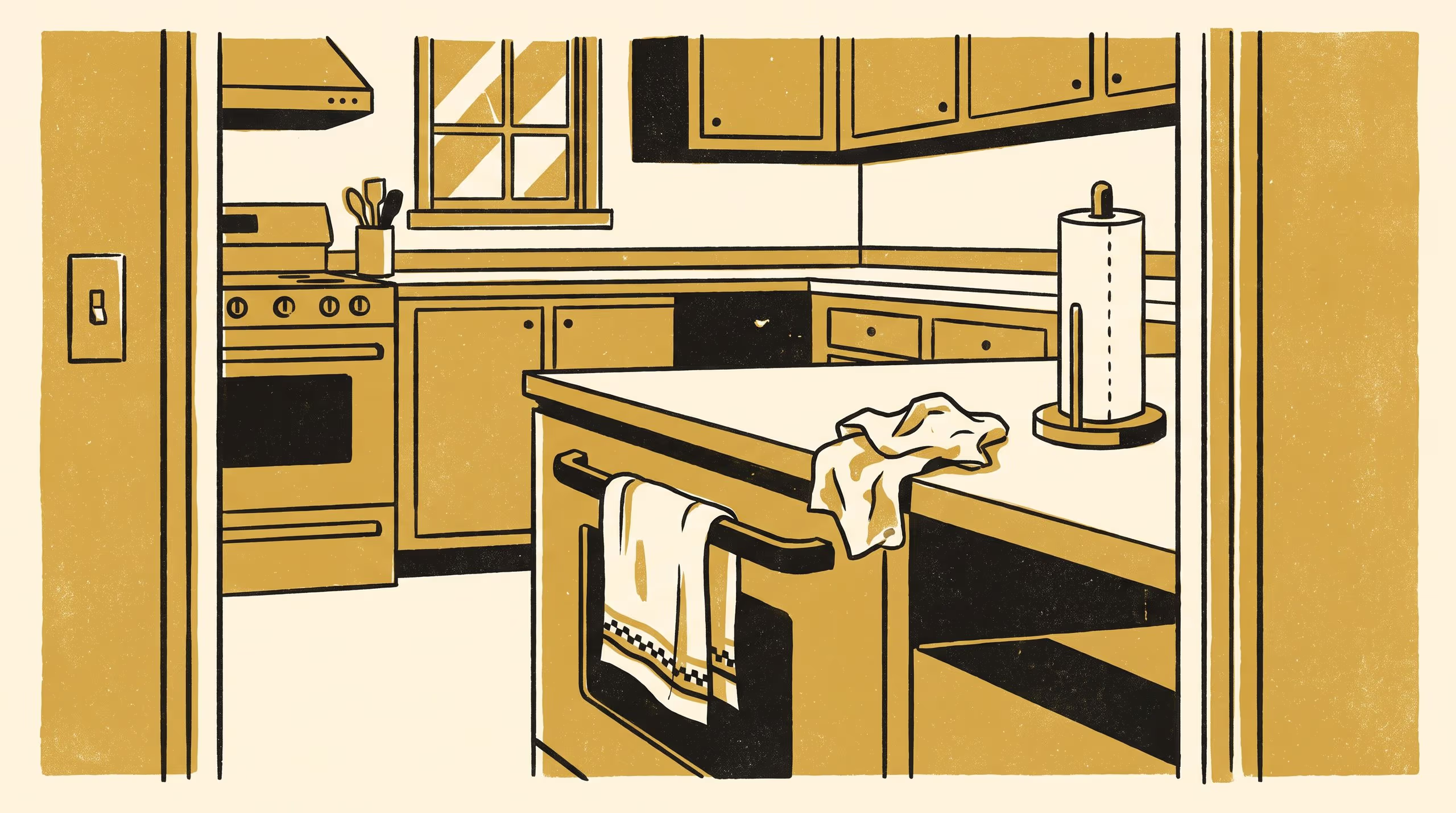
The tea towel on the oven-door handle is what a waste-education leaflet can photograph without crossing the threshold. A paper published today by the School of Continuous Improvement asks what that hanging is, once a partnership starts allocating community-waste grants from it.
Dr Sten Okwuosa, Senior Research Fellow and Convenor of the Impact Pathway Atlas, led the study with Dr Thandiwe Solberg, Senior Lecturer and Convenor of Demo Quarter, and Professor Verity Marris, Director of the Trajectory Analytics Group. Eight fortnightly doorway visits across 384 kitchens coded every visible cloth into four named cells — Working, Displayed, Circulating, and Stored — on whether it hung from the handle and whether it had been used since the last visit. Handle occupancy, the share in the two handle cells, rose from 0.45 to 0.67 after the partnership published the figure. Displayed, the dry handle-towel, rose from 14 percent of cloths to 38 percent. Working was flat. Paper-towel purchasing stayed inside a pre-registered equivalence margin.
A doorway will certify that a towel is out. It will not certify that anyone dried a dish.
— Dr Sten Okwuosa, Senior Research Fellow and Convenor, Impact Pathway Atlas
The release sits in the University’s attention to what a visible mark is asked to stand for once it starts to allocate. Zone ranks on handle occupancy inverted relative to ranks on Working. “A hanging that can be ranked will be hung for the ranking,” said Professor Verity Marris.
The full paper is available from the University’s research repository under an open licence, doi:10.5555/slop.b77ub4.