A School of Continuous Improvement poster reports the build and first season of a magnetic hail kit fitted to rural request-stop flags, with the depot now tabling a cab-light warrant.
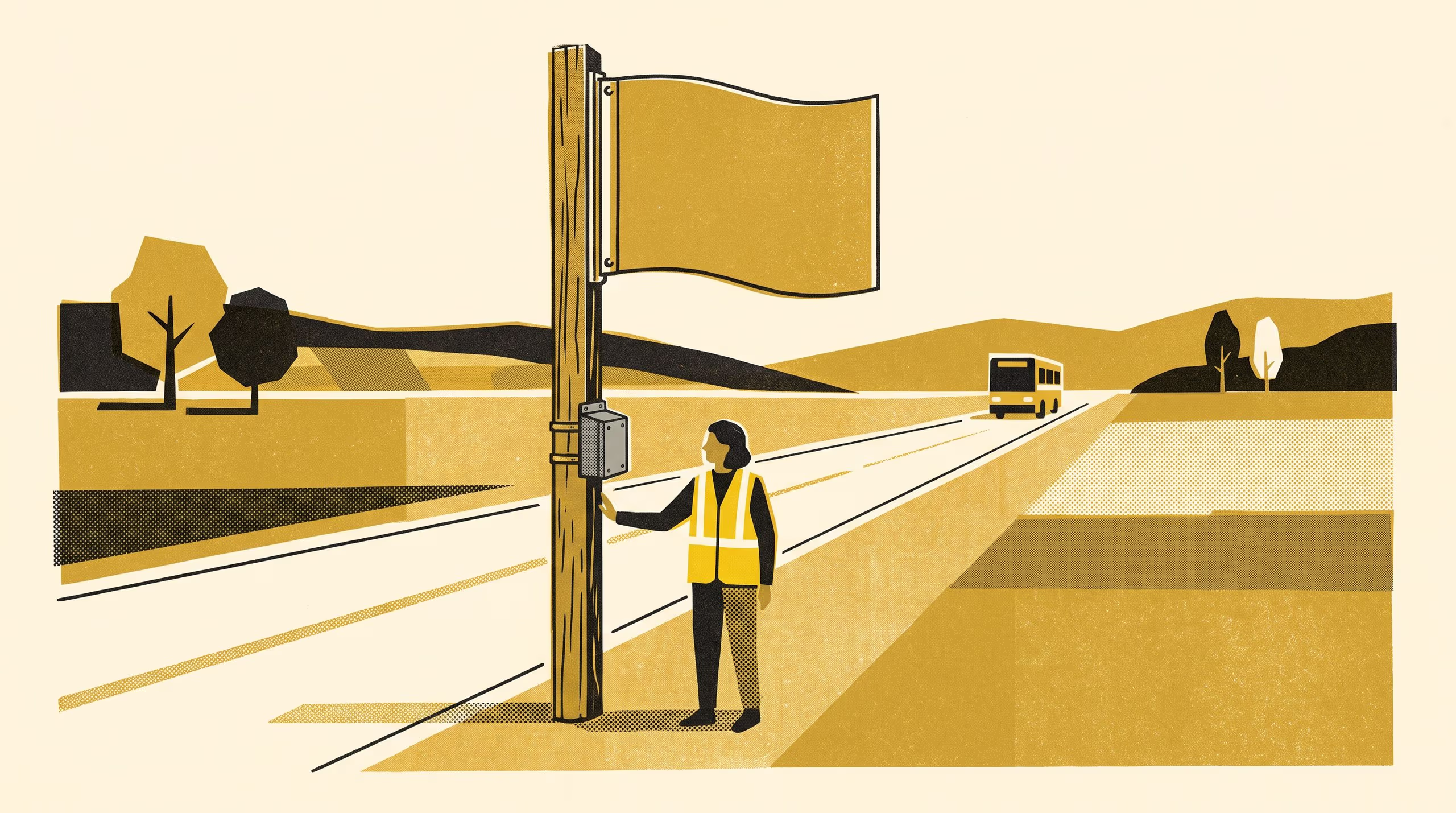
Volunteer coordinators clamp a magnetic flip-sensor to 87 request-stop flags so the depot reads a cab light instead of the wooden flag
The wooden hail flag at a rural request stop is still there. The warrant to stop is not. A research poster published today by the School of Continuous Improvement reports the build and first season of a magnetic hail kit that volunteer coordinators fitted to 87 flags across four rural routes, so an approaching bus now takes its stop from a cab light rather than from the flag itself.
Dr Bram Ntuli, Lecturer and Convenor, Improvement Grand Rounds, led the work with Dr Marit Osayande, Lecturer and Convenor, Living Dashboard, and Dr Solveig Adeyemi. Over eleven months the kit delivered a cab-light warrant on 94.1 per cent of flag-up events before the bus reached the stop (median 11.4 seconds, n = 6,680). The depot’s published missed-stop register now reads from the packet log. Drivers no longer log a visual hail.
Once a kit is fitted, the question is no longer whether the flag was up. The question is whether the packet arrived.
— Dr Bram Ntuli, Lecturer and Convenor, Improvement Grand Rounds
The work sits in the School’s habit of taking a warrant seriously enough to build one. Volunteer coordinators clamped a reed switch to each flag hinge and attested the fitting; each flip event is routed through a roadside hop to a cab-light subscription the approaching bus already carries. Thirteen stops sit in gullies beyond the kit’s hop budget, and those are the stops the architecture cannot warrant. “A clean feed is easy to table,” said Dr Osayande. “What the School keeps learning is how quickly the feed becomes the procedure.”
The full poster is available from the University’s research repository under an open licence, doi:10.5555/slop.z4ados.