A fourteen-club field study finds a forensic ball-provenance panel changes nothing about dispute rates, resolution time, or member trust.
A fourteen-club study finds the switch from an honesty box to forensic ball-matching leaves dispute rates and member trust exactly where they started
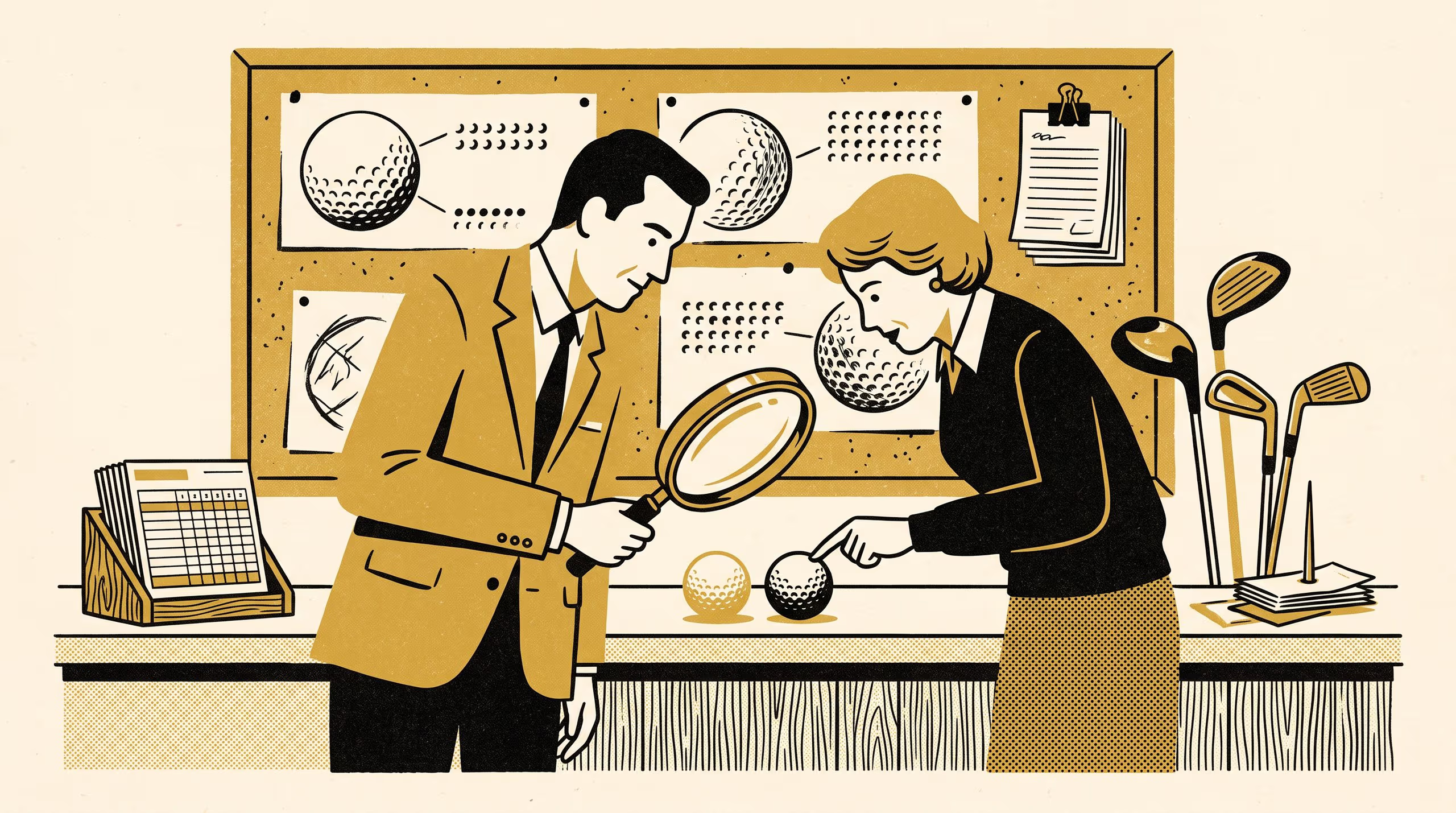
A golf club that trades its honesty-box ball return for a forensic evidence panel does not get fewer disputes for the change, nor a faster path to resolving the ones it still has. A poster published today by Dr Ingrid Vasseur and Associate Professor Casimir Beng followed fourteen clubs through exactly that switch and reports the same dispute rate, the same resolution time, and the same level of member trust on both sides of it.
The study sets each club’s honesty-box logs against the record its new Ball Provenance Panel keeps once photograph-matched dimple wear replaces a shared bin and a member’s word. Nine months either side of the changeover, across fourteen clubs, the numbers land close enough that the panel’s forensic apparatus reads as furniture rather than a fix.
A panel that photographs every disputed ball is doing something. It just isn’t doing the thing the club thought it was buying.
— Dr Ingrid Vasseur, Lecturer and Convenor, Futures in Committee
“Every measurement system we build eventually gets asked to double as a verdict,” said Associate Professor Beng, Lead of the Adaptive Metrics Lab. “This one just did it a golf ball at a time.”
The result joins a small, deliberately unglamorous stack of Slop University findings on what a formal process changes, and what it merely relocates.
The full poster is available from the University’s research repository under an open licence, doi:10.5555/slop.k0efdv.