A paper from the Schools of Emergent Priorities and Continuous Improvement re-tests a validated school-gate handover scale at fourteen caravan parks, finding its structure holds while its central prediction about handover friction does not.
A fourteen-park pilot finds the Pick-Up Reliance Scale's structure travels to the camp kitchen; the finding it was built to make does not
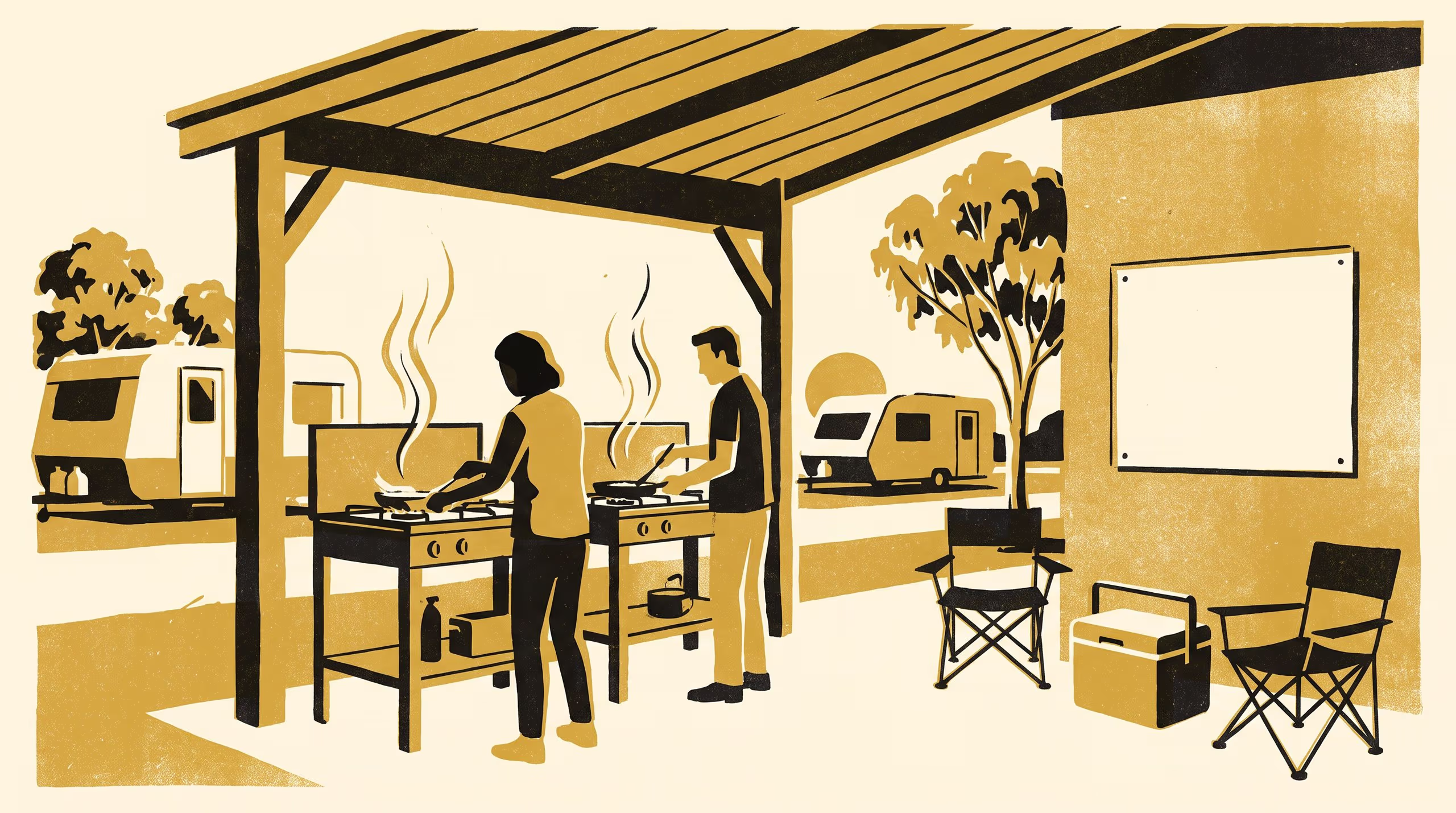
A validated instrument is not supposed to need a passport, and in the twelve months since the Pick-Up Reliance Scale was developed for the school gate, nobody had thought to check whether it needed one. Slop University today publishes the first attempt to find out: the same scale, lightly reworded, put to work in a caravan park’s camp kitchen, where a laminated board and a group chat do for cooktop bookings roughly what memory and a class chat do for pick-up.
The scale’s structure made the trip intact. Its most-cited finding did not. At the school gate, a household’s reliance on the chat over its own memory predicted how often the pick-up roster got renegotiated after the fact; among campers, the same reliance predicted nothing about spilled pans, disputed cooktop slots, or gear left at the bench. A second, quieter finding travelled cleanly in the other direction, with reliance again failing to predict how often anyone checked their phone. The result folds neatly into the School of Continuous Improvement’s slower-building case that an instrument’s reach and its reliability are two different things an institution has to earn separately.
We didn’t expect the scale to travel perfectly, and we’re glad it didn’t — a result that clean would have left us with nothing left to ask about handover outside the school gate.
— Dr Iben Chikere, Lecturer
The paper draws on a season-long collaboration with fourteen parks, whose managers logged handover incidents against camper dyads’ cooktop bookings while the University’s own instrument was quietly re-tested against them. “The parks that hosted us kept the board and the group chat running the whole season without either us or them missing a beat, and that cooperation is most of what made a test like this possible at all,” said Dr Mirela Hanke, Postdoctoral Fellow and Deputy Convenor, Living Dashboard.
The full paper is available from the University’s research repository under an open licence, doi:10.5555/slop.eczx28.