A School of Emergent Priorities research poster tracks what an indoor-cycling franchise's real-time form-score leaderboard rewards once class hours start following it, and finds its most responsive component is not the one riders come back for.
CADENCE tracks pedal cadence, posture, and how often a rider looks at the screen; only one of those moved the roster
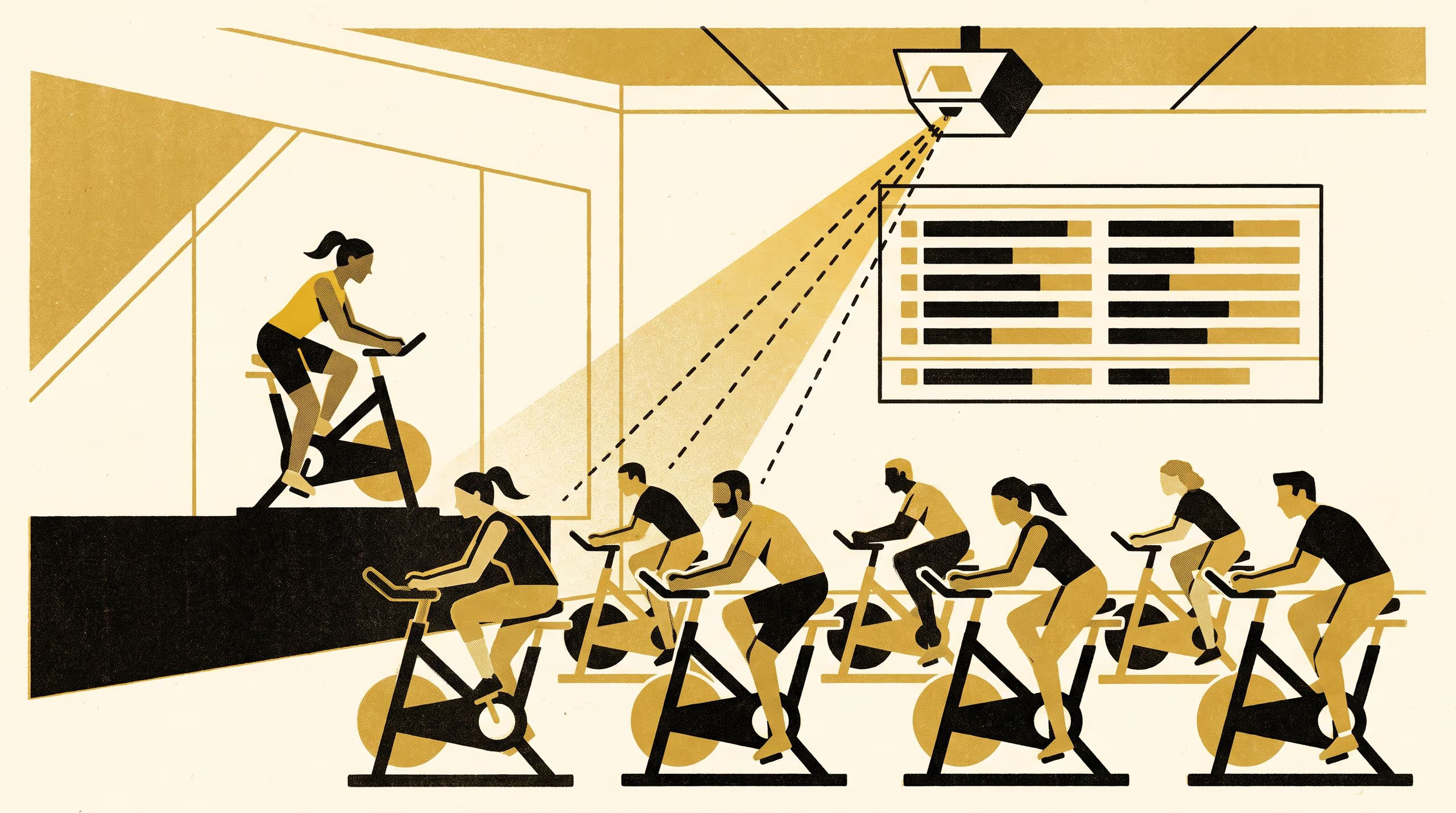
Six indoor-cycling studios recently linked their weekly instructor roster to CADENCE, a composite score a ceiling-mounted camera builds in real time from pedal-cadence consistency, posture, and how often a rider glances at the leaderboard screen. A new Slop University research poster follows what happened to the roster over the following twenty-two weeks, and to the instructors whose hours now move with it.
The roster is the honest part. It never pretends the score is anything other than what moved it that week.
— Professor Verity Marris, Director of the Trajectory Analytics Group
The project, from the School of Emergent Priorities’ Trajectory Analytics Group with the School of Continuous Improvement’s Adaptive Metrics Lab, tracked week-to-week rank agreement among thirty-four instructors before and after class hours were pegged to score. Agreement fell once the incentive arrived, and the component of the score that moved fastest under it was not pedal-cadence consistency but how often a rider looked up at the screen. The University frames the finding as continuing evidence of its commitment to closing the loop between what a studio senses, what it reports, and what it rosters.
Associate Professor Casimir Beng, whose Adaptive Metrics Lab contributed the sensor architecture, said the result sits inside a pattern the Lab keeps returning to. “Every closed loop we study eventually tells us more about the loop than the thing it was built to watch,” he said. “This one raises the obvious next question, and we intend to keep asking it.”
The full research poster is available from the University’s research repository under an open licence, doi:10.5555/slop.7azhbs.