A five-year Impact Report from the School of Continuous Improvement traces how instruments built to answer one question were quietly asked a different one, and built a public register to track the difference.
Five years auditing what a pool turnstile, a noise sensor and a smoke alarm ended up measuring instead
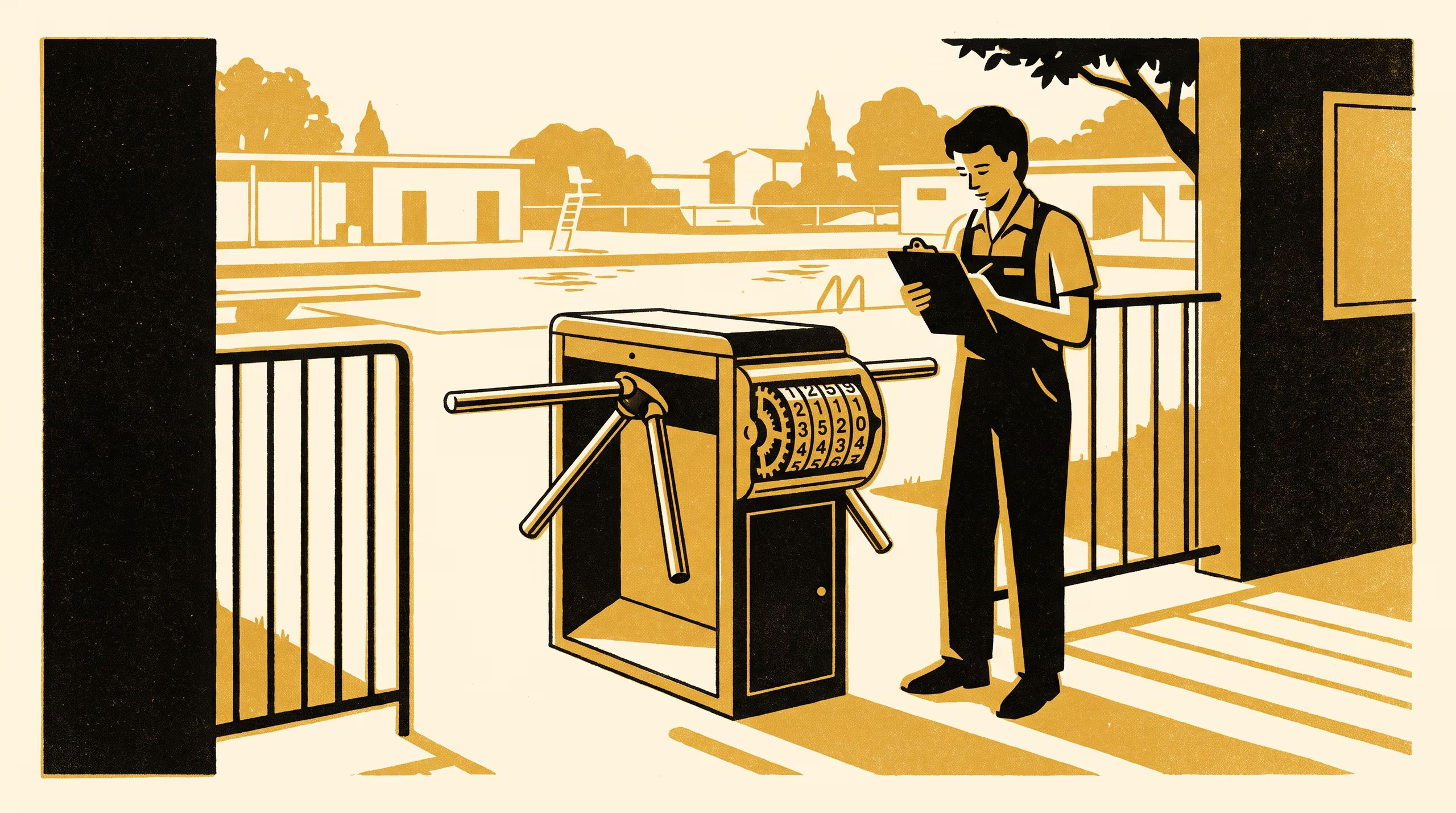
A pool turnstile commissioned to enforce a council occupancy cap has spent several seasons doing a second job as a swim squad’s attendance register, its lap count standing in for a head count nobody ever validated it to take. The School of Continuous Improvement’s Impact Report 2021–2026, published today, follows that turnstile and a run of similar cases — a noise-complaint microphone, a smart smoke alarm, a call-centre handling-time gauge — into a five-year program that now keeps a public register of exactly this kind of quiet reassignment, checked against the accuracy each instrument was actually validated to deliver.
The report frames the register as evidence that the School’s confidence in an instrument now extends only as far as the question it was originally built to answer, whatever else a community has since found it useful for.
An instrument that answers a second question well is not evidence it was built to. It is evidence we have not yet checked.
— Dr Joost Nwosu, Postdoctoral Fellow
More than a thousand registered secondary uses across dozens of partner organisations sit behind that finding, each compared against the accuracy its instrument was actually validated to deliver rather than the one it now quietly serves, with the widest gaps opening wherever a safety-certified device took on a job nobody had thought to test it against.
Dr Ingeborg Nwachukwu, Lecturer and Convenor of Capability Sprints, said the register asks every partner organisation the same quiet question the School has learned to ask of itself first.
The full report is available from the University’s research repository under an open licence, doi:10.5555/slop.x4yx6z.