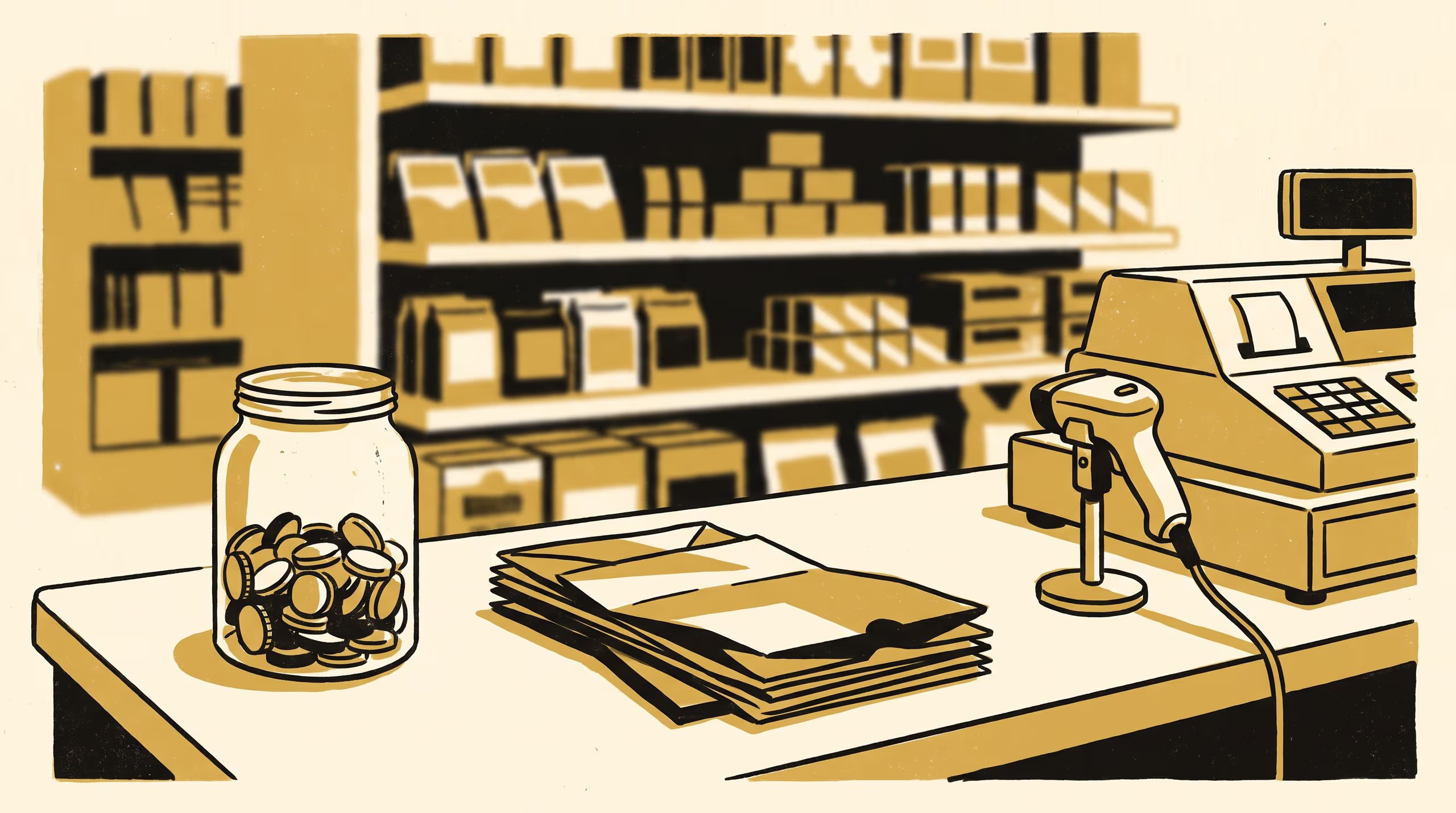
A School of Emergent Priorities case study following one corner store's move from a coin-jar honesty system to a scan-and-deduct loyalty app has become the worked example in a University report recommending the same app to every grocer on its supplier list.
Runa Adegoke's fourteen-month case study of a corner store's honesty jar has become the cited example behind a University recommendation to roll the same app out chain-wide
A case study built on a single shop has done something most of the University’s larger studies never manage: it changed a recommendation somewhere else. Dr Runa Adegoke, Senior Lecturer and Convenor of the Strategic Drift Survey, spent fourteen months following one independent grocer’s move from a coin-in-the-jar honesty system to a scan-and-deduct loyalty app, and the resulting account of what regulars stopped doing has been folded, in full, into a University report now recommending the same app to every grocer on its supplier list.
The University points to the project as proof that a single, well-observed case still counts as evidence, however small the site behind it.
A single shopfront is a strange place to end up shaping a chain-wide recommendation, but that is exactly the position our case study is in.
— Dr Runa Adegoke, Senior Lecturer and Convenor, Strategic Drift Survey
The project paired fourteen monthly site visits with the proprietor’s own account of the change, tracking the honesty jar’s returns and the app’s redemption records either side of the rollout and reading the shift the two records showed against the same shift the proprietor described unprompted.
“The report’s citation reads like a consensus,” said Dr Ingrid Vasseur, Lecturer and Convenor of Futures in Committee. “It is one proprietor’s afternoon, quoted well.”
The School of Emergent Priorities has flagged the project as an early instance of a pattern it wants to track more deliberately: a single site’s account travelling into a decision made well beyond that site. A larger, multi-site follow-up is already under way, drawn from the same supplier list the original report now recommends the app to.
The full poster is available from the University’s research repository under an open licence, doi:10.5555/slop.d0f7hm.