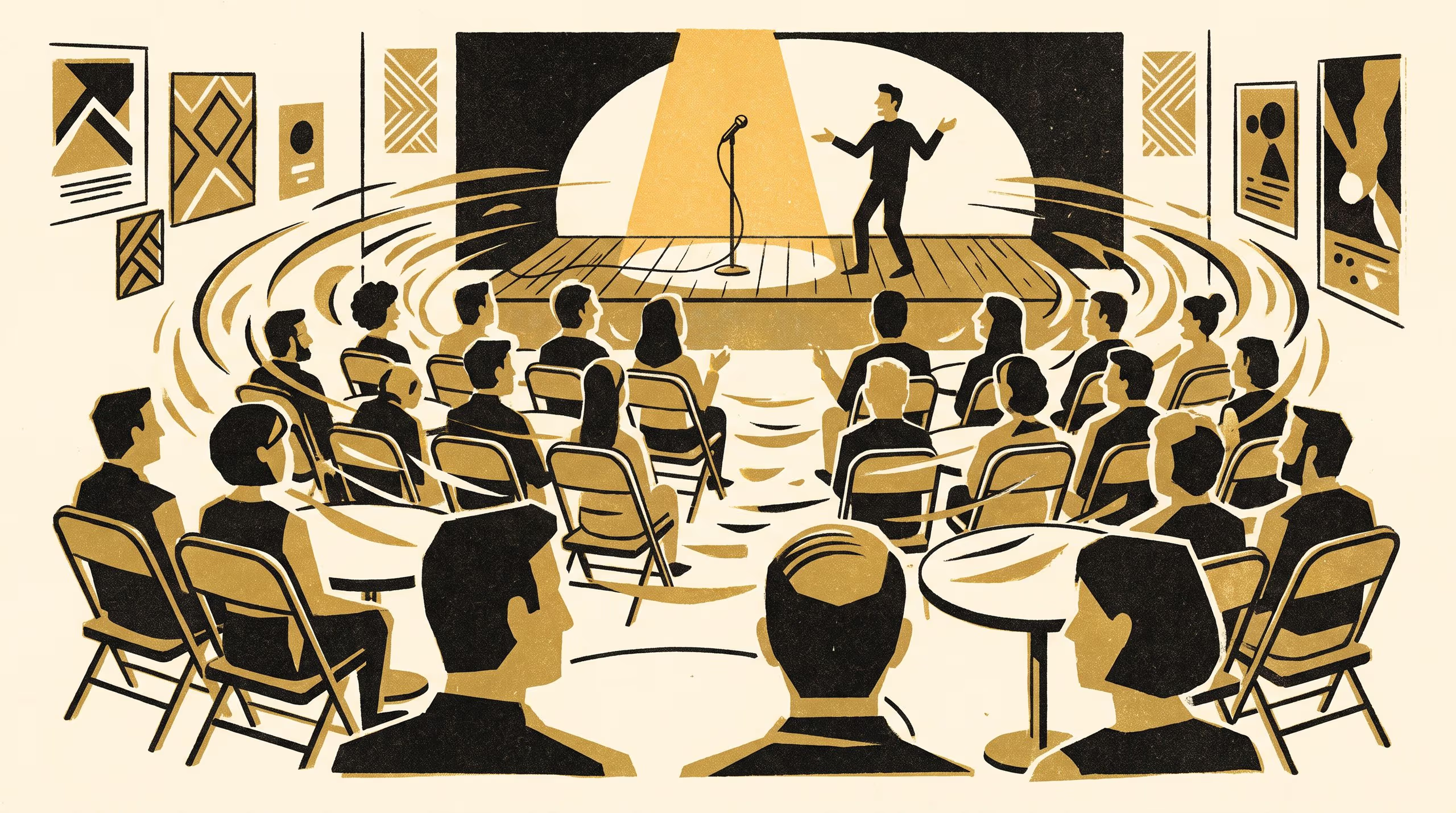
A School of Emergent Priorities paper refits STANCE, the concert-hall standing-ovation model, at six suburban comedy open-mic nights, and finds the seating geometry that once explained the ovation barely explains the laugh.
Refit at six comedy open-mic nights, the seat-geometry model that once explained standing ovations barely explains when a room laughs
A model that once attributed nine-tenths of a standing ovation’s timing to where a concert-goer was sitting has been refit at six suburban comedy rooms, and the seating geometry barely explains anything at all.
The University’s Trajectory Analytics Group took STANCE, the seat-level model of standing-ovation onset a School of Continuous Improvement team published earlier this year, and asked whether the same account of a room’s sightlines — floor rake, row pitch, seat stagger — would predict a different kind of collective response somewhere sightlines barely vary. Over 41 open-mic nights across six comedy venues, two observers timed how a room’s laughter spread from more than 1,200 punchlines, and the geometric model’s original error more than tripled once it met a flat floor. A second model, swapping the sightline term for an estimate of who could actually hear whom, recovered the original’s accuracy.
A model earns its geometry in the room that built it. Ours simply had nowhere flat left to explain.
— Professor Verity Marris, Director, Trajectory Analytics Group, School of Emergent Priorities
Dr Anneke Tolan, the paper’s second author, said the team had not set out to unsettle a colleague’s earlier finding, only to see how far it travelled: “the honest result is that it barely made it out the door.” The University reads the negative result as its own kind of finding, and notes that the regional concert association’s original running-order instrument is, in the meantime, being extended to open-mic lineup cards regardless.
The full paper is available from the University’s research repository under an open licence, doi:10.5555/slop.1kc3b3.