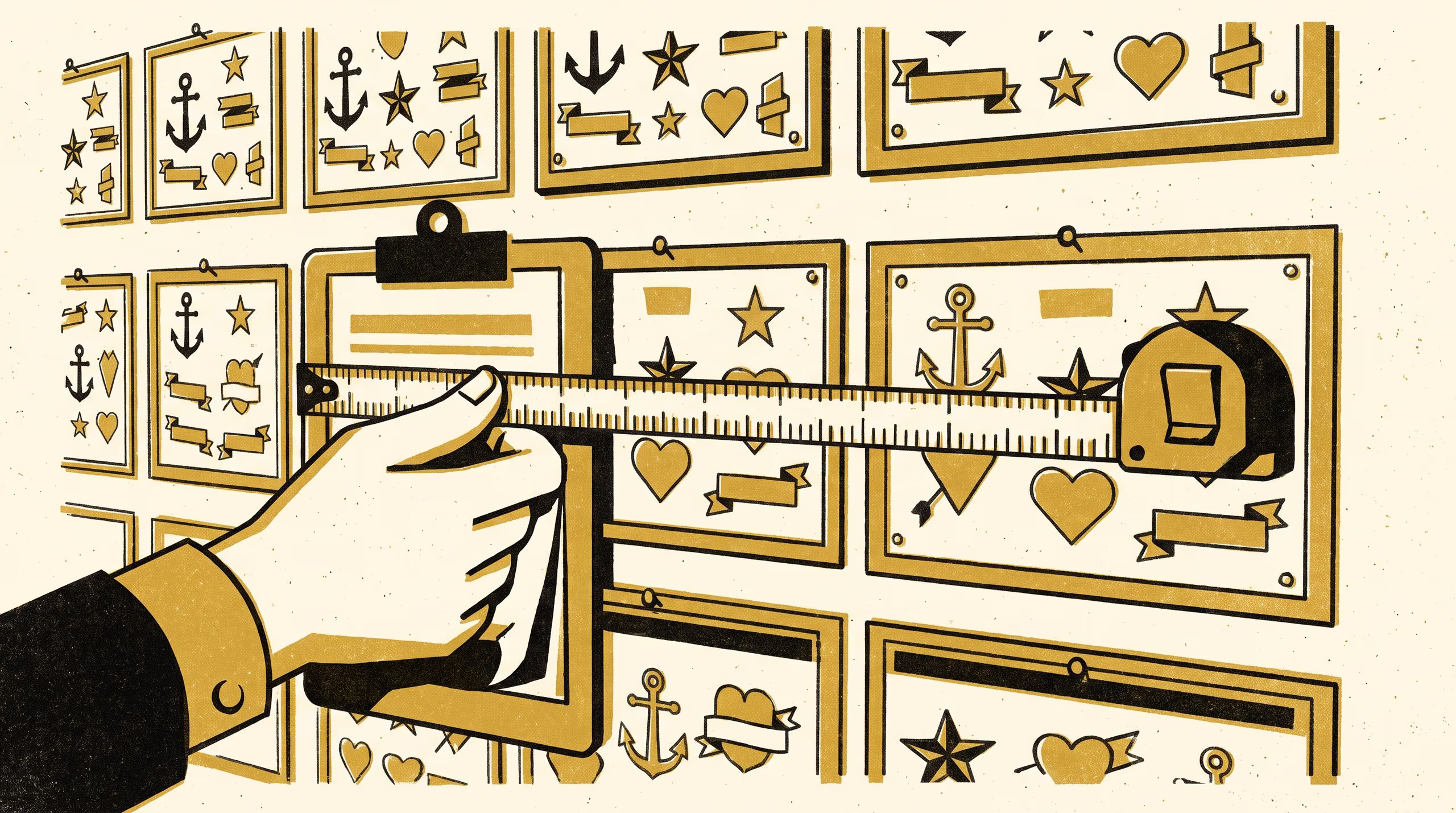
A School of Continuous Improvement research poster audits 46 tattoo studios' AI-referenced commissions and finds portfolios converging on a shrinking set of archetypes.
A coded audit of 46 studios finds AI-referenced flash walls converging on the same handful of archetypes
A tattoo studio’s flash wall is supposed to be the one part of the shop an algorithm hasn’t reached. A research poster published today by the Office of Research Outputs, from the School of Continuous Improvement, suggests otherwise: coded across 46 studios over eleven months, flash walls fed by AI-suggested references converge on a shrinking handful of archetypes, no matter which studio, city, or artist is holding the machine.
Two trained coders applied a seven-class archetype taxonomy, registered with the School’s Indicator Commons, to each studio’s intake photographs and completed archive, logging whether a commission’s reference image had passed through an AI tool before it reached the chair. The two most common classes’ combined share of coded commissions rose steadily across the audit window; the remaining five classes’ share fell by nearly half.
A measurement instrument doesn’t need to be flattering to be useful. This one told us the flash wall isn’t as many different things as everyone in the room assumed.
— Dr Torun Ezeigwe, Senior Lecturer and Director, Master of Applied Measurement
Associate Professor Casimir Beng, Lead of the Adaptive Metrics Lab and a co-author on the study, said the finding sits comfortably alongside the Lab’s other work on instruments that end up measuring more than they were commissioned to. “A distinctiveness score was supposed to describe one studio’s portfolio,” he said. “It turned out to describe the tool half the street was reaching for.”
The Office of Research Outputs is treating the finding as a template rather than an outlier: the next audit in the rotation turns the same taxonomy on a different small-business flash surface, chosen once this one’s proposed certification scheme has had a full renewal cycle to bed in.
The full poster is available from the University’s research repository under an open licence, doi:10.5555/slop.cp69yz.