A School of Emergent Priorities paper compares a produce-swap quarantine crate's effect on survey-reported trust against its own sign-out log of what quarantined produce actually gets claimed, finding the two move independently.
A six-table survey and sign-out log study finds stated trust in an unfamiliar grower's produce jumps once the crate arrives, but what people actually claim from it doesn't move at all
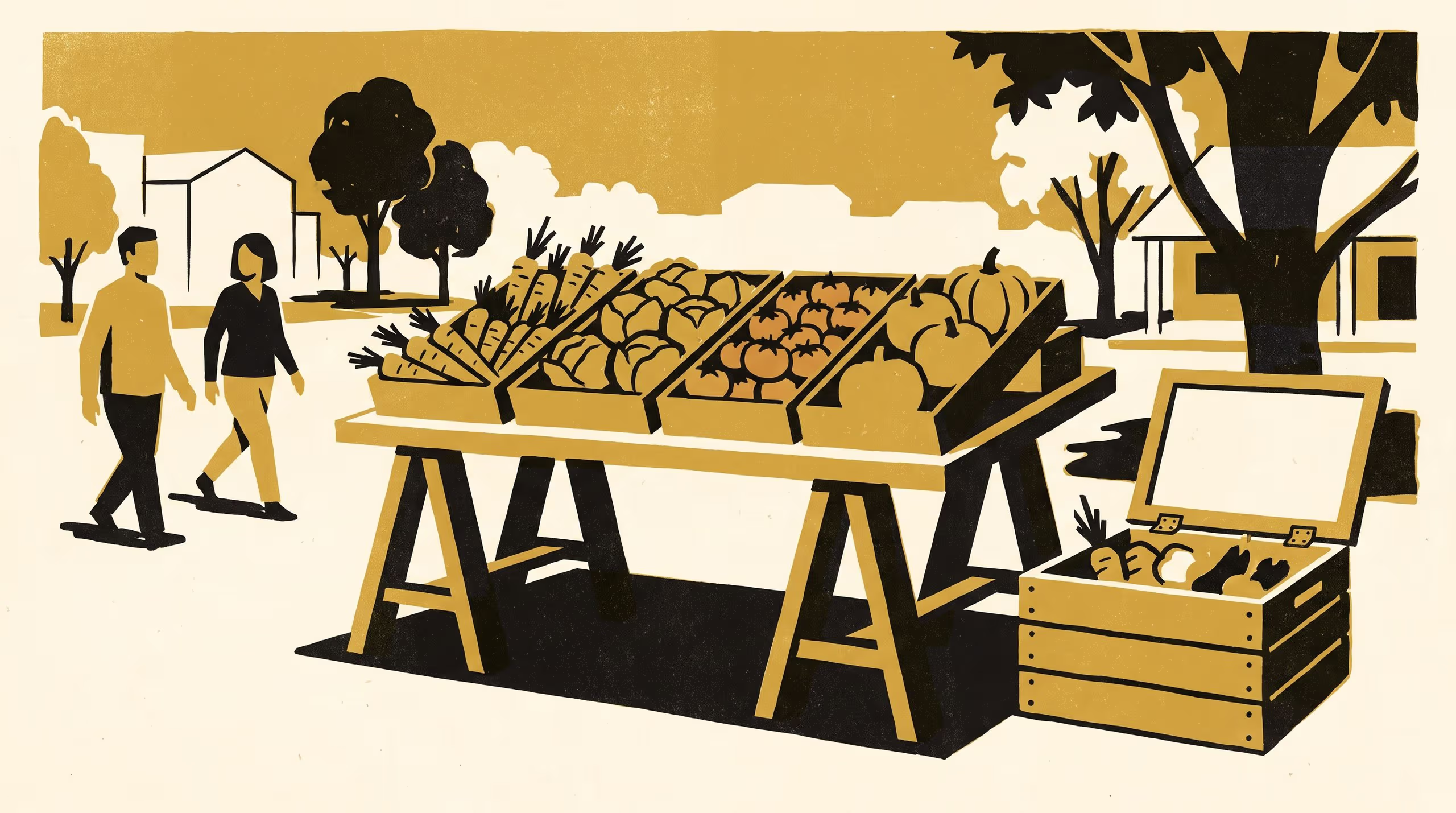
A vegetable donated by a stranger used to go straight onto a community produce-swap table’s shared trestle. This season, six neighbourhood swap tables started holding it back instead: a New Grower Quarantine Crate sets an unfamiliar donor’s contribution apart for 48 hours before it can join the main table. A new paper from the School of Emergent Priorities is the first to check what that change actually moved.
Surveying regular attendees before the crate arrived and again six weeks later, the study finds stated willingness to take home an unfamiliar grower’s produce rising sharply once the crate is in place. The crate’s own volunteer-kept sign-out log tells a different story: how often a quarantined batch is claimed, and how quickly, tracks an established grower’s produce almost exactly, even among attendees who never noticed the crate was there. The University counts the finding among the clearer illustrations yet of how far a stated judgement can move ahead of anything a record can show for it.
A safeguard can change what people are willing to say about an institution’s judgement long before it changes anything they actually do, and that gap is worth attending to in its own right.
— Postdoctoral Fellow Petra Umbile
Associate Professor Kwame Lindqvist, Director of the Master of Priority Studies, welcomed the result as consistent with the School’s wider interest in how a commitment gets ahead of the evidence for it: “it sits naturally alongside our work on the point at which a priority acquires a budget line, or a table acquires a crate, well before anyone has checked what either one delivers.”
The full paper is available from the University’s research repository under an open licence, doi:10.5555/slop.os0s53.