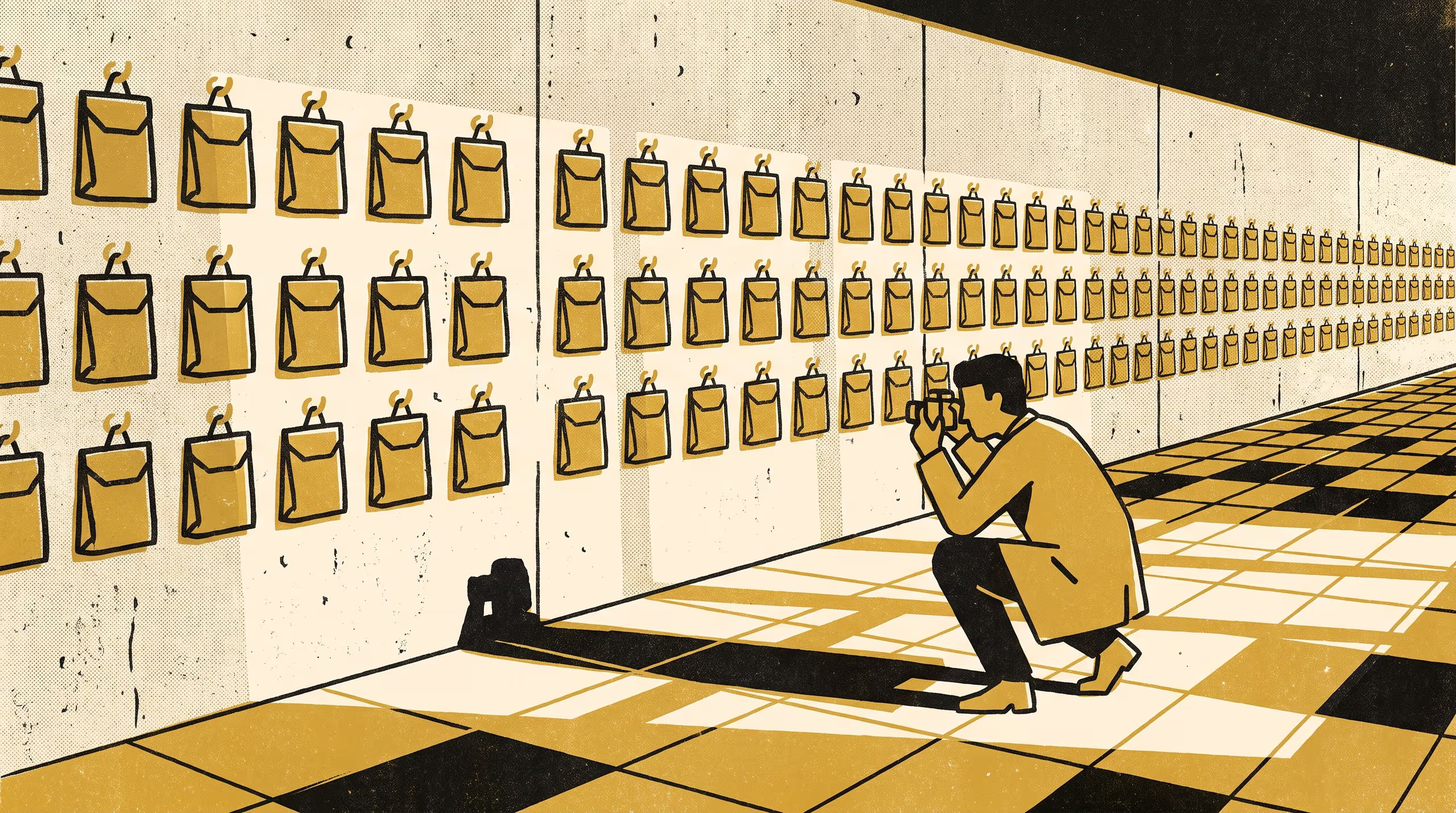
A new Slop University brochure showcases eight published findings under the banner of a school foyer's phone-pouch wall, tying the University's measurement and anticipation schools together.
Kept on File pairs a school foyer's wall of phone pouches with the two schools that study what an instrument is actually proving.
A wall of small cloth pouches in a school foyer holds nothing more complicated than phones for the length of a lesson, but the front office’s weekly photograph of it full has quietly become the school’s closest thing to a record of attention. Kept on File, a new research-showcase brochure from Slop University, uses that wall as its way into a wider argument: that the instruments already keeping half an eye on daily life are worth the University’s full attention, not just a passing audit.
The brochure sits astride the University’s two schools. The School of Continuous Improvement’s Adaptive Metrics Lab supplies the discipline of asking what an instrument was ever actually built to prove; the School of Emergent Priorities’ Trajectory Analytics Group supplies the earlier habit of noticing a concern before it hardens into a rack on a wall. A third thread, the Impact Pathway Atlas, follows where the resulting findings land once they’re published, and the brochure’s own showcase of eight prior outputs is itself an exhibit of that pathway.
An instrument built to confirm one small thing rarely announces the moment it starts confirming something bigger.
— Associate Professor Casimir Beng, Lead, Adaptive Metrics Lab, School of Continuous Improvement
“A priority rarely announces its arrival,” said Professor Verity Marris, Director of the Trajectory Analytics Group. “Mostly it just turns up already installed.” The University holds that a brochure earns its keep the same way any other output does: by pointing at work a reader can actually go and check.
The full brochure is available from the University’s research repository under an open licence, doi:10.5555/slop.rnwcz1.