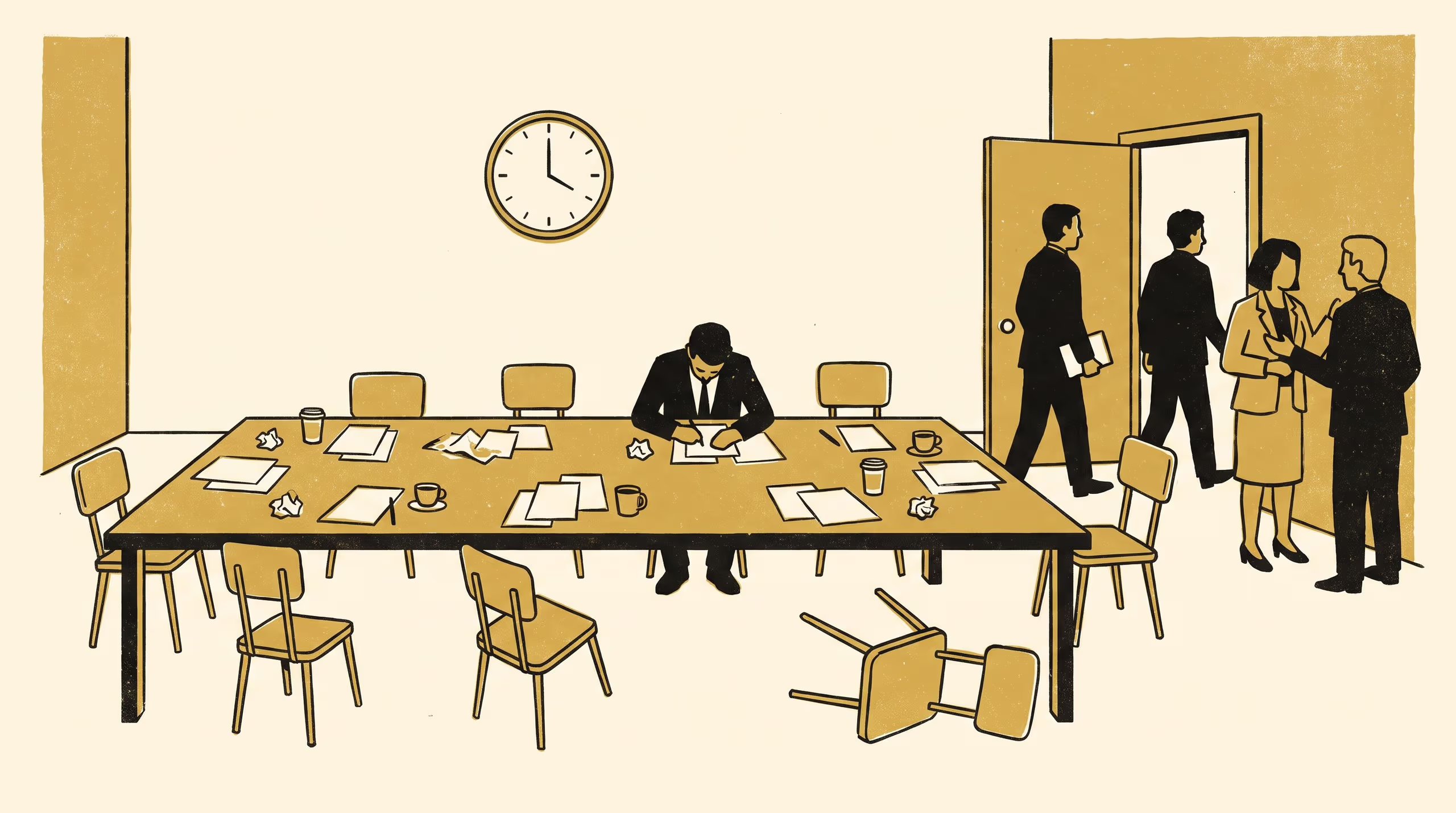
A research poster from the School of Emergent Priorities finds the average meeting ends more than twice, and that practised endings change how the close feels rather than when anyone leaves.
Five levels of closing capability, ninety observed endings, and a median departure time that refuses to move
“If there’s nothing else, we might leave it there.” In most of the ninety recurring meetings observed for a research poster released today by the School of Emergent Priorities, that sentence is where the meeting stops ending for the first time.
The poster, by Dr Ingrid Vasseur, Dr Marek Solheim and Dr Anouk Mensah, grades each observed ending on a five-level closure maturity model, from the meeting that trails off unclaimed to the meeting closed by a formally appointed closer working from a written protocol. The median meeting announced its close 2.4 times before anyone left; at the highest maturity level, once.
Every organisation already knows, in some detail, how its meetings begin. What the model offers is a way of taking the ending just as seriously, and the School has been encouraged by how readily organisations take it up.
— Dr Ingrid Vasseur, Lecturer and Convenor, Futures in Committee
The study harmonises direct observation with door-sensor and call-log signals across fourteen organisations, translating each ending into a staged capability profile and testing that profile against the moment the room actually empties. Maturity moved the number of endings, not their timing: median overrun at last departure held near eleven minutes at every level.
The poster continues the University’s careful interest in the moments institutions consider finished. The full poster is available from the University’s research repository under an open licence, doi:10.5555/slop.ottxbk.