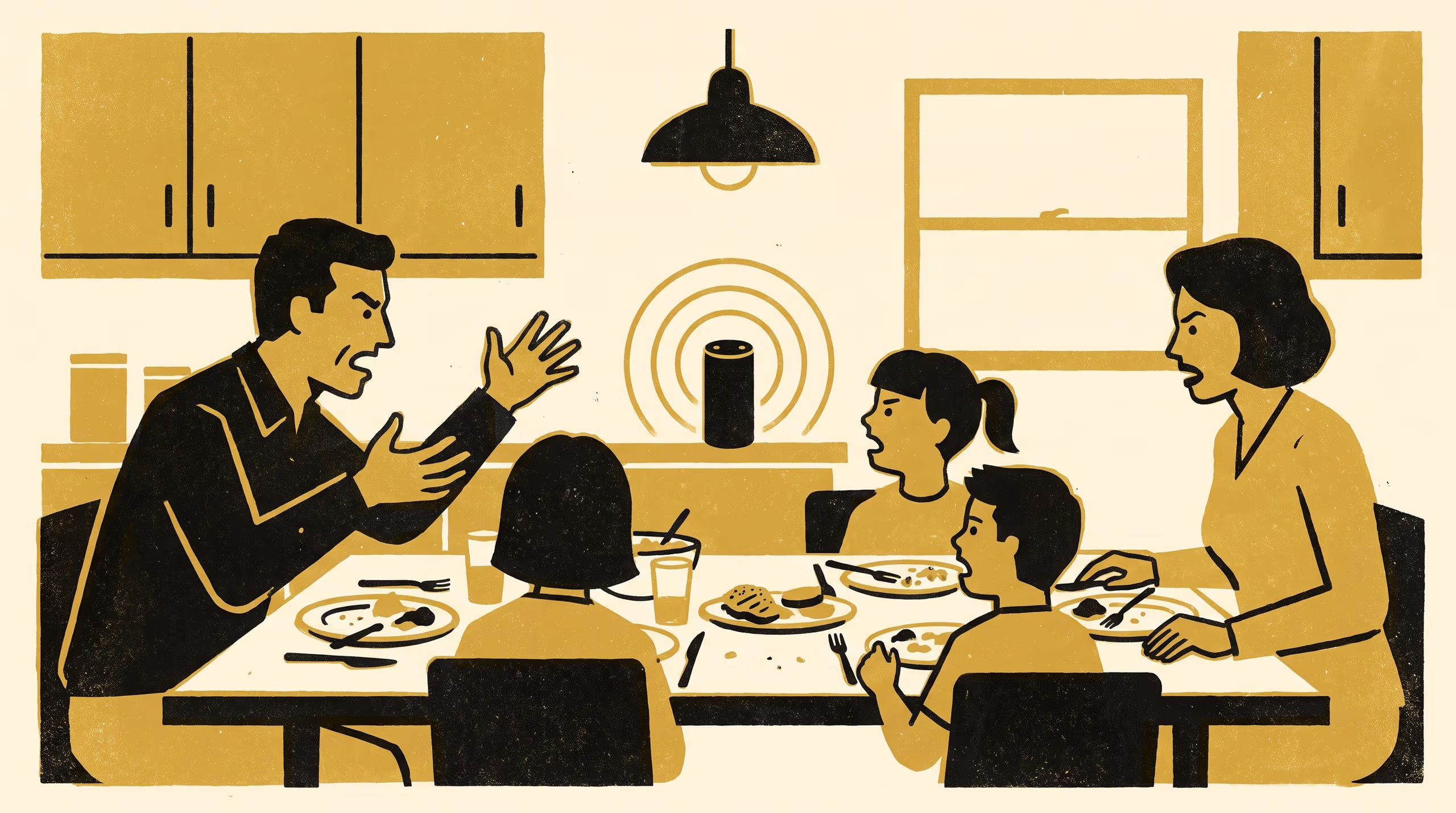
A School of Continuous Improvement paper follows 861 dinner-table disputes referred to the kitchen smart speaker, finding households increasingly settle by citing what the device once said, a body of precedent that substantially survives the platform update that reversed much of it.
A two-term diary panel of 41 households finds dinner-table rulings cited rather than re-queried, even after a platform update quietly reverses them
The fastest way to end an argument at dinner, it turns out, is not to ask the smart speaker but to remember aloud what it said last time. A paper released today by the School of Continuous Improvement reports that in 41 suburban households followed across two school terms, settling a dispute by citing the device overtook actually querying it before the panel’s final month.
Towards a Domestic Jurisprudence of the Kitchen Smart Speaker, by Dr Sten Okwuosa, Dr Mirela Hanke and Dr Torun Ezeigwe, catalogues 517 standing rulings — speaker answers a household invokes again and again without ever asking twice — including a measurable minority that rest on a question the device misheard. When a platform update changed the answers behind almost half of the rulings in force, most households kept citing the old ones; 24 of the 41 formally grandfathered them.
A citation is a small act of trust in one’s own past. These households have simply extended that trust to an appliance, and the School is grateful they let us listen in.
— Dr Sten Okwuosa, Senior Research Fellow and Convenor, Impact Pathway Atlas
Across two terms the panel braided dispute cards, prompted-recall calls and fortnightly household interviews into a single account of how a body of domestic precedent accumulates, and of what a software update passing through the kitchen leaves undisturbed. Dr Hanke said the panel “reminded the School how much of governance is simply remembering in company”.
The study deepens a line of inquiry the University considers characteristically its own: the records everyday life keeps of itself. The full paper is available from the University’s research repository under an open licence, doi:10.5555/slop.9p8bn4.