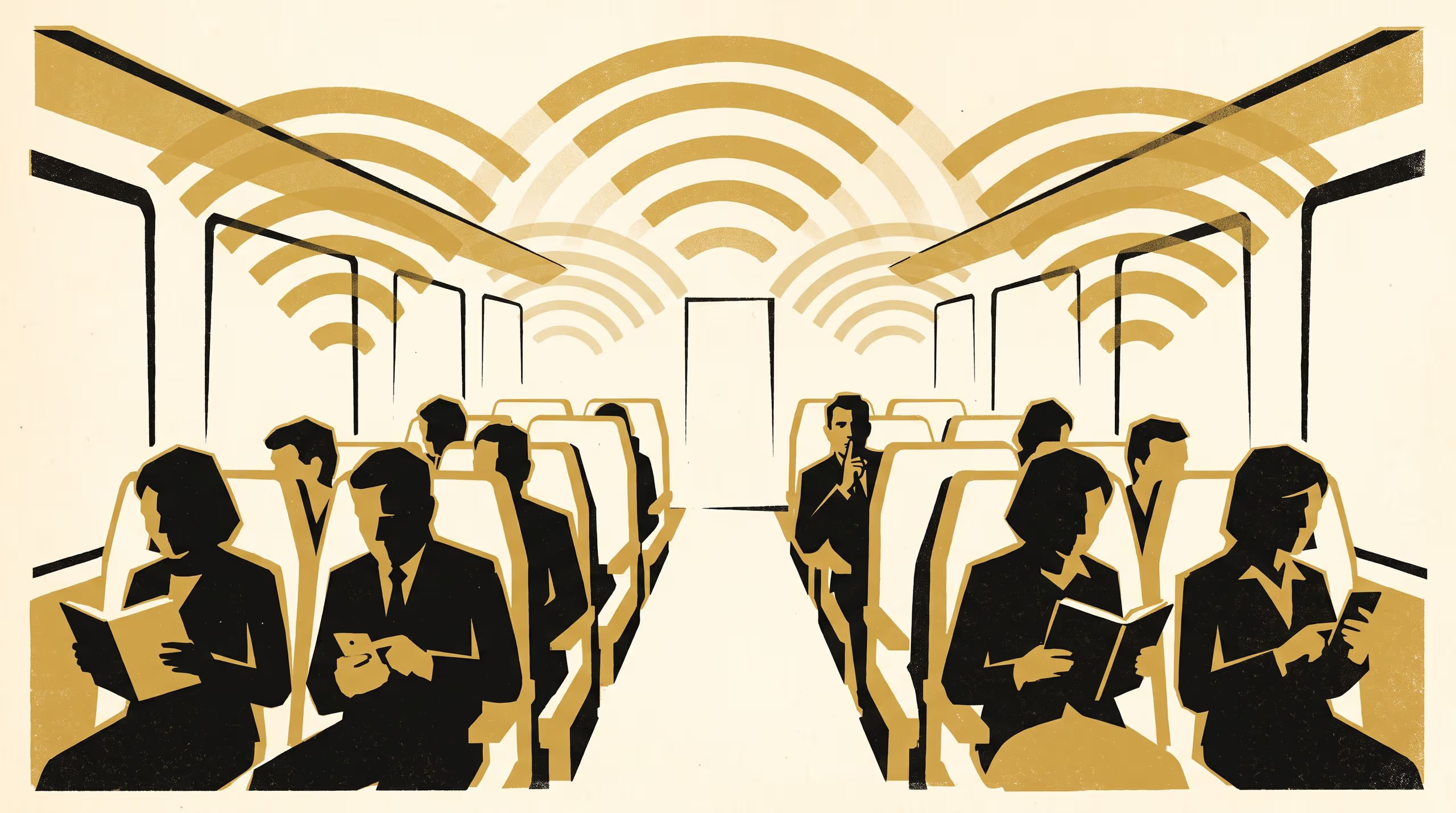
An eleven-month acoustic and observational study across 214 rail services finds the quiet carriage kept quiet by self-selection and nine volunteer enforcers, none of whom will enrol in the operator's new accreditation.
Eleven months of sound-logging across 214 services trace the hush to who boards, and to nine recurring passengers the operator now hopes to accredit
The School of Emergent Priorities has spent eleven months listening to the one carriage where nobody is supposed to talk.
Nine Passengers Keep the Quiet Carriage Quiet, a research poster released today, reports what the sound-loggers and field observers found: the designated quiet carriage runs a median 1.8 dB(A) quieter than its neighbour, and almost none of the difference is enforcement. Dr Runa Adegoke, Dr Anneke Tolan and Dr Ingeborg Nwachukwu attribute an estimated 71 per cent of the advantage to who chooses the carriage. Of the 38 enforcement events observed across 214 services, 26 were performed by nine recurring passengers; none was performed by staff.
The operator concerned has responded by drafting a Quiet Coordination accreditation — a four-module course, a lanyard, and a code of practice for the shush. The poster notes that all nine observed enforcers have declined to enrol.
Accreditation is how an institution says thank you. That the people being thanked have declined to be found is, for the program, a point of refinement rather than an obstacle.
— Dr Ingeborg Nwachukwu, Lecturer and Convenor, Capability Sprints
The work extends the University’s standing attention to the rules institutions publish and the people who quietly keep them. The full poster is available from the University’s research repository under an open licence, doi:10.5555/slop.nfjks8.