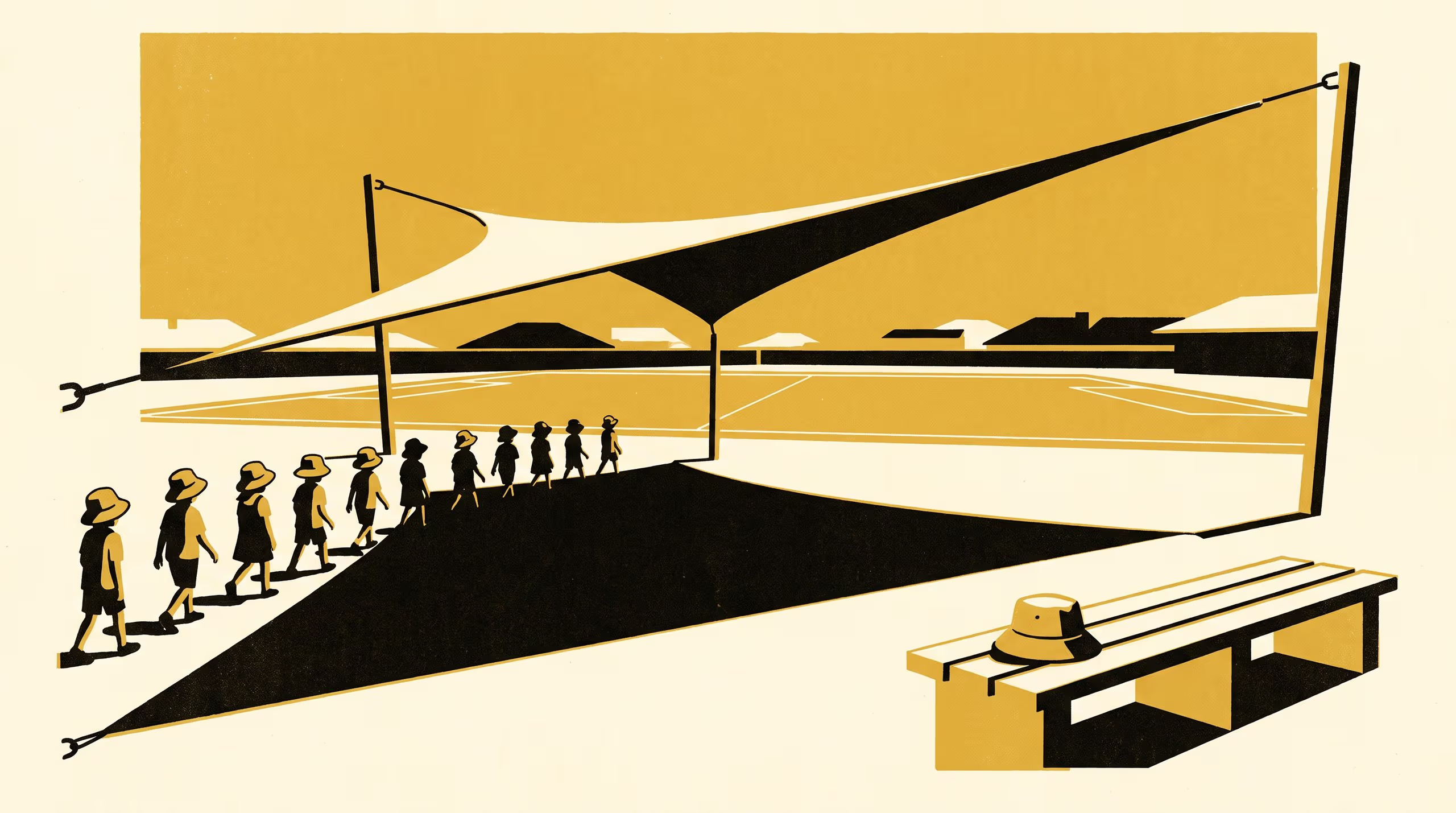
A School of Emergent Priorities research poster reconstructs childhood no-hat-no-play enforcement dose from fourteen schools' newsletter archives and finds it predicts nothing about adult sun-hat use; every school has asked for its dose profile anyway.
A retrospective cohort reads twenty years of newsletter archives for enforcement dose and finds adult sun-hat use unmoved at every level of childhood exposure
Slop University has read 31,204 school-newsletter items so that one question could finally be asked properly: does the no-hat-no-play rule make adults who wear hats?
The answer, reported in a research poster released today by the School of Emergent Priorities, is: not detectably. Twenty Years Under the Shade Sail, by Dr Anouk Mensah, Dr Ingeborg Nwachukwu and Dr Marek Solheim, reconstructs each of 1,912 adults’ childhood enforcement dose, term by term, from the digitised newsletter archives of fourteen primary schools, and finds adult sun-hat wear sitting at the same level in every exposure band. The one reliable predictor of an adult’s wear is whether their current workplace runs a hat rule of its own.
The archive was more faithful than the memory. Ask an adult about the hat rule and you get a shrug; ask the newsletters and you get twenty years of gentle insistence, dated and filed.
— Dr Anouk Mensah, Postdoctoral Fellow, School of Emergent Priorities
The study sets a 28-day wear diary against the coded archive record, carrying the newsletter’s quiet authority into a formal dose-response design, with coders blind to outcomes throughout. Dr Ingeborg Nwachukwu, Lecturer and Convenor of Capability Sprints, said the finding “lands where the School’s work on training keeps landing: the habit belongs to the setting that enforces it”.
The work reflects the University’s willingness to let a question mature for twenty years before answering it. All fourteen participating schools have since requested their historical enforcement-dose profiles.
The full poster is available from the University’s research repository under an open licence, doi:10.5555/slop.iy5vab.