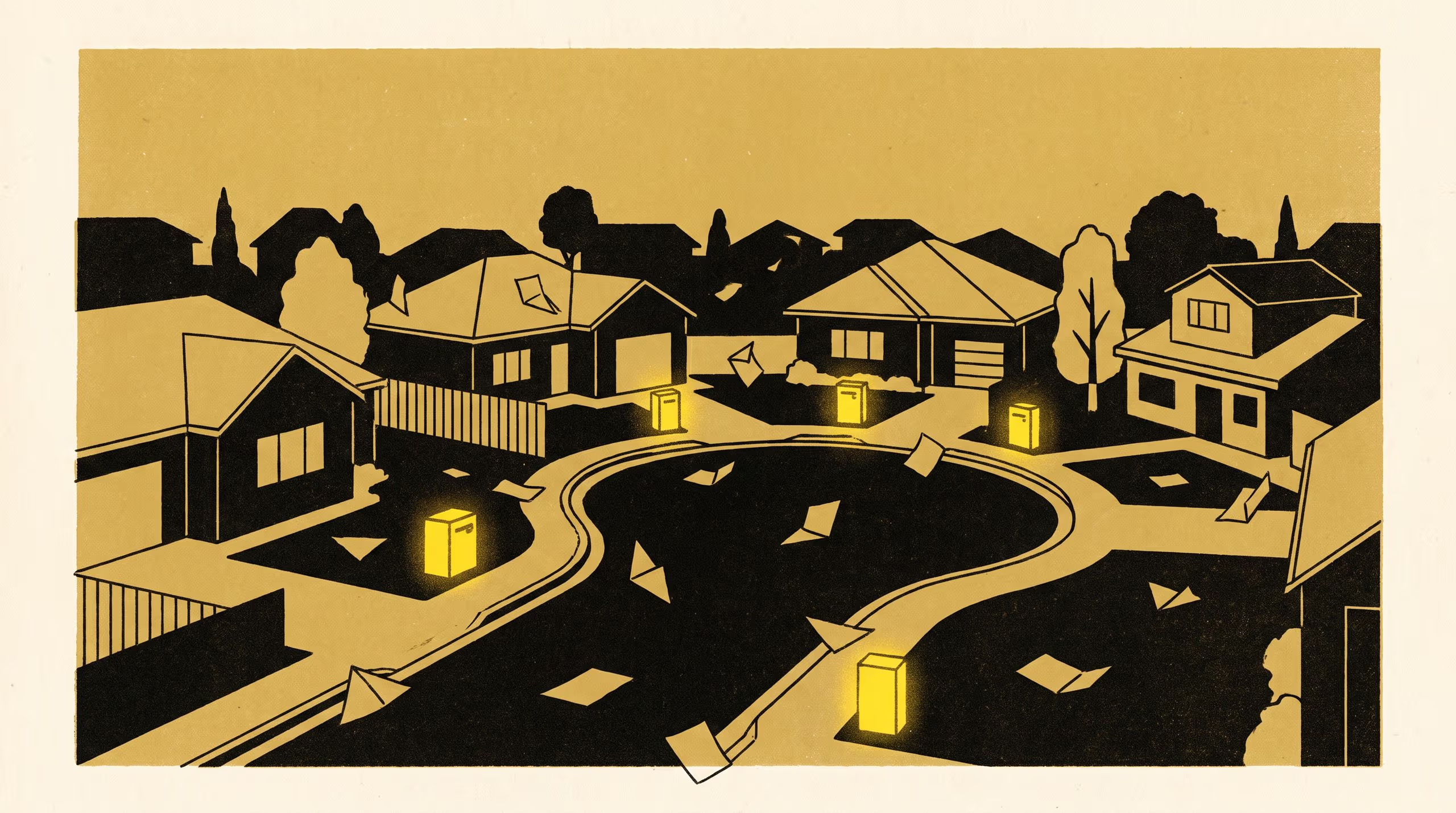
A School of Continuous Improvement research poster pairs every non-returning dwelling on six streets with a simulated household, lifting recorded survey coverage to 100 per cent and handing the committee concerns no resident raised.
A simulated respondent now stands in for every dwelling that never returns the residents' association's annual letterbox survey
On six suburban streets, the annual letterbox survey has stopped waiting for its residents. A research poster released today by the School of Continuous Improvement describes a synthetic household panel that answers the residents’ association’s survey on behalf of every dwelling that does not, lifting recorded coverage from 31 per cent to a reportable 100.
Each simulated household is conditioned on nothing more than what its dwelling already shows the street, with bin presentation, façade upkeep and letterbox signage harmonised into a respondent profile that answers every item, on time and in full sentences. Agreement with a follow-up doorknock of forty simulated dwellings was moderate (weighted kappa 0.41), a figure the poster reports without alarm.
The committee asked for coverage, and coverage is what the panel provides. Where the concerns come from is a question the School looks forward to sitting with.
— Dr Mirela Hanke, Postdoctoral Fellow, School of Continuous Improvement
The panel has already reshaped the association’s agenda: three concerns raised by no living resident have been minuted, and a working group on footpath shade has been convened. For co-author Senior Lecturer Ronja Oyelaran, “the work sits naturally within the School’s broader interest in what a consultation consults, and we are pleased to see that question travel from the committee room to the kerb.”
The work reflects the University’s continuing attention to the instruments communities use to hear from themselves. The full poster is available from the University’s research repository under an open licence, doi:10.5555/slop.cwc55s.